India is strong strategically and militarily : Swamy

India is strong strategically and militarily


Source: Organiser      Date: 10/24/2011 10:33:24 AM


How to deal with China

India is strong strategically and militarily

By Dr Subramanian Swamy

Is China a threat to India? To that question which is on the minds of most Indians today, I shall answer first by a counter question: Which nation, with the exception of Bhutan, is not a threat to India? USA? Have we forgotten 1971 when the US sent a Naval Task Force of 14 battle ships and an aircraft carrier, which was carrying nuclear weapons on board, to the Bay of Bengal? Have we also forgotten a more recent occasion of 2001 when Prime Minister Atal Behari Vajpayee was warned by the US that if he proceeded with his “Aar Paarki Ladai” with Pakistan  following the terrorist attack on the Parliament, then the US will militarily intervene to protect its 5000 soldiers stationed in Pakistan?
Rarely nations make friends or enemies with other nations on sentiments, ideology or platitudes. Jawahar Lal Nehru learnt this lesson the hard way when on the slogan “Hindi Chini Bhai Bhai” he formulated a pro-Chinese foreign policy that had ended in tatters and ignomy in 1962.
Nehru had been warned by Sardar Patel in written warning, in November 1949, not to be swayed by emotion in his China policy.  Instead, as Sardar Patel prophetically told Nehru, it is the cold hard calculus of costs and benefits of pursuing national interests and the intentions of other nations that decides  defence and foreign policy.
Nehru even sacrificed India’s interest, without Cabinet approval, by declining the US offer in 1950 to nominate India to the UN Security Council vacant seat after Communist China was expelled in 1949. Nehru told the US that the seat belonged to China!!
Therefore, firstly, a large nation like India must decide its defence policy before structuring its foreign policy. This defence policy has to be based on matching the military capacity of other nations such as China to inflict damage on us. It does not matter if that other nation is friendly to us or not. In defence policy we are only concerned with the capacity of the other nation and not on its intention.
It is also not necessary that to match the military capacity of other nations, to equal the military hardware of the other nation. For example, China may have 1000 nuclear bombs. It is not necessary to have a 1000 or more nuclear bombs to match China. We can match China with much less because what we seek is to deter China and not to equal China.
Today, we already have more than 200 nuclear bombs. If our Agni rockets can deliver these bombs to Szechuan province, even if we cannot reach Beijing, it is enough to deter China.
Similarly, it is not necessary that even though China has a string of naval bases from Gwadar (Pakistan) to Homantota (Sri Lanka), it is enough if we can join with Indonesia to control the access and police the Malacca Straits, and with Vietnam to patrol the South China sea. Malacca Strait is the lifeline of Chinese economy, and if we block that passage the, China’s economy will be asphyxiated. This is the way we should build our defence capacity.
Dr Manmohan Singh as PM incidentally may be trying to work for this strategic perspective by visits to South East countries. But there are too many pro-Chinese persons at the top of Congress Party hierarchy to let him proceed with speed or finalise anything concrete.
On the foundation of such a sound defence policy, India must structure its foreign policy—which is always based on intentions and not on capacity. Nehru’s fatal error was that he did the opposite—he structured our defence policy on foreign policy. Since he felt that Hindi-Chini Bhai Bhai was permanent, hence he did not see the need for our defence forces to modernise.
But when China built its defences including roads through Indian territory, Nehru foolishly ignored it. However, as Parliament went in an uproar, Nehru provoked the Chinese during 1960-62 by his ill- conceived Forward Posts policy. We were ill-prepared for it. But the Chinese were waiting for him very well prepared. Disaster followed in October 1962. Nehru was demolished.
Even in 1962, if Nehru’s nerves had held, and had got bombed the long supply lines of the Chinese army through Tibet, the “NEFA” debacle would not have taken place. But Nehru never had a reputation for grit or strong nerves. He collapsed and told Assamese in an AIR broadcast: “My heart goes out to you in Assam. Farewell!”
The focus of what I have written above is that: irrespective of whether we are friends with China or not, our defence preparedness against that country must be matched and sufficient to deter China. We cannot let our guard down.
For this our defence expenditure must rise from the present of 2.4 per cent to six per cent of GDP after ensuring sufficient transparency in defence purchases. At present two Italian ladies, one in India and another in France, are playing havoc with the quality of our defence equipment purchases, and collecting hefty kick backs on the same.
Hence, the first principle in dealing with China is never to let our guard down. But deal with China we must. China is our neighbour, and except for the 1962 Nehru fiasco, India and China have had 2,700 years of peaceful and happy relationship. When the two nations get together in international forums, the world trembles as was seen when the two countries co-operated in the Copenhagen Conference on Environment in 2009.
That brings me to the second principle of dealing with China, which is that we must interact with China on the basis of blunt transparent single standard give and take communication. Instead, India has always been dealing with China on the basis of mis-communicated, heavily nuanced, opaque, and double standard positions.
Take the case of the Tibet question. India has signed two treaties with China on Tibet, first in 1954 with Nehru as signatory, and second in 2003 with Vajpayee as signatory. Yet we have a Free Tibet Government in Exile, a Prime Minister, and a Free Tibet Cabinet of Ministers functioning  with  Dharamshala, HP, as a temporary Capital.
If the Maoist did the same in say Yunnan province, would we have kept quiet? Do we not react when Chinese army construction workers are seen in PoK? Why are the Chinese then keeping quiet on what is happening Dharamshala? Do they not know this? Are we not practicing double standard?
Of course the Chinese do know that we are practicing double statndard. But the Chinese approach, when they keep quiet in such matters, is to raise it at the most awkward moment for India. That is, they are waiting for the “ripe” moment.
Recall that when Chou Enlai was asked in 1959 by Indian journalists as to why he did not raise the Border dispute earlier, he replied that earlier, the time was not “ripe”. The Chinese habitually place great emphasis in the foreign policy on “ripe” time.
Hence, let us be clear and transparent on the Tibet question. Either Tibet is a part of China (which is what the Nehru-Vajpayee treaties commit us to), or we denounce these treaties and scrap it to regard Tibet as a free independent country.
Both alternatives have serious consequences which India will have to coolly evaluate and choose in India’s best national interests. But choose we must.
The third principle in dealing with China is to make clear what we will not compromise on, and on what we will.
In my opinion, we cannot compromise on territory that is either ours or certainly areas where China has no legal claim.On Macmahon Line, China has morally completely abdicated  its claim, if there was any, on the legality of the Line. This is because in its treaty with Burma, China has accepted the Macmahon Line as the boundary. Hence it has to accept the same Line with India as well. And we should not yield on this even if we go on discussing the Border Dispute for some more time. The same goes for Aksai Chin. For us, Kashmir is a pillar of our identity. Hence we cannot accept, no matter what the cost, any truncation of Kashmir. The whole, including PoK and Kashmir must be recovered and be part of India. PoK has a common border with Afghanistan, and hence for strategic security reasons too, PoK must be taken back.
Ultimately, India, China, and USA must constitute a triumvirate, not a triangle, in global affairs. These three countries are the three most populous countries and with the three largest GDPs in purchasing parity prices. These three countries have to get together for global security, because two of them getting together will not be acceptable to the third. That is the goal we must work in India in dealing with China.

Pakistan’s de facto ‘Alliance’ with China: by John Tkacik

The Enemy of Hegemony is My Friend: Pakistan’s de facto ‘Alliance’ with China
Testimony before the House Committee on Foreign Affairs Oversight and Investigations Subcommittee

by John Tkacik
Published on July 26th, 2011
TESTIMONY


Since the successful elimination on May 1st of al Qaeda chieftain Osama bin Laden in Abbottabad, Pakistan, and Pakistan’s official expressions of unhappiness with America’s perceived violations of Pakistan’s sovereignty, there has been considerable speculation in the news media that somehow China recently has begun to eclipse the United States as Pakistan’s most important ally.1

This is unfounded, unrealistic and betrays a lack of understanding of Pakistan’s strategic relationship with China.  China has always been Pakistan’s most important strategic ally,2 and the intensity of Pakistan’s relationship with the United States has always been a subset of Pakistan’s all-consuming strategic calculus about India.

History of a Strategic Relationship

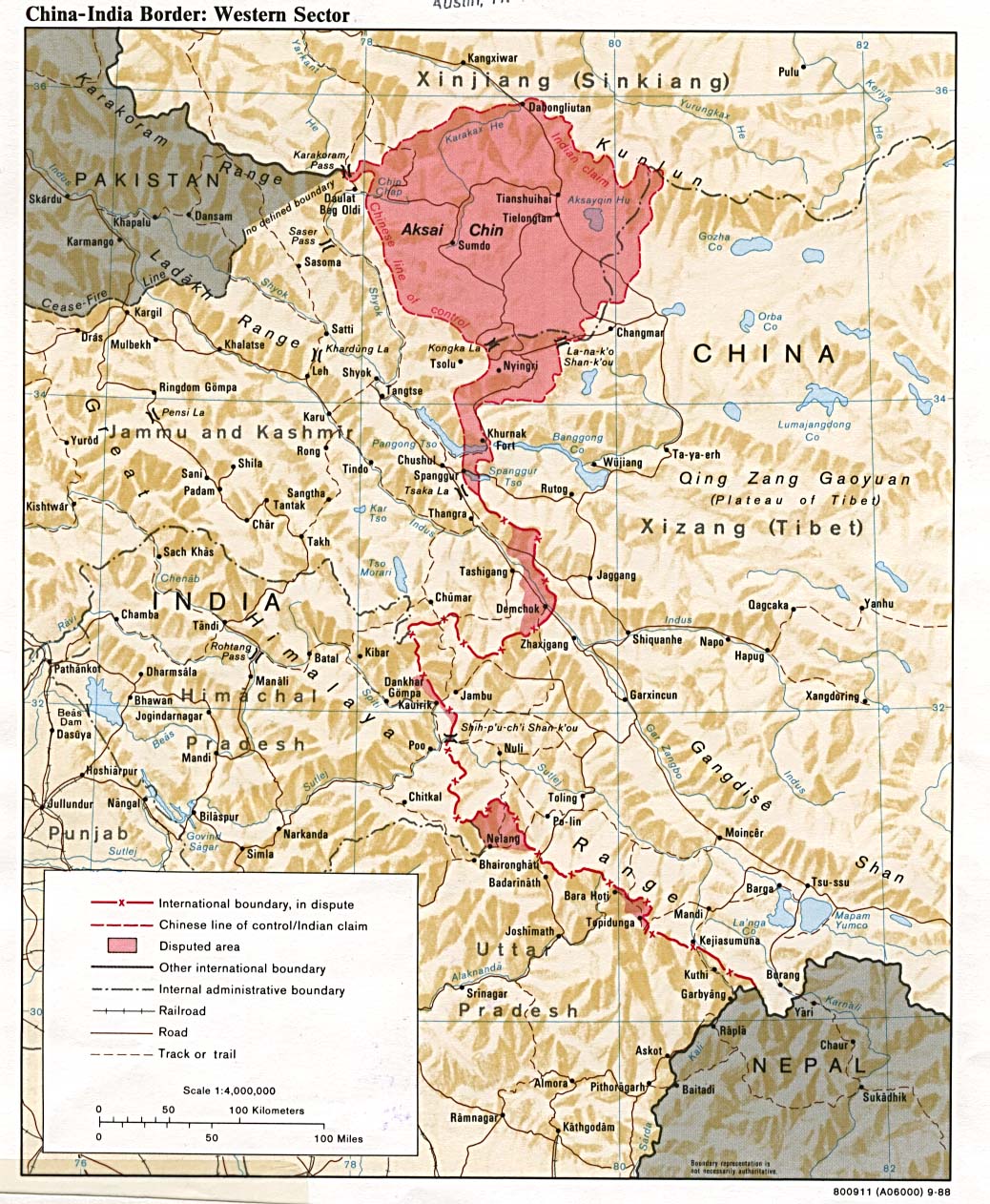
China’s geopolitical interests in Pakistan were kindled in the first Sino-Indian War of 1962, a war rooted in China’s occupation of the Aksai Chin portion of Indian-claimed Kashmir six years earlier.  In March 1963, as the Sino-Indian war died down, the Pakistani government signed a border agreement with China in which China formally recognized Pakistan’s claims to Kashmir, and Pakistan, in turn, demarcated Pakistan’s claimed border in Kashmir (which was, in fact, occupied by India – see annex map) to the south of the Aksai Chin.3 Moreover, China and Pakistan pledged to build a highway through the Karakoram range as the first land bridge between the two countries.  India was, of course, livid.  But India had lost its war with China and was not interested in fighting another.

Pakistan came to rely on China for weapons and military equipment almost immediately after losing the first Indo-Pakistan War in 1965.  Between 1965 and 1968, China provided Pakistan with a considerable amount of war materiel, including at least 160 T-59 medium tanks and 124 MiG-19 jet fighters.4  Certainly, theirs has been the single most important military alliance that either of the two nations has had since the late 1950s.

Pakistan and China have cooperated quite closely across the entire spectrum of military and security affairs ever since.  The news last month that China and Pakistan are cooperating in the joint development of the JF-17 multirole jet fighter is essentially old news.  The two countries have been working on the JF-17 for at least a decade.  Nor was it surprising that China is considering sales of a newer, more capable fighter, the J-10, to Pakistan, as the Pakistani defense minister announced in May.5  The Pakistan Naval Ship Aslat, the fourth jointly-developed China-Pakistan F-22P Zulfiqarclass frigate, was launched from its drydock in Karachi in May.6 China reportedly is preparing for the sale of six advanced diesel-electric submarines with “air independent propulsion” (AIP) to Pakistan, submarines which contain some of the most advanced underwater propulsion systems in the world.7

Pakistan is, by any measure, a major strategic ally of China’s; in military and naval systems, in naval base construction (at Gwadar), in nuclear power, hydro electric power and cross border highways which China hopes will link China’s far west with the Indian Ocean.8 More significantly, China has, for at least thirty years, provided Pakistan with equipment, technical aid, designs, fissile materials and money essential to Pakistan’s development of nuclear weapons and missile delivery systems.  This is documented amply in the public record – particularly in documents declassified at the request of the National Security Archive project at George Washington University.9

China-Pakistan Treaty of Friendship, Cooperation and Good-neighborly Relations, signed on April 5, 2005,10 is as close as the two countries get to a formal declaration of strategic alignment.  In May 2006, Pakistani Prime Minister Shaukat Aziz emphasized Pakistan’s deep military and economic relationship with China was one, not based on “transient interests”, but that was “higher than the Himalayas, deeper than the sea” (no Pakistani has ever expended quite such fulsome encomium on its ties with the United States). Aziz went on to explain the geopolitical ramifications of Pakistan’s ties with China, referring to Newton’s third law of motion – every action has an equal and opposite reaction – that a strong Pakistan-China relationship was a natural reaction to the India-U.S. relationship.11

Evidently, China felt the same way.  When Chinese President Hu Jintao visited Islamabad in November 2006 (a few days after China’s Ambassador in New Delhi reiterated China’s territorial claim to the entire Indian state of Arunachal Pradesh12), he and Pakistani President Pervez Musharraf issued a joint statement which explained that the Treaty provided “an important legal foundation for the Strategic Partnership” between their two nations. But in fact, the security relationship extends at least to 1965.

It is difficult to overstate how important Pakistan views its strategic relationship with the People’s Republic of China.  China is, quite simply, central to Pakistan’s view of its survival.  Without its alliance with China, Pakistan believes it could not exist as an autonomous state actor on the South Asian subcontinent.  Indeed, in the world today, there is no more profound demonstration of the existence of a strategic alliance than the exchange of nuclear weapons materials, technology and delivery systems between states.

By the same token, Pakistan is central to China’s entire strategic posture in South Asia.  Without a militarily powerful Pakistan, China believes it is vulnerable along its entire southwestern border with India – not simply in military terms, but also in terms of the legitimacy of China’s continued occupation of Tibet from the tri-border junction with India and Burma in the east, all along its 5,600 kilometers of borderlands with India, Bhutan, Nepal to Pakistan in the west.13

The America factor in the Sino-Pakistan Alliance

Twice, first in the 1965 Indo-Pakistan War and again in the second Indo-Pakistan War of 1971, China faced the prospect of Indian dismemberment of Pakistan and the subjugation of the subcontinent to India.  At the same time, the United States was clandestinely supporting Tibetan refugee armies based in India that constantly harassed Chinese military deployments in Tibet and supported the Tibetan government in exile based in India.

As the Sino-Soviet ideological split became visible in 1958 and burst into full hostilities in 1962, India appeared in Beijing’s eyes a strategic ally of the Soviet Union.  Yet it was not until 1969 that the United States – during the Nixon Administration – began to regard India, too, as a Soviet client state.  By the time of Dr. Henry Kissinger’s first secret mission to Beijing – exactly 40 years ago this month – the United States had begun to see China as a strategic counterweight to the Soviet Union.  Indeed, Pakistan’s president Yahya Khan was the most essential line of communication between Washington and Beijing’s leaders in arranging for Kissinger’s secret mission. In this context, Kissinger had become sympathetic and cooperative with China’s desire to tilt the balance of power in South Asia away from India and toward Pakistan.14  (By December 6, 1971, Kissinger recommended that President Nixon tacitly approve a proposal by the Shah of Iran covertly transfer U.S.-origin weapons to Pakistan at the height of the Second Indo-Pakistan war, despite the fact that the transfer would, in Kissinger’s words, “be illegal.”15)

Through the rest of the Cold War and five subsequent U.S. administrations, the United States maintained a strong – if not always consistent – geopolitical alignment with the Sino-Pakistan alliance and generally tolerated Beijing’s determined efforts to build a strong Pakistan vis-à-vis India.  The most visible part of this triangular relationship was the US-China-Pakistan cooperation in supplying the anti-Soviet resistance in Afghanistan from 1979 through 1989.

Valentine’s Day 1989, the withdrawal of Soviet troops from Afghanistan marked the successful conclusion of the US-China-Pakistan trilateral entente in South Asia – at least as far as the United States was concerned. The collapse of the Soviet Union on January 1, 1992, made America’s strategic cooperation with Pakistan and China irrelevant.

China and Pakistan in the 1990s: Prologue to September 11

But the strategic imperatives of the Pakistan-China alliance persisted as both countries continued to perceive strategic vulnerabilities with India.  Through the 1990s, Pakistan adjudged that India was trying to regain a foothold in Afghanistan – to Pakistan’s strategic rear – especially in India’s complex relationship with the Afghan Northern Alliance.  Pakistan believed that its financial and military support for the Afghan Taliban was essential to controlling India’s presence.

By the summer of 2001, the destabilizing nature of China’s missile and nuclear relationship with Pakistan had frustrated Washington which was already intensely irritated with China (because of a collision of military aircraft over the South China Sea and the detention of U.S. service personnel in April).  On September 1, the Bush Administration announced sanctions against a major Chinese state-owned arms company for transferring “substantial amounts” of missile parts and technology to Pakistan just a few months after signing an accord with Washington was supposed to halt all missile exports.16 A few days later, Beijing dispatched a senior military delegation to Pakistan to implement “enhanced” military cooperation.17

America’s role in the Sino-Pakistan calculus changed somewhat with the terrorist attacks on the United States of September 11, 2001, as Pakistan came under excruciating American pressure to acquiesce in dislodging Islamabad’s own Taliban clients from Afghanistan.  But it is quite evident from the contemporaneous media reports that China was uneasy with this development – not just it considered India, but primarily because it portended an entirely new American military footprint in Central Asia.  In the days following the terrorist attacks, China appeared somewhat disappointed that Pakistan felt compelled to cooperate, even superficially, with American plans to destroy the Taliban government in Afghanistan.  If America could bully China’s most important ally in Asia, Beijing reasoned, China’s newly- crafted leadership role in Central Asia, via the Shanghai Cooperation Organization (SCO), would be undermined.

The complexity of the Pakistan-China alliance relationship was apparent in the first weeks after the September 11, 2001, terrorist attacks on the United States.   Some analysts have claimed China encouraged Pakistan to cooperate with the United States in the days after September 11. The evidence suggests that opposite was true. China’s top Asia specialist, Vice Foreign Minister Wang Yi, was dispatched to Islamabad on September 22, but was unable to reach any consensus with the Pakistanis other than a vaguely-worded statement that “it can be said that China and Pakistan’s position on the fight against terrorism are in accord with each other.”18The strange lack of a joint statement following such an important diplomatic move suggested that the vice minister’s real purpose in Islamabad was to reassure Pakistan of Beijing’s unwavering support against American pressure.19 Chinese troop movements that same day heading down the Karakoram highway towards the mountainous areas around the Pakistani and Afghan borders were obviously not designed to prevent Afghan intruders (the mountains separating China and Afghanistan are over 20,000 feet high, and were controlled by anti-Taliban forces), but instead to reassure Pakistan of the proximity of Chinese forces.20

In October, 2001, Beijing’s diplomatic coolness toward U.S. plans to strike al Qaeda bases in Afghanistan was grounded in fears of greater U.S. involvement in Central Asia, a region that it saw within its own sphere of influence by virtue of the Shanghai Cooperation Organization (SCO) treaty of a few months earlier which China hoped would cement its leadership in Central Asia. In a call to Pakistan’s President Musharraf on October 1, 2001, just prior to the U.S. air war against al Qaeda and the Taliban, Chinese President Jiang Zemin stressed one thing: any conter-terrorism operation must be conducted with “conclusive evidence and concrete targets” and must comply with the United Nations charter and international law.  Jiang, however, stressed that no matter what Pakistan chose to do, friendship between the two countries “had stood the test of time, and no matter what happens, the friendly relations will not be affected.”21

It was in this context that China’s Chief of General Staff, General Fu Quanyou, in comments to his visiting Pakistani counterpart, warned the U.S. against using the War on Terror to dominate global affairs: “counter-terrorism should not be used to practice hegemony.”22 “Hegemony,” in the post-Cold War era of America’s “Unipolar Moment,” had become a Chinese codeword for “The United States.”  In March 2002, General Xiong Guangkai, deputy chief of staff for intelligence in the Chinese Peoples Liberation Army, visited Islamabad and signed two agreements on “defense cooperation” and “Defense production” with Pakistani counterparts.  Pakistan still regarded China as a more reliable ally than the United States.  Commenting on Gen. Xiong’s visit, Pakistan’s The Nation newspaper put it in the context of “Deepening U.S.-Pak relations [in the wake of 9/11 that] could lead to unintended strain in its ties with a trusted and sincere friend like China.”23

Sino-Pakistani Nuclear Weapons and Missile Cooperation24

Twenty years ago, when United States intelligence assets first obtained conclusive evidence of China’s transfer of nuclear-capable M-11 short range ballistic missiles, components, designs and manufacturing technology to Pakistan (even after Presidents Carter and Reagan had concluded that China was central to Pakistan’snuclear weapons development25), Washington put considerable pressure on Beijing to stop these transfers.  In 1992, Chinese arms control diplomats explained to American counterparts that the “US-Soviet nuclear arms race produced a de factopolitical stability that prevented direct conflict,” and questioned whether other rival states, “such as Pakistan-India” shouldn’t be allowed the same chance to prevent conflict through nuclear deterrence” and noted that China had already “accused Washington of ‘nuclear blackmail’ and of using its post-September policy review as a pretext to resume nuclear tests and develop new weapons.”26

Those were the days when Washington still had leverage in Beijing.

Initially, American officials were gratified that Beijing curtailed its proliferation to Pakistan and North Korea, but were quickly dismayed to find instead that China had begun to facilitate the exchange of Pakistani nuclear weapons technology – across Chinese territory – for North Korea’s short- and medium-range missiles.

China’s decades of robust technical assistance and provision of specialized equipment and materials to Pakistan’s nuclear weapons program is well known.27  But China’s central role in Pakistan-North Korea exchanges of missiles and nuclear weapons is less frequently commented upon.

For over a decade beginning in 1993, China had acquiesced in (but more likely it had actively encouraged) Pakistan’s barter trade of nuclear weapons designs, technologies and equipment for North Korean long-range missiles following China’s cessation of direct missile and nuclear weapons materials to Pakistan (apparently in an as-yet undisclosed quid pro quo deal with the Clinton administration that Chinese leader Jiang Zemin found most agreeable).28

In 2003, Pakistan’s late prime minister Benazir Bhutto – concerned that her legacy might be one of pro-Americanism rather than Pakistan patriotism, confided in a friend: “Let me tell you something, I have done more for my country than all the military chiefs of Pakistan combined.”29  She then revealed that she had delivered “critical nuclear data” as part of a barter deal for North Korean missile components and designs on her December 30, 1993, visit to Pyongyang, known to – and aided by – China.

Before arriving in Pyongyang, Bhutto conferred with top Chinese leaders, including Premier Li Peng with whom she spent two hours, a session she termed as “most rewarding.”30 In a meeting with Pakistani reporters, Bhutto noted only that she discussed Kashmir and nuclear nonproliferation with her Chinese counterparts, and added “I was deeply moved during my talks with the president. The president stated that Pakistan was China’s closest friend and that China would never forget an old friend. The prime minister assured me that China will always remain Pakistan’s staunch ally regardless of any changes in the world.”31  Bhutto described Pakistan-China friendship as an “all-weather relationship”, and according to Xinhua news agency, averred that “her countrymen will never forget China’s assistance to Pakistan at critical times.”  Bhutto then, in a revealing portrayal of Pakistan-China relations, “reiterated that Pakistan-China ties are ‘the cornerstone’ of Pakistan’s foreign policy, saying that her government wants to further its all-round co-operation with China.”32

The Bhutto visit to Pyongyang took place at a particularly sensitive time for Pakistan, China and North Korea.  The United States threatened sanctions on China for transferring nuclear-capable missiles to Pakistan.  North Korea was in delicate negotiations with the United States over its refusal to allow the International Atomic Energy Agency to inspect its nuclear facilities.  So perhaps even the Pakistani Prime Minister believed she was obliged to maintain strict operational security in transferring CD-ROM’s of sensitive nuclear data to Pakistan, and therefore needed “an overcoat with the ‘deepest possible pockets’ into which she transferred CDs containing the scientific data about uranium enrichment that the North Koreans wanted.”  Bhutto’s visit to Beijing and Pyongyang, her first trip abroad after her October 1993 election as Prime Minister, were marked by oratorical paeans to Pakistan-China and Pakistan-North Korea friendship, including Bhutto’s own avowal that “nuclear nonproliferation should not be made a pretext for preventing states from fully exercising their right to acquire and develop nuclear technology.”33

The atomic weapons designs that Bhutto transferred to North Korea were likely Chinese.

In the 1980s, Beijing transferred to Pakistan’s chief weapons researcher, A.Q. Khan, blueprints for a smaller nuclear device that could fit atop a ballistic missile, designs that had the names of the Chinese ministers involved in the deal scribbled upon them.34  Khan resold these blueprints to Libya, and certainly paid the same favor to North Korea.35  Indeed, Chinese assistance has always been essential to Pyongyang’s plutonium separation program.  Through 2002, according to theWashington Post, The United States observed “a series of suspect purchases” by Pakistan from North Korea and vice versa.36 In July 2002, U.S. intelligence-collectors had happened upon a Pakistani military C-130 transport plane that had flown through Chinese airspace carrying a cargo from Pakistan’s top-secret nuclear weapons base, the Khan Research Laboratory. The C-130’s cargo was probably $75 million worth of equipment relating to a uranium enrichment centrifuge. It landed at a Chinese military base to refuel, and proceeded on to North Korea. The aircraft returned to Pakistan carrying a North Korean No-dong ballistic missile, again, via a refueling stop at a Chinese military base.37  The flights were only a small fraction in a series of secret Pakistani C-130 missions, facilitated by its ally China, to North Korea that dated back at least to 1998.38

Since 2002, The United States has sanctioned Chinese companies for providing North Korea with tributyl phosphate, an acid solvent used in the extraction of uranium and plutonium salts from nuclear reactor effluents39 – most recently in April 2004 (incongruously just one month before the U.S. State Department recommended that China be admitted to the Nuclear Suppliers’ Group, an ad hoc international nonproliferation organization).40  In 2003, at U.S. insistence, China interdicted one such shipment41 but there is no indication that China has made any other effort to enforce its export controls on North Korea.  It is the opinion of arms control experts at the U.S. State Department that China enforces its rules “only under the imminent threat, or in response to the actual imposition, of sanctions” and that China’s failure to respond is not so much an “inability” to enforce its export regulations as an “unwillingness” to do so.42

As late as March 2003, U.S. intelligence reportedly tracked a cargo ship carrying ten “Scud” SRBM’s from North Korea to Pakistan “possibly in return for Islamabad’s nuclear technology”, which “was refueled at a PRC port” before proceeding on to Pakistan.43 It is difficult, then, to avoid the conclusion that China acquiesced in these transfers, and probably facilitated them outright.

Conclusion: the Enemy of Hegemony is my Friend

In the fourth century before Christ, ancient Taxila – now in Pakistan – was home to one of the most revered figures in the history of strategic thought, Kautilya.  In his treatise, the Artha-Shastra (“The Science of Material Gain”) Kautilya outlined for the Mauryan emperor a model of international conflict and alliances that provides a framework for understanding the geographic determinants of Pakistan’s contemporary international conflicts and alignments.  Basically, it read “the enemy of my enemy is my friend, and the friend of my enemy is my enemy.”  A king, observed Kautilya, will always find a bordering state hostile, and should seek an ally to the rear of that hostile state.  Likewise, this enemy state will seek an ally on the other side of the king, and so too will those states seek allies likewise.  Thus Kautilya explained:

The third and fifth states from a Madhyama king are states friendly to him; while the second, the fourth and the sixth states are unfriendly.44

It was the first articulation of the maxim “the enemy of my enemy is my friend.” It is this fact which is at the center of the Sino-Pakistan alliance, a comprehensive strategic relationship that has been a part of South Asia’s geopolitical landscape for over 50 years.  So far as Pakistan is concerned, its giant neighbor India seeks hegemony on the subcontinent, and Pakistan’s existential imperative is to confound that hegemony.  Likewise, China’s grand strategy posits that the United States seeks global hegemony – and India is America’s ally in that quest.

For the United States to achieve a true strategic partnership with Pakistan, it must share Pakistan’s posture toward India.  It follows, then, that subduing India also demands acquiescing in China’s ultimate hegemony in Asia.  In reassessing America’s grand strategy in South Asia, the United States must first reassess its global “grand strategy.”  If America can live with an Asia under Chinese hegemony, and with a crippled India, then America can have Pakistan’s enthusiastic partnership against the Taliban.  Decisions like this are, as they say, above my pay grade.  Instead, they are properly the focus of these hearings and the deliberations of the Executive.

Aksai-Chin Border Area Map – Taken from

http://www.lib.utexas.edu/maps/middle_east_and_asia/china_indiaw_border_88.jpg


[1] This is the subtext of several analyses.  See James Lamont and Farhan Bokhari, “China and Pakistan: An alliance is built,” Financial Times, June 30, 2011, athttp://www.ft.com/intl/cms/s/0/417a48c4-a34d-11e0-8d6d-00144feabdc0.html; Griff Witte, “Pakistan courts China as relations with U.S. grow strained,” The Washington Post, June 22, 2011, at http://www.washingtonpost.com/world/asia-pacific/2011/06/19/AGDCyWfH.html; David Pilling, “China’s masterclass in schmoozing Pakistan,” Financial Times, May 25 2011at http://www.ft.com/intl/cms/s/0/cac10ffe-8701-11e0-92df-00144feabdc0.html; Kathrin Hille and Farhan Bokhari, “Show of support as China hosts Pakistan PM in Islamabad,” Financial Times, May 19, 2011 athttp://www.ft.com/intl/cms/s/0/f50629b6-81a7-11e0-8a54-00144feabdc0.html; “Pakistan’s Gilani visits old ally China as Islamabad deals with strained ties with Washington,” The Associated Press, May 17, 2011; Farhan Bokhari and Daniel Dombey, “Kerry talks of ‘make or break’ Pakistan ties,” Financial Times, May 16, 2011, athttp://www.ft.com/intl/cms/s/0/99184e36-7fe5-11e0-b018-00144feabdc0.html;

[2] Aside from the China-Pakistan Treaty of Friendship, Cooperation and Good-neighborly Relations, signed on April 5, 2005, there is no specific treaty of alliance binding Beijing and Islamabad.  But the relationship certainly qualifies as an alliance: Professor Stephen M. Walt defines an alliance as a “formal or informal relationship of security cooperation between two or more states” which includes “some level of commitment and exchange of benefits for both parties.”  Stephen M. Walt, The Origins of Alliances, Cornell University Press, Ithaca, NY, 1990.

[3] The Aksai Chin, though as remote a plot of 10,000 square miles as exists on earth, was seized by China’s People’s Liberation Army in 1956 apparently in the belief that India wouldn’t notice.  And indeed India didn’t notice until the PLA constructed military highway through it; it was China’s only land route between Chinese Xinjiang and Western Tibet.  India’s Prime Minister, Jawaharlal Nehru only informed Parliament of the Chinese occupation in August 1959 at the onset of the ideological split between Moscow and Beijing.

[4] Immediately following the First Indo-Pakistan War, Pakistan also covertly transferred to China spare parts and material samples of the U.S. F-104 supersonic fighter jet.  See U.S. Department of State Intelligence Note—944 of December 4, 1968 entitled “Pakistan and Communist China Strengthen Cooperation,” available athttp://www.gwu.edu/~nsarchiv/NSAEBB/NSAEBB6/index.html.

[5] Jeremy Page, “China to Speed Up Fighter Jets for Pakistan,” The Wall Street Journal, May 19, 2011, athttp://online.wsj.com/article/SB10001424052748704083904576333192239624926.html.

[6] Lamont and Bokhari, “China and Pakistan: An alliance is built.”

[7] Farhan Bokhari and James Lamont, “Islamabad splurges on defence hardware,”Financial Times, May 22, 2011 at http://www.ft.com/intl/cms/s/0/9b19baf6-848d-11e0-afcb-00144feabdc0.html.   Indian sources are cited as describing the submarines as “Qing” class diesel-electrics, “a variant of the Type 041A Improved Yuan-class SSK.”  That report appears at “Submarine Sails, China-Pakistan all-weather friendship scales new heights,” Force Magazine, July 2011, at http://www.forceindia.net/Issue4.aspx.

[8] For a current review of this relationship see James Lamont and Farhan Bokhari, “China and Pakistan: An alliance is built,” Financial Times, June 30, 2011, athttp://www.ft.com/intl/cms/s/0/417a48c4-a34d-11e0-8d6d-00144feabdc0.html; and Griff Witte, “Pakistan courts China as relations with U.S. grow strained,” The Washington Post, June 22, 2011, at http://www.washingtonpost.com/world/asia-pacific/2011/06/19/AGDCyWfH.html.

[9] William Burr, “Declassified Documents Show That, For Over Fifteen Years, Beijing Rebuffed U.S. Queries on Chinese Aid to Pakistani Nuclear Program,” National Security Archive, March 5, 2004, at http://www.gwu.edu/~nsarchiv/NSAEBB/NSAEBB114/press.htm.

[10] A discussion of the strategic dimensions of the Treaty is found at D.S. Rajan, China: Revisiting the 2005 Friendship Treaty with Pakistan, South Asia Analysis Group, October 12, 2006, athttp://www.southasiaanalysis.org/%5Cpapers21%5Cpaper2058.html.  While the Treaty’s language seems tilted more towards and explicit commitment by  Pakistan to control Islamic elements that may support Xinjiang separatists in China (“each Contracting Party shall prohibit, on its own soil, the establishment of organizations or institutions which infringe upon the sovereignty, security and territorial integrity of the other Contracting Party”), the Treaty does require that  “the Contracting Parties shall enhance and consolidate trust and cooperation in the military and security fields to strengthen their security.”  See the Chinese explanation of the Treaty athttp://english.peopledaily.com.cn/200504/06/eng20050406_179629.html.

[11] See telegram 04 ISLAMABAD 9705 from the American Embassy in Islamabad, “Subject: Pak-Sino Relations: ‘Higher than the Himalayas, Deeper than the Sea,” a copy of which is available athttp://wikileaks.org/cable/2006/05/06ISLAMABAD9705.html.

[12] (No author cited), “PRC Ambassador to India claims ‘whole of Arunachal Pradesh is Chinese Territory’,” CNN-IBN News India, November 13, 2006, athttp://www.ibnlive.com/news/arunachal-is-chinese-territory-envoy-minces-no-words/26108-3.html.

[13] In addition, China was concerned by private financial support given by Pakistani citizens to Muslim separatists in China’s far western Xinjiang autonomous region, but that concern seems to have dissipated by the mid 1990s.

[14] In its introduction to FOREIGN RELATIONS OF THE UNITED STATES, 1969–1976, VOLUME E–13, DOCUMENTS ON CHINA, 1969–1972,The U.S. Department of State Office of the Historian underscores “Pakistan’s role in Sino-American rapprochement could not be divorced from its conflict with India. The stability of Pakistan was a key area of cooperation between the United States and the PRC after mid-1971 prompting a remarkable measure of diplomatic coordination. In Kissinger’s meetings with PRC diplomats in New York during November and December 1971, both sides exchanged positions and messages concerning the UN and the antagonists on the subcontinent, India and Pakistan. (173, 175, 176) South Asia was also one of the important substantive issues discussed by Kissinger’s deputy, Alexander M. Haig, during his January 1972 trip to Beijing. (183, 184).” A version is located athttp://history.state.gov/historicaldocuments/frus1969-76ve13/summary.

[15] The Watergate Tapes, December 6, 1971, available at the Nixon Library, Yorba Linda, California.

[16] Robin Wright, “ U.S. to Sanction Chinese Firm Asia: Washington says the arms maker has sold parts to Pakistan in violation of an accord reached with Beijing,” Los Angeles Times, September 1, 2011, page  A-01

[17] Muhammad Saleh Zafir, “Pakistan, China Agree to Enhance Defense Cooperation,” Rawalpindi Jang, September 7, 2001, cited in Srikanth Kondapalli, “The Chinese Military Eyes South Asia,” Chapter 9 in Scobell, et.al. eds, Shaping China’s Security Environment; The Role of the People’s Liberation Army, Strategic Studies Institute, U.S. Army War College, Carlisle Barracks, October 2006.

[18] Willy Wo-Lap Lam, “The Terror Attack and China’s Deeper Concerns,” China BriefVolume 1, Issue 6 of September 27, 2001, athttp://china.jamestown.org/pubs/view/cwe_001_006_001.htm.

[19] See, for example a toughly-worded article in the PRC-owned Ta Kung Paonewspaper shortly after the visit which warns Pakistan that Washington is cooperating with New Delhi to encircle Pakistan. Ba Ren, “The United States Meddles With Afghanistan To Kill Three Birds With One Stone—On The White House’s Military Deployment and Variable of Central Asian Strategic Patterns,” Hong Kong Ta Kung Pao, September 24, 2001 (translated by the Foreign Broadcast Information Service at FBIS-CHI-2001-0924).

[20] “More on China FM Spokesman Comments on Border Security, Terrorism,” Agence France Presse, Beijing, September 25, 2001; transcribed by Foreign Broadcast Information Service Document Number: FBIS-NES-2001-0925.

[21] “China Stresses ties with Pakistan in war on terror,” Reuters, October 1, 2001.

[22] See “Fu Quanyou Yu Ba Canlianhui Zhuxi Huitan” (Fu Quanyou meets Pakistan Chairman of Joint Command), Jiefang Jun Bao (Liberation Army Daily), January 16, 2002, at http://www.pladaily.com.cn/gb/pladaily/2002/01/16/20020116001011.html.

[23] “Strain in U.S. China ties,” The Nation, March 20, 2002, transcribed in FBIS-CHI-2002-0320.

[24] See also Carey Sublette, “Pakistan’s Nuclear Weapons Program Development,”The Nuclear Weapon Archive, January 2, 2002, athttp://nuclearweaponarchive.org/Pakistan/PakDevelop.html.

[25] In a “Back of the Book”(BoB) intelligence analysis dated June 23, 1983, to Secretary of State George Shultz, the Bureau of Intelligence and Research notes: “We have concluded that China has provided assistance to Pakistan’s program to develop a nuclear weapons capability.  Over the past several years, China and Pakistan have maintained contacts in the nuclear field.  For some time, China’s involvement was limited to operational aspects of the KANUPP power reactor in Karachi.  We now believe cooperation had taken place I the area of fissile material production and possibly also nuclear device design.”  A heavily redacted version of this report is available at http://www.gwu.edu/~nsarchiv/NSAEBB/NSAEBB6/index.html.  Sublette (above) notes that in return for this support, A.Q. Khan provided China with the details of the Dutch URENCO uranium gas centrifuge design and manufacture.

[26] U.S. Embassy Beijing telegram 92 BEIJING 37734 dated November 25, 1992, declassified August 27, 2003.

[27] William Burr, “China’s role as a leading provider of sensitive technology to Pakistan has repeatedly strained U.S.-China relations.”  See a review of declassified U.S. intelligence and diplomatic documents at Joyce Battle, “India and Pakistan — On the Nuclear Threshold”, National Security Archive Electronic Briefing Book No. 6, (no date), at  http://www.gwu.edu/~nsarchiv/NSAEBB/NSAEBB6/index.html.

[28] Private conversation in June 2008 with a U.S. intelligence official.  That China was still exporting M-ll ballistic missiles and samarium-cobalt rare earth  ring-magnets for use in frictionless centrifuge bearings in uranium isotope separation to Pakistan as late as early 1996 was a constant irritant to the Clinton Administration.  See Bill Gertz, “China Nuclear Transfer Exposed, The Washington Times, February 5, 1996, p. A-01.  For a vague description of National Security Advisor Anthony Lake’s talks with Chinese counterparts in Beijing on June 8, 1996, see Robert L. Suettinger, Beyond Tiananmen, The Politics of US-China Relations 1989-2000, The Brookings Institution, Washington, D.C., 2003, p. 277.

[29] Glenn Kessler, “Bhutto Dealt Nuclear Secrets to N. Korea, Book Says,” The Washington Post, June 1, 2008; A16, http://www.washingtonpost.com/wp-dyn/content/article/2008/05/31/AR2008053102122.html.

[30] Xinhua noted of the Bhutto-Li Peng consultations, that “Before the formal talks, both prime ministers had a private meeting which lasted half an hour. They discussed in detail the international situation, regional affairs including Kashmir, and bilateral relations. There was a total identity of views on various issues and they agreed to further promote the existing good bilateral relations.” (emphasis added.) “Pakistani Prime Minister Bhutto Continues Visit; Li Peng Remarks on Kashmir Noted” Islamabad Radio Pakistan Network December 28. 1993, at FBIS-CHI-247.

[31] “Further on Visit by Pakistan Prime Minister,” Islamabad PTV Television Network in English, December 30, 1993, transcribed at FBIS-EAS-93-249.

[32] (emphasis added) “Pakistani Prime Minister Bhutto Continues Visit; Spokesman on Li Peng-Bhutto Talks,” Xinhua in English December 28, 1993, at FBIS-CHI-247.

[33] See “‘Text’ of Bhutto Banquet Speech,” Pyongyang Korean Central Broadcasting Network in Korean, December 30, 1993, transcribed by the Foreign Broadcast Information Service, Daily Report at FBIS-EAS-93-249.  In a perhaps telling moment, the North Korean media noted that Kim Il Sung and Bhutto exchanged gifts, and uniquely noted that each “saw the [other’s] gift and expressed thanks for it.” See “Kim Il-song, Bhutto Exchange Gifts”, FBIS Daily Report, December 30, 1993, at FBIS-EAS-93-249. I can find no other instance of an exchange of gifts with Kim Il Sung where Kim is ever described as “expressing thanks.”

[34] William J. Broad and David E. Sanger, “As Nuclear Secrets Emerge in Khan Inquiry, More Are Suspected,” The New York Times, December 26, 2004, athttp://www.nytimes.com/2004/12/26/international/asia/26nuke.html.

[35] William J. Broad and David E. Sanger, “Warhead Blueprints Link Libya Project To Pakistan Figure,” The New York Times, February 4, 2004, p. 1.

[36] Kessler

[37] David E. Sanger, “In North Korea and Pakistan, Deep Roots of Nuclear Barter,”The New York Times, November 24, 2002, p. A-01. Danny Gittings, “Battling the Bribers,” Asian Wall Street Journal, October 29, 2002, p. 18. William C. Triplett II, “Road to Pyongyang through Beijing?” The Washington Times, February 21, 2003, p. A18. On September 11, 2003, Senator Feingold asked Assistant Secretary of State James Kelly “about North Korean planes flying through Chinese airspace or even making refueling stops in China when these planes may well be involved in proliferation activities. . . . have we raised this issue with the Chinese?” Kelly responded “Yes, sir, we have raised that issue with the Chinese. It would probably be best to brief you more completely on that particular topic in a closed hearing, sir.” See U.S. Senate Committee On Foreign Relations “Hearing On U.S.-China Relations, September 11, 2003.”

[38] Paul Watson and Mubashir Zaidi, “Death of N. Korean Woman Offers Clues to Pakistani Nuclear Deals,” The Los Angeles Times, March 1, 2004.

[39] Bill Gertz, “N. Korea seeks aid from China on nukes”, The Washington Times, December 9, 2002, page A-01 athttp://findarticles.com/p/articles/mi_hb5244/is_200212/ai_n19696552.

[40] Private conversations with a Bush Administration official.  In May 2004, Assistant Secretary of State John Wolf told a congressional committee that the U.S. still supported China’s membership in the NSG.  He explained, “Let me be clear on the April cases. And when you talk about, I mean, the Iran Non-Proliferation Act covers all of the export control regimes, not just the Nuclear Suppliers Group list. And most of the sanctions that were imposed on Chinese entities related to things that were non-nuclear (emphasis added).”  He then noted, “We haven’t seen the kinds of activity that worried us several years ago. That doesn’t mean that it’s not taking place. It’s only that we haven’t seen it.”  See “U.S. Representative Henry J. Hyde (R-Il) Holds Hearing On China And The Nuclear Suppliers Group – Committee Hearing,” May 18, 2004, transcript by Federal Document Clearing House.

[41] See “Remarks at Conference on China-U.S. Relations,” Secretary of State Colin L. Powell, Texas A&M University, College Station, Texas, November 5, 2003, athttp://www.state.gov/secretary/former/powell/remarks/2003/25950.htm .  A Rand Corporation researcher sees the Chinese action as a sign of cooperation (Evan S. Medeiros, Chasing the Dragon – Assessing China’s System of Export Controls for WMD-Goods and Technologies, The Rand Corporation, Santa Monica, 2005, p. 90, athttp://www.rand.org/pubs/monographs/2005/RAND_MG353.pdf.  However, when confronted with a simple question, “Intelligence reports aside, are you satisfied that China is not assisting North Korea’s nuclear weapons programs,” State Department spokesman Richard Boucher told a press briefing on December 17, 2002, that he could not make a judgment on whether China is helping North Korea’s nuclear program “without having to base it on intelligence sources,” which he could not do.http://www.state.gov/r/pa/prs/dpb/2002/16081.htm.

[42] See testimony of Assistant Secretary of State for Verification and Compliance, Paula A. DeSutter in Hearings conducted by the U.S.-China Economic and Security Review Commission entitled “China’s Proliferation Practices and the North Korean Nuclear Crisis” on July 24, 2003, pp. 7-31 athttp://www.uscc.gov/hearings/2003hearings/hr03_7_24.php. This comment appears on p. 26.

[43] (No author cited), “North Korea Exported Scud Missiles to Pakistan in March: Japanese Report,” Agence France-Presse, April 2, 2003.  AFP cited Japan’s Sankei Shimbun newspaper as the source of its report.

[44] Kautilya, Arthasastra, translated by R. Shamasastry, Third Edition, Weslyan Mission Press 1929 Mysore, p. 296.


PLA Modernization : by Richard Fisher, Jr.

People’s Liberation Army Leverage of Foreign Technology To Achieve Advanced Military Capabilities
Testimony Before the U.S.-China Economic and Security Review Commission

by Richard Fisher, Jr.
Published on March 16th, 2006
TESTIMONY


Mr. Chairman, and distinguished Members of this Commission, I would like to thank you for the opportunity to offer testimony on the degree to which access to foreign weapons, plus military and dual use technologies have enabled China’s People’s Liberation Army (PLA) to transform its capabilities in some cases, and in others, to revive their domestic military technical sectors. Over the past 15 years the PLA’s ability to purchase, co-produce and absorb foreign weapons and foreign military technology has had played a decisive role in achieving the capabilities it now demonstrates, and will demonstrate in the near future.

I think it is fair to say that very few people indeed, and no neighboring states, expected China’s military build up to proceed with the rapidity and sophistication it now clearly manifests. A new challenge has emerged that directly affects the security interests of China’s neighbors and the world. Japan and India will be deeply concerned. So too should be Russia, though Russia is a main source of Chinese military technology. All of the states of Southeast Asia will be worried, one way or another, by China’s unanticipated capabilities. Certainly Washington should take all of this very seriously.

Thanks in part to foreign assistance, direct or indirect, by 2010 China will have a military formidable enough to cause real trouble for its neighbors in the region and for the United States, should it attempt, as an ally or friend, to help them. For this reason successive U.S. Administrations have sought to stem the traffic in weapons and related technologies to China. It is essential that Washington continue its dialogue of concern with China’s main suppliers: Russia, Ukraine, Europe, and Israel. It is also vital that the United States continue to deny militarily useful technologies to China for as long as it refuses to curb its nuclear and missile proliferation and to renounce the use of force in the region..

I would also like to acknowledge the support given me by this Commission to pursue research concerning this topic. In early 2004 I produced an extensive review of foreign military systems and technologies acquired by the PLA and assessed their impact on then developing PLA capabilities. My testimony today builds on this report but also benefits from subsequent interviews at arms shows in China, Russia, Pakistan, Abu Dhabi and India, as well as a review of numerous open sources. Because it is confined to open sources, this approach has weaknesses. It is not possible to obtain precise PLA documentation of their broad or specific military intentions and the range of individuals and companies that sell technology to the PLA are often evasive. The PLA is an institution that abhors transparency and its many clients reflect that preference.

It must also be noted that weapon and technology acquisitions alone do not convey the full story of the PLA’s transformation over the last decade, from a still largely defensive force, just beginning to use modern weapon systems, to a more confident force today that has experienced fundamental doctrinal, personnel, logistic and training reforms, plus numerous upgrades and reforms within its research and development and production sectors. Starting with the large “Peace Mission 2005” combined-arms exercises in August 2005, Russia is starting to transfer “software” in addition to hardware, and this trend is likely to grow. China does not wish to be dependent on foreign weapons, and the true test of this period of transition in which it must turn to foreign sources, is the degree to which it can succeed in absorbing foreign technology to enable the production of equal or better next-generation weapon systems.

Massive Weapons Purchases Shifting To Components, Technology

For 1999 to 2004 the Stockholm International Peace Research Institute (SIPRI) ranked China as the world’s largest weapons importer. SIPRI notes that for the five year period 2000 to 2004 that China imported over $11.6 billion in weapons.However, it is not possible to offer precise figures owing to lack of complete information. For example, a Russian source notes that from 1995 through 2005 that China purchased $15 billion in weapons from Russia alone. Over the last several years this rate has been sustained at about $2 billion a year, though one source notes that 2004 Russian military exports to China rose to $2.84 Billion. Less is known about the continuing military sales to China from Ukraine, Europe, or the previous sales from Israel (which promised to halt such sales in 2004 but has now reportedly resumed them). The following chart illustrates SIPRI’s estimates of Chinese weapons purchases.

Chinaas the recipient of major conventional weapons
Rank
2000-2004
Rank
1999-2003
Recipient 2000 2001 2002 2003 2004 2000-2004
1 1 China 1797* 3018 2586 2038 2238 11677
* Numbers in millions of dollars

Source: Stockholm International Peace Research Institute

What is known is that rising PLA budgets are able to sustain a growing amount of foreign military purchases if it desires. China’s 2006 official military budget of about $35 billion, announced on March 4, was said to amount to a 14.7 percent rise over the 2005 official budget, but is also a 40 percent increase over the official 2004 budget. Few believe that China’s official budget is close to the reality of China’s military spending, which the Pentagon has stated could be up to three times the official figure. By this estimate China’s real 2006 budget could be up to $105 billion. To be sure, China protests that alarm over such spending is unjust given the fact, however valid, that much of the increases are devoted to rising personnel costs. But it also cannot be denied that rising PLA budgets will mean increased funds for foreign as well as domestic weapon purchases. Some sources indicate that capital costs are in any case not included in the military budget.

In terms of outright foreign purchases, 2004 to 2006 have seen a shift from emphasis on aerospace to naval weaponry. During these years imports will be dominated by deliveries of 8 KILO 636M conventional submarines and two Project 956EM Sovremenniy class cruisers. For the next several years there could be a shift back to aerospace, as Russia delivers 32 Ilyushin Il-76 heavy transports and 6 Il-78M tanker aircraft, and there may be looming purchases of Russian Sukhoi Su-33 and Su-33UB carrier-based combat aircraft. Wild cards would include the potential sale of Russian Tupolev bombers and strategic aircraft, like the Tu-22M3 Backfire and the Tu-95 strategic bomber or the Tu-142 long-range maritime patrol bomber.

One trend that became more discernable during the 10 th 2001 to 2005 Five Year Plan was the PLA’s desire to shift from outright system purchases to the acquisition of components and technologies. Russian technology has enabled China to build new types of electro-optical and radar satellites, while the Chinese Shenzhou space capsule is essentially a highly modified Russian Soyuz capsule. While the PLA has continued to purchase Russian Sovremenniy missile cruisers, it also imported weapons and electronic components from Russia and Ukraine to enable its construction of three new classes of air defense destroyers. China apparently has chosen to purchase Russian components and technology to help develop its Type 093 nuclear attack submarine (SSN) and its Type 094 nuclear powered ballistic missile submarine (SSBN) over buying used ones from Russia. The Chengdu Aircraft Company’s J-10 has been made possible not only by U.S. and Israeli technology, but also by Russian engines. Shenyang Aircraft Company is trying to turn its J-11, now based on Su-27SK kits made in Russia, into a fighter with enough Chinese content to pass as a Chinese export product. Denied the Israeli-Russian A-50/Phalcon AWACS by Washington in 2000, China has somehow succeeded in producing three such AWACS that may have the same performance characteristics as the Israeli Phalcon radar. The Ukraine’s Antonov bureau is ready to meet emerging PLA demands to develop an indigenous large transport aircraft. The PLA also has used Russian missile components to produce its PL-12 “AMRAAM” air-to-air missile and to make one or possibly more modern medium-range surface-to-air missiles.

There remains a critical question over whether such reliance on foreign weapons, technology and design assistance reflects continued weakness or inability by the PLA to make modern weapons systems or to produce innovative military technologies that could potentially rival that of the Untied States? There are likely many in the PLA who share this concern, but it is also clear that many PLA leaders are for now willing make practical compromises concerning foreign reliance in order to achieve substantial near-term capability growth. It is also clear that China’s interaction with the breadth of the Russian military-industrial complex, plus its interactions with European and U.S. companies, mainly in regards to dual use technologies, has significantly accelerated its military technical learning curve. China has just started producing, or is about to start making advance active phased array radar for AWACS, ships and fighters, new modern turbofan engines, stealth technologies, and maneuverable and terminally-guided warheads for ballistic missiles; all of which will contribute to new and far more capable weapons systems. Very soon China will begin marketing its new, inexpensive and capable weaponry that will rival the performance of Western systems enough to cause real concerns, especially when sold to “rogues” like Iran or rising rogues like Venezuela. In the next decade there likely will be many “shocks” as the PLA proves it has the mastered the necessary foundations to produce “innovative” weapons.

Foreign Content of Future PLA Weapons
Weapon System Foreign Content Domestic Content
Microsat-based ASAT, Communication, Recon Sat British micro and nano-satellite technology PRC design and solid fueled mobile launch system
EO and Radar Satellite Russian EO and antenna PRC satellite bus
New large transport aircraft Antonov An-70 design and substantial consulting assistnace PRC made components, possible PRC made engines
Y-9/Y-8 transport, AWACS, command/ELINT aircraft Design consulting from Antonov bureau, foreign composite tech Shaanxi Y-8 transport aircraft production and design
Chengdu J-10 Multi-Role Fighter Russian engine; possible Russian radar; Israeli airframe and control system assistance PRC designed airframe; possible PRC Radar and defensive systems; PRC weapons
Shenyang J-11B Multi-Role Fighter Russian airframe, some avionic and electronic systems PRC multi-mode radar; PRC weapons, PRC WS-10A engine
PL-12 Active Air-to-Air Missile Russian radar and data link PRC motor; airframe
HQ-9/FT-2000 Surface-to-Air Missile Russian guidance systems; possible US seeker technology; possible Israeli design assistance PRC motor; airframe
Aircraft Carrier Russian Varyag, Russian design consulting, possible Russian Su-33 combat aircraft Chinese modifications of Varyag and then Chinese construction of future carriers
Luyang 1 and Luzhou class destroyers Russian Shtil or RIF-M SAM; guidance and search radar; Ukrainian gas turbine engine PRC hull; anti-ship missile; CIWS; defensive systems
Luyang II destroyer Ukrainian design assistance for APAR; Russian assistance for VL SAM; Russian helicopter PRC hull and stealth technology; CIWS; defensive systems
SONG-A SSK German engine; possible Russian weapons and design assistance; possible Israeli design assistance PRC hull; defensive systems
Type 093 SSN and Type 094 SSBN Russian design assistance; possible 4 th generation nuke sub tech, possible Russian weapons PRC hull; nuclear reactor; defensive systems
EC-175 6-ton Medium Transport/Attack Helicopter Eurocopter design assistance; possible French engine PRC full co-production
Type-99 Main Battle Tank Russian influenced hull and 125mm main gun; Russian gun-launched guided missile; British or German influenced engine PRC designed composite armor; tank design and integration; PRC laser countermeasures system
PLZ05 Self Propelled Arty Russian MSTA-1S9 technology PRC-made hull, 155mm gun

“Informationalization”

Perhaps the most profound transformation to take place in the PLA has been the wide and deep application of information technology to enable the development of joint doctrine and tactics, to increase the ability to PLA to surveil and target its enemies, and to give its weapon systems more combat power. The PLA has given this broad doctrinal aspiration the term “informationalization.” To be sure the PLA has been able to pursue this aspiration largely as China has developed a modern information sector, to include building a substantial national fiber-optic network and a world-class computer and electronics sector during the 1990s. This process has been assisted by a very broad commercial interaction with companies in the United States, Japan and Europe, and can be tracked with the rise of Chinese electronics powerhouses like Huawei. But the PLA has also closely followed the U.S. military experience as the world leader in developing military information innovations.

In addition, the PLA has also sought specific foreign information technologies to enhance its combat power. It has obtained Russian electro-optical and radar satellite technology, and French communication satellite technology. Russian and Ukrainian naval radar technology dominates new PLA warships. Russians have accused the Chinese of stealing their application of modern computer processing to old meter-wave radar to produce better counter-stealth radar. China is also producing its own passive radar, patterned after the innovative Ukrainian Kolchuga radar.

Enabling New Power Projection Capabilities 

A relatively new trend in China’s pursuit of foreign weapons and military technologies has been a clear shift in emphasis to systems designed for longer range, or power-projection missions. These systems may not facilitate the global reach long enjoyed by the American military, but for scenarios within the greater Asian periphery, China is gaining the platforms it needs should it then also seek to assert regional or even extra-regional dominance. Many of these systems would have application to Japan or Taiwan contingencies, but their appearance will also limit the ability of U.S. forces to deter Chinese military adventures without substantial cost.

Aircraft Carriers The year 2005 marked a turning point in China’s willingness to continue to deny or obfuscate its ambitions to build aircraft carriers. Last May it moved the old Russian uncompleted aircraft carrier hulk the Varyag, that it purchased and moved to Dalian harbor in 2002, from dockside into a drydock. It then emerged in early August painted in PLA Navy grey, and the most recent Internet-source photos show that the carrier deck is receiving new multiple coatings. China’s ruse was that the Varyag would be turned into a casino and Chinese officials have repeatedly denied they were developing carriers. But on March 10, Hong Kong’s Wen Wei Poquoted General Wang Zhiyuan, a Deputy Director of the Science and Technology Committee of the General Armaments Department, that in “three to five years,” “ The Chinese army will conduct research and build an aircraft carrier and develop our own aircraft carrier fleet.” He went on to add that the escort and support ships for this carrier group are either being built or have already been built. These would likely include the new Luyang 1, Luyang 2 and Luzhou class air defense destroyers launched from 2003 to 2005, new Type 093 nuclear powered attack submarines, and new Fuchi class underway replenishment ships.

If General Wang is to be believed, then the carrier Varyag, now undergoing what appears to be substantial refurbishment, will be used for some kind of military mission. These could include the refinement of China’s anti-aircraft carrier doctrine and tactics, training and development of a new carrier air wing, and future aerial and amphibious support combat missions. In August 2005 Russian sources interviewed at the Moscow Airshow offered confirmation of China’s carrier plans in that two Russian companies offered that China was interested in two types of future carrier combat aircraft, the Sukhoi Su-33 and the Chengdu J-10 modified with a new Russian engine thrust vector to enable slower carrier landing speeds. The Russians also used the Moscow Airshow to market the twin-seat Su-33UB, but modified with thrust vector engines. It is quite likely that all three will be upgraded with new more powerful Russian Al-31 engines, have new active-phased array radar, and carry a range of active guided and helmet display sighted air-to-air missiles and precision ground attack missiles. As such both could offer some performance parameters that equal or even exceed that of the U.S. Boeing F/A-18E/F, the main U.S. carrier combat aircraft.Internet sources also indicate that China is developing a carrier-sized AWACS aircraft that could also be developed into anti-submarine and cargo support variants. While the U.S. Navy benefits from its over 70 years of constant practice and employment of effective carrier aviation, it is nonetheless a major shock that China’s carrier fleet could commence with combat capabilities that could neutralize those of the U.S. Navy in some scenarios.

Bombers A second, though at this point potential foreign assisted power projection ambition, would be new manned strategic bombers. While these were denied to China during the 1990s, since 2004 Russia has been marketing its Tupolev stable of bombers to the PLA, to include the supersonic Tu-22M3 Backfire, the very long-range Tu-95 Bear and the Tu-142 anti-submarine/maritime patrol bombers. They appeared in model form at the 2004 Airshow China, and then the Tu-22M3 and the Tu-95 were high-profile participants in the August 2005 “Peace Mission 2005” China-Russia combined arms exercise. In August 2005 Asian sources also noted that Russia and China were conduction negotiations regarding sale of these bombers, but this has not been confirmed by subsequent reporting. The PLA would likely be interested in updating its Xian H-6, a copy of the 1950s vintage Tu-16, which has been forced back into production to carry new land-attack cruise missiles (LACMs). With the Tu-22M3 the PLA could launch supersonic attacks against Okinawa or against U.S. Navy formations operating in that area. And with aerial tanker support or refueling stop in Burma or Gwadar, Pakistan, the PLA Tu-142s could support PLA Navy operations along the length of the oil shipping routes from the Persian Gulf.

Large Transport Aircraft A third major PLA investment in power projection to involve critical foreign inputs is that of large transport aviation. A week after Premier Wen Jiabao’s March 5 report on government work to the Chinese National People’s Congress, it became clear that he listed the development of “jumbo aircraft” as one of 16 new programs for the 11 th Five Year Plan from 2006 to 2010. An official from the AVIC-1 aviation consortium clarified that “jumbo aircraft” refers to a planned “150-seat” airliner and a 100-ton capacity cargo transport. According to Ukrainian sources, the Antonov bureau has proposed a radical development of its An-70 transport that would replace its current contra-rotating propfan engines with four turbofan engines, lengthen the fuselage and increase cargo capacity to between 50 and 60 tons. This would approach the 70-ton capacity of the Boeing C-17 and exceed the 50-ton capability of the Ilyushin Il-76MD. It appears the new An-70 variant may be able to carry four of the ZLC-2000 airborne tank revealed in 2005 by the PLA. In September 2005 the PLA agreed to purchase about 32 Il-76MD transports, which can only carry three ZLC-2000s, in addition to about 20 acquired during the 1990s. Antonov has also helped China’s Shaanxi Aircraft Company to produce a much improved version of the Y-8 called the Y-9, which can carry 20 tons of cargo. In addition, China has held discussions with Antonov regarding the possible co-production of the 150-ton capacity An-124 Ruslan, which exceeds the 120-ton capacity of the U.S. C-5 transport.

The declared ambition to develop a 150-seat airliner not only signals China’s determination to challenge Boeing and Airbus, it also means that the PLA will receive several military derivatives. China’s previous failed attempts to copy the Boeing B707 during the 1970s, co-produce the McDonnell Douglas DC-9 during the 1980s and 90s, and then start a similar sized airliner with European firms during the 1990s, should not lead to conclusions that China will fail again. Unlike the previous periods, today China has a developed market of airline infrastructure and about 600 Boeing and Airbus airliners, and growing demand that can be used to subsidize domestic airline production. Chinese aircraft companies have also been co-producing components for successive Boeing and Airbus airliners, and by 2008 Airbus hopes to assemble its first A320, building to a rate of four a month, which is in the same class of airliner China now intends to build. On top of this, China apparently will meet its 2009 in service goal for its ARJ-21 90-seat regional airliner, a program which involves numerous U.S. and European firms. It is reasonable to assume that China will apply the knowledge and technology gained from this broad experience to the new 150-seat airliner project. This aircraft will then grow in size, making it a logical candidate for future PLA aerial tanker, AWACS, electronic intelligence and maritime patrol variants. When it was developing its Y-10 copy of the B707 during the 1970s, Chinese designers went as far as to produce a wind-tunnel model of a Y-10 in AWACS configuration.

Software and Expanded Reach With this effort, it is possible that by 2015, China will be building its second aircraft carrier, perhaps based on the Varyag design but larger, and building its own C-17 class large transports, and new airliner-based refueling tankers and electronic warfare aircraft. Before that year, China may also have embarked on building a second or even a third Airborne Army, to complement the current single 15 th Airborne Army. But before this period it can be expected that the PLA will have absorbed many lessons regarding the employment of its larger naval and airborne forces. Russia’s eagerness to participate in the August 2005 “Peace Mission 2005” combined-arms exercises with China under the rubric of the Shanghai Cooperation Organization (SCO), points to a heady future in China joins Russia in future larger and more sophisticated exercises. This exercise marks the beginning of Russian transfers of “software” or doctrine and tactics, to compliment its “hardware” transfers. Indian source indicate that Russia, China and India will join in “counter-terror” exercises perhaps in the Summer of 2006. The 2005 admission of Pakistan and Iran as SCO “observers” points to the possibility of China helping to lead combined arms exercises in South West Asia, to include Iranian and Pakistani forces.

Assisting Strategic Military Space Capabilities 

Foreign technology has been essential to the realization of China’s unmanned and manned military space ambitions. China’s unmanned and manned space programs are controlled by the General Armaments Department under the PLA Central Military Commission. While Chinese diplomats regularly inveigh against American moves to militarize outer space, it is clear that China is developing systems to exploit space for terrestrial military activities, and is preparing for offensive and defensive outer space combat, to possibly include manned military missions. According to Chinese sources there has been some debate about whether to form a new separate military-space service under the CMC. While some have said that the PLA Air Force and Second Artillery missile force were vying for control of this mission set, other information suggests the GAD may succeed in gaining the lead of a future “Space Force.”

While China has invested heavily in the development of a range of space launch vehicles, many of which are based on liquid and solid fuel strategic missiles, and has also invested heavily in its domestic satellite program, it has also sought Russian and European technologies to support its satellite and manned space programs. Both Russian and Chinese officials confirm that a soon-to-be-launched series of new Chinese electro-optical (EO) and radar surveillance satellites will be based on the Kornet series developed by Russia’s NPO Machinostroyenia. France’s Alcatel contributed technology to China’s latest DFH-4 communications satellite, and its DFH-3 predecessor, which reportedly forms the basis for the PLA’s Xhongzhing-22 communications satellite, two of which were launched in 2000 and then in 2003. According to a British report China was invited to become an investing partner in the European Galileo navigation satellite network because its espionage success against this project made it futile to keep China out. Despite its partnership with Galileo, and it access to U.S. GPS and Russian GLONASS navsat signals, China still intends to launch its own navigation satellite network. In addition, China has plans for data-relay satellites that will allow its manned space program to be less dependent on ground and ship-based relay stations, and to better conduct distant military operations.

Manned Mil-Space Perhaps more ominous has been China’s willingness to use all of the unmanned test missions and the two manned missions to date, of its Shenzhou space capsule, to support military missions. The Shenzhou is a larger and highly modified version of the Russian Soyuz capsule, based on data and technology sold to China during the mid-1990s. China and Russia apparently plan future larger though undisclosed space cooperation projects. The main difference is that the orbital module has been modified to perform continuing missions after the crew capsule has returned to Earth. Shenzhous 1 to 3 likely carried electronic intelligence or signals monitoring payloads, while Shenzhous 4 through 6 all carried electro-optical cameras; Shenzhou 5 carried at least two cameras while the October 2005 Shenzhou 6 mission very likely carried one. In 2010 China intends to launch a small “space laboratory,” in preparation for a “space station” in 2011 to 2012. Have the Shenzhou missions set a precedent that China will also use its space stations for military purposes, even arm them, as did the form Soviet Union with at least three of its Salyut/Almaz space stations? Should future military competition also be concern regarding China’s ambition to put men on the Moon, perhaps in 15 years?

Miocrosatellites While Chinese assert they have been researching microsatellites for over 30 years, it is also the case that their micro and nanosatellite competencies were advanced by their 1998 cooperation agreement with Britain’s Surrey Space Systems, perhaps the world’s leading micro and nanosat developer. This agreement helped contribute to China’s ability to launch their first 50kg microsatellite in 2000 and its first 20kg nanosat in 2004. China is also developing its MS-1, a 70kg communication satellite with one transponder. In the event Chinese communication satellites are attacked it could launch a large number of MS-1 comsats that would be much more difficult to detect. The KS series of mobile solid fueled space launch vehicles, based on MRBMs and ICBMs, has been developed just to launch new micro and nanosats. In addition, these micro and nanosatellites could be adopted as direct assent anti-satellite (ASAT) weapons for launch on the same KS series launchers.

Precision Strike and Air Force Modernization

Foreign technology is also contributing to just emerging PLA capabilities in the areas of precision strike and air combat modernization. Taiwanese civilian and military officials contend that in 2005 the PLA has started deployment of its long-awaited new land attack cruise missiles (LACMs). Asian sources contend that two Chinese companies are making LACMs; one for the Second Artillery missile forces, and one for PLA Navy and PLA Airforce platforms, most likely based on the new 300+ km range YJ-62 anti-ship missile. It has been well reported that China has sought to develop modern LACMs since the 1970s and has sought technology from Russia, Israel, and has obtained at least six Russian Novator Kh-55 LACMs via the Ukraine, and has obtained parts of U.S. RGM/UGM-109 Tomahawk LACMs via Iraq, Afghanistan and very likely, Pakistan. When these LACMs are married to new Russian-assisted EO and Radar satellites, French assisted communication satellite, access to U.S., Russian and European navigation satellites signals, and then carried by Russian assisted nuclear submarines or future Russian-made bombers, then the PLA will have its first limited non-nuclear global strike capability. Such a synergy could emerge by 2010 or shortly thereafter. This might not equal the U.S. all-weather intimate moving-target hitting capability, but China may be able to use LACMs for political-military influence much as the U.S. does today.

Foreign technology is also helping with emerging capabilities of the PLA Air Force. According to recent Russian statements China has acquired over 300 of the Sukhoi Su-27SK/UBK/Su-30MKK/MKK2/J-11 family of fighters and fighter-bombers. The Su-30s and potentially some Su-27s and J-11 are able to employ new Russian R-77 self-guided anti-air missiles, at least 300 of which have been delivered to China. China has also taken delivery of thousands of precision guided missiles and bombs for its Su-30s. China has multiple aircraft laser/electro-optical targeting pod programs, and at least one appears to have benefited from Russian technology.

The Xian JH-7A twin-engine strike fighter entered production in 2004 following the completion of a technology transfer from Britain’s Rolls Royce to enable China to co-produce an improved version of its Spey 202 turbofan, called the “Qinling.” It is now entering PLA Airforce and Naval Air Force regiments and is capable of delivering new supersonic anti-ship missiles and precision-guided bombs. Recent reports indicate that the PLA wishes to double current “Qinling” production, which could enable an increase in JH-7A production to over 25 a year.

Fighters After a production hiatus in which it appeared that Sukhoi/Russia and Shenyang/China were at loggerheads over China’s desire to increase the Chinese content of its J-11/Su-27 co-produced fighters, it appears that delays in China’s WS-10A turbofan engine program have prompted China to resume J-11 co-production from Russian parts, perhaps as many as 17 a year. However, Chinese sources report that the WS-10A has met with some level of success, perhaps even reach low-level production over the last year. Thus, to Sukhoi’s detriment, Shenyang may soon begin to produce a J-11 with a Chinese engine, radar and equipped largely with Chinese weapons. The PLA, however, does remain dependent on Russia for follow on engine orders and for maintenance of purchased fighters.

After many years of development, with substantial Israeli and Russian assistance, Chengdu’s J-10 has entered production and may now equip a small number of PLAAF regiments. In late 2003 a twin-seat trainer version flew and this could be developed into a dedicated attack version. Then in early 2005 Chinese sources indicated that an “advanced” version of the J-10 was in development and that a version with a Chinese engine would fly “soon.” The advanced version will likely incorporate a more powerful version of the Al-31FN engine specifically designed for the J-10, with a thrust vectored nozzle. But until the WS-10A reaches sufficient production, the J-10 will rely on Russian engines; 100 more were ordered in 2005, with indications 150 more will follow.

Shenyang and Chengdu are also developing “5 th generation” fighters. Sheyang’s appears to be most developed, a seeming F-15 size twin-engine fighter that employs stealth shaping, internal weapon carriage, and very likely, an active phased array radar. It is likely that Sukhoi has attempted to interest Shenyang in co-development but it is not clear that Shenyang is interested. Chengdu may have two 5 th generation designs. One is a canard delta design that apparently benefits from Russian design assistance; early versions bore a healthy resemblance to the unused Mikoyan MiG 1.44 design. Chinese sources also indicate that Chengdu is considering a smaller F-35 class 5 th generation design, which if it emerges, may be much less expensive than the Lockheed-Martin fighter.

Force Multipliers Foreign technology is also helping the PLA to produce aerial force multipliers. Even though Israel apparently halted is transfer of Phalcon airborn active phased array radar technology in 2000, the PLA has built three AWACS aircraft that look nearly the same as the A-50/Phalcon. Asian sources suggest that the radar signals from this aircraft approximate those from a Phalcon-like radar. In addition, the Antonov bureau has helped the Shaanxi Aircraft Co. to produce new modifications of the Y-8/An-12 airframe to support AWACS, command/control, and perhaps a radar ground-mapping mission. And on March 13, the Hongdu L-15 twin-engine advanced trainer made its first “official” flight. Powered by two Ukrainian Motor Sich Al-222 engines, and benefiting from substantial design assistance from Russia’s Yakovlev bureau, the L-15 will likely become the PLA’s next advanced trainer, and form the basis for new carrier trainers and possibly future ground-attack aircraft. Ukrainian sources confirm reports earlier this year that Hongdu has ordered 200 Al-222 engines to support future L-15 production.

Deadly SAMs One area where Russian technology in particular is producing a new and dangerous PLA capability is that of modern air defenses. The PLA Air Force is on its way to purchasing up to 14 to 20 Battalions of Russian S-300/PMU-1/PMU-2 surface-to-air missiles (SAMs), which could mean the purchase of 700 to 1,000 of these deadly missiles. The S-300 family is very difficult to jam and can only be evaded with some assurance by stealthy F-22A or B-2 aircraft. The range of the S-300PMU-2 allows it to target aircraft that operate over Taiwan, thus denying the Taiwan Strait as an air defense buffer zone for the Taiwan Air Force. Jane’s reports that China may be funding the development of the even longer-range S-400 missile, while Asian sources report that China may be co-producing the deadly short range TOR-M1, which can shoot down precision-guided cruise missiles and bombs.

Accelerating China’s Naval Buildup

The last decade has seen the PLA Navy (PLAN) accelerate its modernization via access to foreign weapons and technology. Submarines, surface combatants, and as noted previously, carrier aviation, have benefited variously from Russian, Ukrainian and European naval technology.

Submarines It appears that Russian technology has played a major role in the PLA’s completion of its new 2 nd generation Type 094 JIN nuclear ballistic missile (SSBN) and Type 093 SHANG nuclear attack (SSN) submarines. Much reporting during the mid 1990s noted that Russia’s Rubin bureau was assisting new PLAN nuclear submarine development. Rubin’s main current nuclear program, however, is the Project 995 Borei 4 th generation SSBN. In 2004 the U.S. Office of Naval Intelligence produced an artists projection of the Type 094 that showed a sub-launched nuclear missile (SLBM) “farm” of similar configuration seen on Russian projections for the Borei, raising at least the possibility that Russian 4 th generation nuclear submarine technologies have been sold to China. While it would seem strange that Russia would sell such sensitive technology to China, unfortunately, the trend has been for Russia to increasingly sell its most modern kit, in order to fund next-generation weapons development. It this suspicion proves true then the Type 093 and Type 094 could offer a remarkable improvement in capability over first generation PLAN nuclear submarines.

In 2006 the PLAN should complete its acquisition of 8 Russian KILO 636M conventional submarines ordered in 2002. These will differ from the four KILOs purchased during the 1990s in they will carry the deadly Novator CLUB group of anti-ship, anti-submarine and land-attack cruise missiles. The Novator 3M54E anti-ship missile has a supersonic terminal second stage that likely cannot be defeated by early U.S. Phalanx close in weapon ship defense systems (CIWS). The PLAN is now producing its Type 039 SONG in Wuhan and Shanghai shipyards, building about 14 so far. The Type 039 looks similar to the French Agosta class submarine and uses German designed diesel engines. And in 2004 the Wuhan yard produced the first of a new class of conventional sub dubbed the YUAN class by the U.S. Navy. The YUAN bears a strong resemblance to Rubin’s new AMUR/LADA class modern conventional submarine. Rubin officials recently refused to discuss this resemblance but did note the AMUR exhibits far better acoustic performance and greater automation than the KILO.

Surface warships In 2006 the PLAN should take delivery of its second Project 596EM Sovremenniy class missile destroyer, which differs from the first two delivered in 1999 and 2001 in that they have more capable 200km range versions of the supersonic Moskit anti-ship missile and more capable Kashtan combined missile/gun ship defense systems. Russia and the Ukraine have also provided weapons and technologies for the PLAN to produce three new classes of destroyers, six in total launched between 2003 and 2006. These 10 new destroyers can provide up to 480 capable SAMs, which for the first time, allows to PLAN to provide air cover for more distant operations. The Luyang 1 and the Sovremenniys use the medium range Shtil SA-N-12, while the Luzhou uses the 120-150km range RIF-M, based on the S-300. The RIF-M has been modified to carry newer active-guided 9M96E, and its maker Altair would neither confirm nor deny this modified version has been sold to the PLAN. The Luyang 1 and Luzhou destroyers use Russian Fregat search radar, while all ten new destroyers use the Russian Mineral-ME active-passive weapon targeting radar, which also incorporates a data link. The Luyang II uses a new Aegis-like active phased array radar that is very likely based on technology developed by the Ukrainian Kvant Co. All six Chinese-made destroyers use the Type 730 radar/optical guided 30mm gattling gun apparently derived from the French SEAMOS CIWS.

In 2003 and 2004 the PLAN launched two new stealthy Type 054 Jiankai frigates, which may benefit from French stealth design technology associated with the La Fayette frigates sold to Taiwan. Included in revelations from La Fayette purchase corruption and murder scandals in Taiwan was information that France gave China La Fayette technology to quiet its protests. Series production of the Type 054 is expected to resume when Russia’s Altair can deliver a newer and faster vertical-launched version of its medium range Shtil SAM. The PLAN is also expected to produce up to 30 of a new stealthy missile-armed fast attack craft (FAC). This FAC is derived from fast ferry technology developed by the Australian AMD design firm.

Aiding PLA Ground Forces Modernization 

The PLA Army is somewhat less dependent on foreign technology to pursue its modernization, but some specific systems and technologies have made a difference. With Russian assistance the Army has developed a series of new main battle tanks. The heavyType-99 and more medium weight Type-96 use a 125mm main gun that is at least influence by Russian and Ukrainian technology. The Type-99 uses the Russian Reflex gun-launched anti-tank missile (ATGM). The new Type-63A amphibious tank that is equipping PLA Marine and Army Amphibious tank units, and the new Assaulter wheeled light tank, use a copy of the 105mm Russian Bastion ATGM. These missiles have a range of 5km, which in many cases out-ranges the regular 105mm gun rounds used by Taiwan’s tanks. The PLA is now producing a new infantry fighting vehicle (IFV) armed with the 30mm and 100mm gun combination used by the Russian BMP-3 IFV, which also uses an ATGM.

The Army has also relied heavily on foreign technology to build up its Army Aviation forces. The Army has purchased over 200 of the Russian Mi-17 helicopter, from both the Kazan and Ulan Ude factories. China’s domestic produced helicopters are heavily dependent on European designs and engine technology. The Z-8, Z-9, and Z-11 are all based on designs now owned by Eurocopter. In 2004 it emerged that Eurocopter was co-developing a 6-ton transport helicopter with China, which is now known as the EC-175; by 2011 it will have production lines in China and France. The Z-9, based on the AS-365 Dauphin, and the Z-11, based on the AS-350, are now being produced in attack-helicopter variants. And at least two prototypes of the heavy Z-10 attack helicopter are in testing. There have been reports of Z-10 related consulting by Eurocopter and Italy’s Agusta aerospace company. Internet source pictures show it has unique design features like V-shape fuselage to better deflect blasts, but also show the dominant influence of the Italian Agusta A-129 on the Z-10 design.

Impact on the Region

These developments, now no longer prospects but realities, are already having a strong impact on the Asian region. The case of India is the clearest. That country has now undertaken a major program of force development and modernization that, as the very highest Indian officials have confirmed, is fundamentally a response to China. Evidence suggests that at least some in Russia are increasingly concerned by China’s range of strengths in its weakly-held Far East and Central Asian regions. Why exactly Moscow continues to sell to China is a difficult question to answer, but money alone most likely does not suffice. Certainly the entire Russian Pacific coast, including Vladivostok, are placed at every increasing risk by these new Chinese capabilities.

Southeast Asian states are also concerned, though none, except Singapore, is responding with a really major attempt to strengthen its military—and Singapore, of course, will deny that China has anything to do with it. Of particular concern to this region will be China’s apparent intention to base some of its future SSBN and SSN fleet on Hainan Island, which is closer to deep water patrolling areas. This deployment will also cause China to move more naval and air forces to that island, perhaps even aircraft carriers in the future. This may then lead to more aggressive Chinese behavior to enforce its territorial claims, and more incidents similar to the April 2001 EP-3 incident could occur should the U.S. Navy seek to monitor or contain China’s vital strategic submarines.

Perhaps the best way to sum up the situation is with the current cliché: “The US wants a unipolar world and a multipolar Asia, China wants a unipolar Asia and a multpolar world, while India wants a multipolar Asia and a multpolar world.” One can quibble with this, but the bit about a “unipolar Asia” seems accurate, true to Chinese traditions, and confirmed by current activities.

Political scientists believing in “realist” theory of international relations argue that a major challenge to the military balance, such as China is currently mounting, will lead to one of two possible reactions. States may bend to the new power and accommodate themselves. Or they may seek to form balancing coalitions and seek allies. Unfortunately the theory does not tell us how to know which of these two quite different reactions will be followed in a given case.

The evidence suggests that China is expecting the first reaction: accommodation and acquiescence. Beijing wants paramount influence, it would appear, and expects to achieve it by over awing its neighbors with military might—but with luck not actually using it. This is very much the approach Sun Zi endorses. It makes sense to think this is Beijing’s hope, because if this method works, it will be possible to attain hegemony without conflict or even endangering economic links around the world.

What about the other states, however? Here the evidence suggests unwillingness to bend and accommodate, and instead balancing and a seeking for allies. India is a good example. But so too is Japan, which already possesses a strong military, though without force projection capabilities or weapons of mass destruction. Should Japan feel the need, it could rapidly and self-sufficiently create military forces far stronger and more sophisticated than China’s. For the moment Japan is committed to alliance with the U.S. The steps Tokyo and Washington are now taking to coordinate military capabilities are very important. As long as Washington does its part, the U.S.-Japanese alliance will be secure, and it is the real foundation of security and stability in Asia. But if the United States should wobble or be seen as unreliable, then Japan would most likely decide the time had come to take over its own defense. China fears Japan more than it does any other power. Yet by arming itself with such vigor, China is, paradoxically enough, pusing once pacifist Japan into doing the same.

Other states in the region are also looking toward greater military self sufficiency. An arms race has begun, thanks to Beijing, and it has been intensified by the qualitative leaps that foreign technology has permitted. Now we must brace ourselves for the reaction to China’s initiative, for as Clausewitz stresses, in international security no less than in physics, actions elicit reactions. The problem is that in international relations one cannot predict the reactions as one can in physics.

Impact on the Taiwan Strait

While a seemingly risky policy, the cumulative weight of PLA foreign weapons purchases over the last decade has made a substantial contribution to the ongoing shift in the balance of military power on the Taiwan Strait. New Russian satellites and future European navigation satellites will enable better targeting for the PLA’s 784 SRBMs and new LACMs. Russian Su-30s and British engine powered JH-7As will deliver new Russian precision missiles to further devastate Taiwan naval and air defense units, and Russian S-300 SAMs will confront any Taiwan fighters that survive to fly. Russian KILO submarines, plus Russian assisted Type 093 SSNs, and the ten new Russian build or Russian assisted destroyers will ease the PLAN’s attempt to impose a naval embargo on Taiwan, or to confront American naval forces that may seek to aid Taiwan. Foreign technology will be instrumental in the PLA’s ability to target and attack U.S. carrier battle groups.

But perhaps just as important is the role this buildup is playing in demoralizing the Taiwan population, and even demoralizing Taiwan’s supporters in the United States, creating a sense that accommodation with Beijing may be preferable to resistance. This is in line with the first response outlined above and is one of Beijing’s most important goals. China would rather force a slow surrender, promoted by intense political warfare that manipulates political factions in Taiwan, rather than fight and risk international opprobrium.

Impact on the United States

For Washington the PLA’s foreign fueled buildup only adds further challenges to an already stressed U.S. military, as it is eroding support for the U.S.-led alliance and military cooperation network in Asia. To be sure, Japan’s reaction has been quite the opposite and it wants to increase security cooperation with Washington. But should the PLA conquer Taiwan and hold Tokyo’s maritime arteries hostage with superior naval forces, there could also be accommodation at the expense of the American relationship. But South Korea, the Philippines, Australia, even Vietnam show signs of wanting to accommodate Beijing, be it regarding Taiwan or conflicting maritime resource claims, or even security relations with the United States. In addition, the PLA’s near-term potential to be better able to project power into Central Asia will strengthen Beijing’s leadership within the Shanghai Cooperation Organization, help this organization evolve into a more active military bloc, and potentially give India reason to moderate its more recent strategic tilt toward Washington.

A less observed danger to U.S. security will come from China’s soon to be realized ability to sell very capable and relatively inexpensive weapons. China has not been a major arms seller in recent decades but this may change soon. It will be able to sell modern air defense networks from microsatellites to fighters, AWACS and SAMs. Its non-nuclear submarines will be almost as capable as Russian and European models, but more affordable. And should they prove robust, its new light armor may become very popular within the developing world markets. A rising rogue like Venezuela may have the option to forgo U.S. made weapons for Chinese systems almost as good.

Whither Beijing’s Suppliers?

Of course, Beijing’s suppliers do not escape with their interest unthreatened as well. Russia is creating a vigorous competitor that could pose a real threat to its own underfunded and increasingly less competitive arms sector. A more militarily powerful China will also seek to displace Russian leadership within the Shanghai Cooperation Organization. After a painful process, the Bush Administration finally thought it had convinced Israel to halt its military technical cooperation with China, though recently a resumption of such sales has been reported. In the past some Israeli officials have argued that military sales to China may help convince it not to sell weapons to Israel’s enemies. Yet this has not stopped China from selling weapons to Iran, even helping with cruise missile technology that could be developed into longer-range systems that may eventually be used to target Israel. In addition, Chinese help with North Korea’s No Dong has migrated to Iran to assist its Shahib-3 missile, and Chinese nuclear bomb designs given to Pakistan have apparently migrated to Iran via the A.Q. Khan network.

After much work, by mid-2005 the Bush Administration also managed to convince most members of the European Union not to lift their 1989 arms embargo on China. While this might eventually happen in the next few years, the EU has apparently agreed to work with Washington to establish new, hopefully binding rules to restrict the export of dangerous military technologies to China. But this process is not yet complete, and recent European moves to set up Airbus construction lines and increase helicopter co-development and co-production, are not encouraging signs from a U.S. perspective. It behooves Washington to continue to engage all of China’s current and past military technology suppliers and encourage broader instance that China not threaten its democratic neighbors, or persist in its proliferation behavior, as a minimum price for normal military relations.

Richard D. Fisher, Jr. “The Impact of Foreign Weapons And Technology On The People’s Liberation Army, A Report for the U.S.-China Economic and Security Review Commission,” January 2004,http://www.uscc.gov/researchpapers/2004/04fisher_report/04_01_01fisherreport.htm

Stockholm International Peace Research Institute , “The SIPRI arms transfers database 1999-2004,” http://first.sipri.org/index.php?page=step2

Ibid.

Ekaterina Grigorieva and Dmitri Litovkin, “ China will be offered some new Russian weapons,” Izvestia, September 9, 2005, p. 3.

“ China ‘s Military Spending Is `Low,’ General Says,” Bloomberg, March 7, 2006,http://www.bloomberg.com/apps/news?pid=100…id=asajL1r3Gf2U

Office of the Secretary of Defense, Annual Report To Congerss, The Miltiary Power of the People’s Republic of China, 2005, p. 22, hereafter called, “DoD PLA Report 2005.”

Interview, Moscow Airshow, August 2001.

Richard D. Fisher, Jr, “2005: A Turning Point For China’s Aircraft Carrier Ambitions,”International Assessment and Strategy Center web page, January 8, 2006,http://www.strategycenter.net/research/pubID.87/pub_detail.asp

Photos of Varyag aircraft carrier being refurbished in Dalian harbor viewed onwww.China.military.com on March 13, 2006.

“Report: China plans to build carrier,” Associated Press, March 10, 2006.

Some reports raise questions about whether this ship’s steam turbine engines are in working order, which may only be answered after further revelations.

Interviews, Moscow Airshow, August 2005; for additional reporting on Chengdu’s plans to upgrade the J-10 with thrust vectored engines, see, Henry Ivanov, “China working on ‘Super-10’ advanced fighter,” Jane’s Defence Weekly, January 11, 2006.

At medium fuel states the Su-33 will be more maneuverable than the F/A-18E, and with thrust vectoring, both will be much more maneuverable and better able to evade even new highly maneuverable air-to-air missiles. While the F/A-18E may have some margin of superiority in anti-air missiles and active phased array radar, in relatively short order this margin could be reduced to an unacceptable level.

The picture has been reproduced in “2005: A Turning Point…,” op-cit. It appears to illustrate a model concept for a carrier AWACS roughly the size of the former Grumman E-1 Tracer.

Interview, August 2005.

“ China to resume jumbo aircraft production,” People’s Daily, March 11, 2006,

http://english.people.com.cn/200603/11/eng20060311_249701.html

“ China’s Large Aircraft Dream To Come True by 2015: NPC Deputy,” Xinhua, March 10, 2006.

Interview, Defexpo, New Delhi, January 2006.

Robert Sae-liu, “ China approaches Ukraine for heavy lift aircraft,” Jane’s Defence Weekly, September 29, 2004.

Viki Kwong and Kyunghee Park, “Airbus will build first A320 in China by 2008 ,”Bloomberg, February 22, 2006, http://www.bloomberg.com/apps/news?pid=10000100&sid=aIlcyQk7hndo&refer=germany; in addition, by the second half of 2006 Airbus and China hope to settle China’s workshare for both design and production of the A350, which is intended to compete with the new Boeing B787.

The ARJ-21 uses General Electric engines, Collins avionics, Honeywell primary flight controls, Sagem flightdeck controls, and Fisher Advanced Composite Components for its interior, in addition to may other foreign contractor systems, see, Leithen Francis, “Chinese Turn,” Flight International, February 14-20, 2006, pp. 64-66.

Interview, Shenzhen China, November 2004.

Chin Chien-li, “PRC is preparing to form a space force,” Chien Shao, July 1, 2005, No 173, pp. 52-55.

Interviews, Moscow Airshow, August 1997 and Airshow China, November 2002.

Damien McElroy, “China aims spy network at trade secrets in Europe,” Telegraph, July 3, 2005.

Richard D. Fisher, Jr., “China’s Manned Military Space Ambitions,” International Assessment and Strategy Center web page, October 10, 2005, http://www.strategycenter.net/research/pubID.80/pub_detail.asp

“China’s Ambassador to Russia on Space Cooperation with Russia,” March 10, 2006, http://www.china.military.com

Speculation that Shenzhou 6 carried a high resolution camera inside its orbital module is supported by illustrations in the December 2005 issue of Binqi Zhishi.

Chen Lan, “China reveals manned programme revisions,” Flight International, February 14-20, 2006, p. 42.

“ China faces realities of manned spaceflight,” Reuters, March 8, 2006.

Yu Dengyun, China Academy of Space Technology, “The Development State and Prospect for Micro and Small Satellites in China,” July 2005.

Rich Chang, “China to deploy cruise missiles: NSB,” Taipei Times, April 24, 2005, p. 1.

China began marketing the YJ-62 (C-602) at a British arms show in September 2005, see Douglas Barrie and Robert Wall, “ Chinese Cruise Missile Portfolio Expands,”Aviation Week & Space Technology, September 19, 2005, p. 43.

Richard D. Fisher, Jr. “China’s New Strategic Land Attack Cruise Missiles: From the Land, Sea and Air,” International Assessment and Strategy Center web page, June 3, 2005, http://www.strategycenter.net/research/pubID.71/pub_detail.asp

R-77 numbers from SIPRI, op-cit.

Yihong Chang, “China deploys upgraded JH-7 fighter,” Jane’s Defence Weekly, August 3, 2005.

Yihong Chang, “ China orders Russian equipment for J-11, but continues to develop local content,” Jane’s Defence Weekly, March 22, 2006.

Interview, London, May 2005.

Interviews, Moscow Airshow, August 2005, and Ivanov, op-cit.

Interview, London, May 2005.

Interview, November 2005.

Interview, Defexpo, New Delhi, January 2006.

Dr. Carlo Kopp, “S-300: China’s “Offensive” Air Defense,” International Assessment and Strategy Center web page, February 25, 2006, http://www.strategycenter.net/research/pubID.93/pub_detail.asp

Interview, November 2005.

Office of Naval Intelligence, Worldwide Maritime Challenges, 2004.

For further details on China’s submarine buildup see, Richard D. Fisher, Jr., “Trouble Below,” Armed Forces Journal, March 2006,http://www.armedforcesjournal.com/story.php?F=1518994_0306

Interview, Defexpo, New Delhi, January 2006.

Interview, Defexpo, New Delhi, January 2006.

Interview, IDEX, Abu Dhabi, February 2005.

Also explored in Fisher, “Trouble Below,” op-cit.

For a more detailed analysis of what European countries have sold the PLA in recent years see Richard D. Fisher, Jr, “How May Europe Strengthen China’s Military,”International Assessment and Strategy Center web page, January 16, 2005,http://www.strategycenter.net/research/pubID.61/pub_detail.asp

China’s Naval Modernization : Richard Fisher, Jr.

The Implications of China’s Naval Modernization for the United States
Testimony before the U.S. –China Economic and Security Review Commission

by Richard Fisher, Jr.

Published on June 11th, 2009
TESTIMONY

Introduction

Recent statements by paramount leader Hu Jintao and others indicate that China is now signaling its political intent, and indeed is beginning to assemble the naval forces, to begin to defend China’s wide ranging interests further abroad.  However, China does not provide for its citizens or for foreign parties, a clear explanation of its evolving maritime interests, naval doctrines and naval equipment modernization programs.  Repeated calls for greater military transparency are largely ignored because the ruling Communist Party shares China’s historical aversion to such, and it does not have to provide expansive details of the doctrine, strategies or hardware modernization objectives of the People’s Liberation Army Navy (PLAN) to an adversarial legislature or press.  The United States government offers frequent assessments of China’s naval developments, but there is a sense that politics and a desire to protect sources inhibits the disclosure of more details to the public.  In addition, analysts can also base their assessments on a large body of opaque literature from China, which includes official statements, strategy or hardware oriented academic and popular journals, plus interviews with Chinese officials or their military-commercial partners.

Another set of indicators are the ships and weapons the PLAN has or may purchase in the future.  Despite their often classified nature, the examination naval weapon systems to some extent can provide more tangible indicators of potential trends in capabilities. It is also often the case that data is more easily obtained on foreign weapon systems sold to the PLAN, as well as on Chinese naval systems China wishes to sell.  But it is important to stress that open sources often can only offer a limited basis upon which to derive conclusions about the People’s Liberation Army.

That said, based on a long review of many of these opens sources[1] it is this analyst’s conclusion that China is currently modernizing and expanding the PLAN to fulfill two broad goals.  Initially China seeks to assemble new naval capabilities to contribute to new joint force capabilities which can first deny access to opposing naval forces to the Western Pacific, and then to exercise increasing military control over those regions to advance China’s political-military objectives.  This goal will be tied to development of China’s naval nuclear missile forces.  Second, China is now starting to build modern naval systems capable of increasingly global nuclear and non-nuclear power projection.  The PLAN could have the wherewithal to begin to achieve the first goal by the middle of the next decade, and be well on its way to achieving the second by the middle of the 2020s.

China’s reaching this level of maritime capability is dependent upon many factors, not the least of which is the survival of the Communist Party-People’s Liberation Army ruling coalition and the continuation of their national and budgetary priorities of military expansion.  Nevertheless, the modernization and buildup of the PLAN is taking place today simultaneously with a broader Chinese military modernization that encompasses PLA investments in military-space power, 5th generation combat airpower, large aircraft and rapidly deployable mechanized army forces.  If these investments continue and produce increasingly modern and capable PLA forces, it is not inconceivable that the PLA of the 2020s will have a broad global military projection capability.

By this period the PLAN may not be as large as the U.S. Navy, but it may possess a competitive array of high-technology capabilities, and be able to raise the costs to U.S. actions in ways that could result in damage to U.S. security interests and diminish Washington’s ability to exercise international leadership.  Absent an appropriate level of U.S. investment in its naval combat capabilities, and the strengthening of its Asian alliances and allied military capabilities, by the 2020s the PLA may be able to exercise increasing control over the Western Pacific.  A brief list of possible dangers would include:

–Heightened threats to forward deployed U.S. carrier groups from an array of PLA anti-access forces, undermining a key pillar of the U.S. conventional deterrent in Asia, thus challenging the viability of U.S.-led alliance and defense networks.

–An increasing likelihood that forward deployed Chinese naval forces will be on hand to help U.S. forces, or to thwart U.S. influence over distant future crises that affect U.S. interests.

–China’s increasing use of both naval and air-based power projection to foster new military coalitions that could exclude or diminish U.S. influence in regions of importance to China.

–A growing Chinese ability to reduce technology gaps, especially in terms of space systems, sensors, missiles, anti-missiles, energy-based weapons, combat aircraft and unmanned surveillance and combat systems.

–Additional challenges from China’s increasing sale of advanced naval technologies to rogue states that may join China in seeking to undermine U.S. influence and interests.

But well before these dangers are realized, U.S. friends and allies may be forced to seek independent deterrent capabilities, raising the specter of arms races.  By the 2020s, the U.S. may find itself competing or cooperating with China militarily far beyond the Asian region.

What follows is a brief review of China’s naval hardware modernization trends.

Basis for Recent Naval Modernization

The most recent period of PLA modernization very likely began shortly after the 1989 Tiananmen Massacre, when the Chinese Communist Party leadership reversed the formerly low priority given to military modernization, in order to better defend the Party from perceived heighted internal and external threats.  While former paramount leader Deng Xiaoping had hoped to delay such rearmament, he did initiate the critical 1986 “863 Program” for high-tech military research and development, which has profoundly affected China’s current military-technical progress.  Many of the information, space, missile and energy-based weapon programs now benefitting PLAN modernization started with the 863 Program.

However, PLAN modernization received greater attention under the leadership of General/Admiral Liu Huaqing, a former PLAN commander whose high-tech savvy impressed Deng enough to elevate Liu to the critical Principal Vice Chairman of the PLA’s Central Military Commission (CMC) between 1992 and 1997.  Liu accelerated the PLA’s acquisition of many foreign naval systems like the Kilo conventional submarines and Sovremenniy class destroyers from Russia, and then the purchase of components and weapons technology that later emerged in the Type 052B and Type 052C air defense destroyers.  Liu likely also played a major role in the acquisition of the uncompleted Russian carrier Varyag from the Ukraine, acquired in 2002, and was a major advocate for the current aircraft carrier program.  The 2002 to 2004 launchings of China’s two second generation Type 093 nuclear attack submarine (SSN) and the first second generation Type 094 nuclear ballistic missile submarine (SSBN) was also likely possible due to Liu’s leadership.

During the period of the 10th and 11th Five Year Plans (2001-2010) the People’s Liberation Army has demonstrated an increased ability to develop, build and sustain an increasing array of modern naval vessels armed with increasingly capable weapon systems.  Foreign technology has still been critical during this period, from the modernization of China’s shipyards during the 1990s following access to Japanese and South Korean shipbuilding technology, to the ability to develop more modern warships based on purchased or co-developed Russian weapon systems.
A testament to the capability of China’s shipyards is that the first 20,000 ton Type 071 LPD was built in about six months in 2006.  In 2005 the China State Shipbuilding Corporation started construction of a new Jiangnan Shipyard on Changxing Island near Shanghai.  When additional facilities are complete in about 2015 the Changxing complex may become the world’s largest shipyard.  It now has a new drydock that measures 580m x 120m, and this yard is now able to start building carriers and other combat ships larger than the Varyag.  According to Google Earth and DigitalGlobe satellite imagery obtained by the Jane’s Information Group, the Dalian shipyard and drydock to which the Varyag moved on or about 25 April 2009, did not exist at all in 2007.[2]  The movement of the Varyag to this yard for eventual completion may also mean that is carrier may serve as a template to assist the construction of a reported two similar follow-on carriers.

The PLAN’s phased warship development was illustrated by the 2002-2004 construction of two air defense destroyers based on the same hull: the Type 052B which used largely purchased Russian weapons and systems, and then the Type 052C which uses a new phased array radar co-developed with Ukrainian help, and a surface-to-air missile (SAM) based on Russian technology.  A second co-developed SAM equips the new Type 054A frigate.  These new destroyers and frigates use new stealth shaping and feature new-generation electronic and Type 730 close-in-weapon system (CIWS) anti-missile systems. China’s heavy investment in new aircraft turbofan engines is expected to result in early spin-offs of new marine gas turbine engines, to allow China to supplement turbines now purchased from the Ukraine.  This decade has also seen the PLAN transition from the 1980s-level Type 093 Songnon-nuclear submarine (SSK) design to the more advanced Yuan class, with rumors that a succeeding SSK design is in development.  While less is known about SSN development, a hiatus since 2003 in the production of Type 093 SSNs may indicate that an improved or successor class is under development.

In addition the PLA is investing heavily in new basing and naval logistic support capacities.  In 2004 a PLA source confirmed to the author a previous report that China was at the time building up to five new naval bases and facilities.  The most noteworthy has been a new large base near the resort city of Sanya on Hainan Island.  This base features a prominent underground facility for submarines.  In early 2008 Jane’s was able to use DigitalGlobe imagery to identify progress on the main opening of this facility and to identify other access points.  This base also features new large docks and a new loading pier capable of handling aircraft carrier size ships.[3]The construction of this base follows China’s effort since the 1970s to assert control over the South China Sea by building military bases and outposts in the Paracel and Spratly Island groups. Also significant is China’s building maritime relationships with Burma, Bangladesh, Sri Lanka, Pakistan and Iran.  These most often involve the construction of new modern port facilities and/or the sale of modern naval warship technology.

Future issues: In the next decade it is likely that China will prove the capacity to develop and build world-class warships, and will strive to sell them to friendly states.  China is now completing two major large modern shipyards that will be capable of the modular construction of warships as large as aircraft carriers.  The new Jiangnan Changxing yard in Shanghai and the new Dalian yard are just now able to start large carrier-size warship construction, as well as large amphibious assault ships and large logistic support ships.  The PLAN is now developing either improved models of the Type 093 and Type 094 nuclear submarines, or successor classes.  The PLAN will also develop more capable destroyers, frigates, small combatants, and make increasing use of innovative hull forms like the wave piercing catamaran.  After their extensive development, in the next decade new surface warships can be expected to incorporate better supersonic anti-ship missiles, to perhaps include versions of the new anti-ship ballistic missile (ASBM) and new energy based weapons like railguns and lasers.

The PLAN’s buildup at Sanya may soon lead to a greater effort by the PLA to militarily exploit its outposts in the Paracel and Spratly Islands, perhaps to sustain seabed and radar sensors to help create a “bastion” for the safe operation of new SSBNs.  This would likely increase China’s sensitivity over this region and perhaps lead to stronger efforts to exclude foreign naval forces from the critical sea lanes of the South China Sea.  In addition, China’s visible investment in new major port facilities in the Indian Ocean point to the likelihood that these states will increasingly grant access to the PLAN, as part of bi-lateral or multi-lateral military endeavors, perhaps under the aegis of the Shanghai Cooperation Organization.  This will increase China’s ability to affect critical sea lanes to the Persian Gulf and create increasing concern for India and for Asian states dependent upon Persian Gulf energy.

Information-Space-Missiles

Like the other PLA services the PLAN is moving to exploit a range of new information technologies, a doctrinal goal known as informatiztion in the PLA.  Digital communication and training, as in the other PLA services, has enabled the PLAN to better implement new joint-service doctrines and to better join new joint service region and theater command structures. Modern warships like the Type 052B and Type 039 submarines feature high levels of computerized automated controls to allow reductions in crew size.  New computerized ship and submarine simulators also allow for greater training efficiencies.  The PLAN even uses online connections to facilitate professional military education to its far-flung small island outposts in the disputed South China Sea.

In the last two years is has become apparent that the PLAN has increased its regional intelligence awareness by introducing new radar and undersea sensors.  At the recent February 2009 IDEX arms show a Russians source confirmed the author’s suspicion that Russia had sold long-range Over-the-Horizon radar systems to China, that had first been noted by an Asian military source to the author in 2007.  Asian source also indicate that the PLAN has made some use of sea-bed sensors to monitor submarine and warship activity around Taiwan.

While the PLA considers whether it will form a new unique service to control space systems and space operations, it is likely that the PLAN will benefit and contribute to space operations as do other PLA services.  The General Armaments Department of the CMC currently controls the PLA’s growing constellation of optical and radar imagery, navigation, weather, communication, data-relay, electronic intelligence, and perhaps soon, deep space infrared early warning satellites.  But all of these satellites will increasingly enable the PLAN to accomplish regional and extra-regional missions. Iridium satellite telephones are used by Maritime Militia to coordinate military operations by fishing ships.

Joint service coordination and space information systems are also allowing the PLAN to benefit from a novel naval weapon, the anti-ship ballistic missile (ASBM), and future cruise missiles and advanced SAMs.  It is likely that the Second Artillery now controls emerging ASBMs, but when used in conjunction with the GAD’s satellites they offer a potential revolutionary weapon, which poses a new threat to large U.S. Navy ships like aircraft carriers and critical air defense destroyers.  A recent report from the National Air and Space Intelligence Center (NASIC) indicates that the initial DF-21 (CSS-5) based ASBM may have a range of 900+ miles (2,340+km).[4]  But Asian military sources have indicated to the author that a new 3,000km range variant of the DF-21 may also have an anti-ship capability.

Space systems will also enable the PLAN to use longer range cruise missiles and new SAMs.  While the PLAN uses a version of the 180km range YJ-82 anti-ship cruise missile from Type 039 SSKs, it can be expected to use sub-launched versions of the 500km-1,000km range YJ-62 and the smaller C-705 (YJ-75?), which is similar in size to the Russian Novator Club.  The PLAN has purchased the Russian Altair Company’sFortSAM, the naval version of the Almaz-Antey S-300, which has a limited anti-tactical ballistic missile (ATBM) capability.  The HHQ-9 missile that equips the new Type 052C destroyer may be the analogue to the ground-based FD-2000 SAM, which a Chinese source at the 2009 IDEX arms show told the author has been tested in an ATBM capacity.

Future issues: It can be expected that the PLAN will make greater use of radar, undersea and space information systems.  The PLAN can be expected to make greater use of seabed sensors to protect its future SSBN operating areas in the South China Sea and in areas around Taiwan and the East China Sea to counter U.S. and Japanese surface and submarine warships.  It should be considered that the PLAN will benefit increasingly from PLA future developments in information, space and missile technology, and contribute to them as well.  Some PLA academic literature suggests that PLAN SSBNs could become platforms for satellite launch and for direct ascent anti-satellite missile launches.  China’s significant investment in micro and nano satellites is also suited to enabling naval space operations.[5]It also has to be considered that the PLAN will eventually put smaller ASBMs on submarines and surface ships, as they can be cued and guided by the same satellite networks that enable cruise missiles and aircraft to accomplish their missions. 

The next decade could also see the PLAN’s rapid utilization of new long and short range unmanned aerial vehicles (UAVs) and unmanned underwater vehicles (UUVs) for surveillance and communication missions.  The Chengdu Aircraft Corporation is developing a large UAV similar to the Northrop-Grumman Global Hawk while other Chinese companies are developing shorter range helicopter UAVs which could be used by large and small PLAN warships.[6]  Since the mid-1990s China has also been developing autonomous UUVs, initially with Russian help.

Imagery, navigation, communication, data relay satellites and UAVs will eventually allow initial PLAN power projection missions, and may facilitate more capable naval anti-missile capabilities. Early power projection missions may take the form of global cruise missile strikes from SSNs, but later from larger aircraft carrier and amphibious formations. In the last two years the PLAN has launched two new large Space Events ships, part of a fleet of about seven such ships, which have assisted PLA-managed satellite and all of China’s manned space missions. These ships could also contribute to tracking and even actual attack activities for space combat missions.  China’s longstanding interest in missile defenses, its demonstrated ASAT capability, plus comments by Asian sources, point to a possible PLA ABM capability in the early 2020s.  It should be considered that the PLAN will naval versions of some of these systems to allow advanced ABM capabilities to be deployed on surface ships and perhaps submarines.

Submarines

The PLAN’s traditional emphasis on submarines stems from early People’s War doctrines that stressed coastal defense and sea denial to counter sea-borne invasion.  PLAN non-nuclear submarines are expected to comprise about 50-60 modern to still-useful non-nuclear submarines (SSKs) by the middle of the next decade. The PLAN is expected to retain for some time most of the 19 or so Type 035Ming class SSKs built mainly during the early 1990s, for secondary decoy, mining and Special Forces transport missions.  But the 1990s saw a greatly increased investment by the PLA in both non-nuclear and nuclear powered submarines.

To achieve a rapid technology upgrade the PLAN has turned to Russia, for new non-nuclear submarines and technology, and technology for nuclear submarines.  But Israel and perhaps others have provided submarine technology.  However, the PLA has also made considerable strides in developing acoustic signature reduction technologies like advanced skewed propellers, engine isolation systems and anechoic hull coverings.  In addition, academic technical literature suggests the PLA has been developing multiple air independent propulsion (AIP) systems to include Sterling engines, fuel cells (with German inputs) and close cycle diesel engines similar to the French MESMA.  These hold the potential for increasing submerged periods from one to two weeks, greatly increasing the tactical utility of SSKs.

To accelerate its modernization, in 1993 the PLAN ordered two Russian Project 877EMK Kilo class submarines, and two more advanced Project 636 Kilos.  When the U.S. announced its intention in early 2001 to sell eight new SSKs to Taiwan, the PLAN responded in early 2002 by ordering eight more advanced Project 636M subs, armed with the Novator Club system of anti-ship, land-attack and anti-submarine cruise missiles.  The anti-ship and land attack variants have a 200+km range, and the unique 3M54 variant uses a supersonic second stage to defeat CIWS defenses. Whereas Taipei and Washington have yet to begin construction of the first new SSK for Taiwan, the PLAN’s eight new 636M Kilos were delivered by 2006.  The PLAN’s 12Kilos, deployed to the East Sea and South Sea Fleets, now constitute a formidable, quiet, survivable (twin-hull construction) and well armed open-ocean capable SSK force.

After solving some developmental challenges by the late 1990s, by 2004 the PLAN had launched 13 of its Type 039 Song SSKs, similar in size and configuration to the 1980s level French Agosta SSK.  The Type 039 marks a generational advance over the Type 035 by its greater use of digital ship control and combat systems, and its far better better sonar, weapons, and acoustic levels.  While perhaps not quite as good as the Kilo, in late 2006 a Song SSK was now famously able to sneak up on the U.S.S. Kitty Hawk during an exercise near Japan.  While reports contended the U.S. Navy was not watching for PLAN submarines, it is also well known that for decades, lesser capable but still quiet and well-captained SSKs have been able to penetrate U.S. carrier group defenses, highlighting a growing threat from PLAN SSKs.

Then in 2004 the PLAN reportedly caught U.S. intelligence services by surprise with the launch of the first Yuan (possibly Type 041) class SSK.  So far about four have been launched, though the 2009 Department of Defense PLA report estimates up to 15 will be built. This SSK shows a dimensional similarity to the Kilo but differs in the placement of its forward hull horizontal fins.  The Yuan may also incorporate double-hull construction and may be the first PLAN SSK class to use an AIP system.  It features a cleaner hull form than the Song, and may also have better sonar and combat systems.  There are also unconfirmed rumors that the PLAN has developed an additional SSK class which shows some similarity to the German Type 212 SSK class.

SSNs:  The PLAN is expected to operate the three first generation Type 091 Han class that were updated between 1998 and 2002, perhaps increasingly for secondary and training missions.  The 2002 launch of the first Type 093 Shang followed nearly a decade of great effort, followed by a second in 2003.  There is some unconfirmed reporting that four more have been launched, for a total of six.  Should such reports be false, then the production hiatus may be explained by preparations for a successor class, usually referred to as the Type 095.  Chinese source images of the Type 093 indicate that it is a measured development the first generation 091, with a more hydrodynamic hull form, though the presence of air vents may generate some noise.  Earlier estimates by the U.S. Office of Naval Intelligence compared the performance of the Type 093 to the late Soviet era Russian Victor-III SSN.  If true, this would constitute a steep advance for PLAN SSNs, bringing them to a level comparable to early U.S. Los Angeles class SSNs, but not as capable of the latest U.S., Russian and British SSN.  This potential gap in performance may help explain a possible low production for the Type 093.  The ultimate number of SSNs the PLA plans to build is not known, but might be determined by the size of the PLAN’s SSBN and carrier forces.

SSBNs:  In 2004 the PLAN launched its first Type 094 Jin class second generation SSBN.  The 094’s development extends back to the 1960s and several Chinese internet images show that it not a radical departure from the design of the solitary Type 091 Xia first generation SSBN.  It is reasonable to expect it features improved sonar, combat and quieting systems.  In 2007 the Department of Defense PLA report estimated the PLA would build up to five 094s, though Chinese sources sometimes note the total number may be six—the PLA has not disclosed its planned construction.  Again, the hiatus in SSBN production may indicate the PLA is developing an improved version. Chinese internet commentary sometimes raises the possibility that future versions may have 16 submarine launched ballistic missiles (SLBMs) vice the current 12.

While the first Type 094 may not be operational until 2010, the expected service entry of the second generation JL-2 SLBM, it has been deployed to its likely new base near Sanya, including one 2008 visit to this base by PLA and Communist Party leader Hu Jintao.  Some Asian sources have commented that the JL-2 has yet to overcome some developmental issues, but Chinese CCTV television coverage in late April 2009 indicated the JL-2 was “cold launched” from a Type 094 in 2005.

China’s possible adoption of a “bastion” strategy for its new SSBNs may depend in part on success in extending the range of the JL-2.  The U.S. intelligence community reports a current range of 7,200+km.  From Hainan this is enough to reach Moscow and Canberra, but the 094 would have launch near Shanghai in order to reach Anchorage, Alaska.  Chinese internet commentary sometimes mentions the possibility of a future 12,000km range JL-2, which would be sufficient to reach Seattle and Los Angeles from just east of Hainan Island, or Chicago if launched near Shanghai.  NASIC has reported that the JL-2 may currently be armed with a single warhead, though Asian military sources have noted to the author that it may eventually carry 3 to 4 warheads.  The 2005 “cold launch” image of the JL-2 shows that it has a blunt nosecone shape, which would be consistent with multiple warhead carriage.

Future issues: If current estimates hold, the PLAN could have about twice the number of SSKs as are in both the South Korean and Japanese navies, or over three times that in the Japanese or the Australian Navy.  The high likelihood that later Yuanor successor classes of SSKs will feature an AIP system points to an increased ability of PLAN SSKs to conduct offensive as well as defensive missions in higher threat environments.  A very quiet AIP powered SSK will also pose an increased risk to U.S. and Russian SSNs.

The future number of PLAN SSNs and SSBNs is a critical issue as it may affect other aspects of fleet size and the degree of aggressiveness that China may show in asserting control over some disputed maritime territories.  Based on available open sources this analyst estimates tentatively that the PLA may be seeking a rough division in the number of long range nuclear missiles that it assigns to the Second Artillery and to the PLAN.  If one assumes that a notional size for a land-based ICBM type will be about “20,” and that Type 094s will continue to have 12-16 SLBMs, that points to a potential early nuclear missile force increase to about 60-70+ missile each for ICBMs and SLBMs.

Should this estimate prove plausible, it would then follow that the PLAN would seek to justify greater resources and political considerations in order to protect the critical SSBNs.  This would be increasingly necessary if the Type 094 suffers from an acoustic disadvantage compared to U.S., Indian and Russian SSNs.  As such it is possible that the PLAN would seek to be able to deploy multiple SSN escorts for its SSBNs, and there may be a considerable difference in consideration between 5 and 6 SSBNs, as it has been suggested that the 6 SSBNs may enable simultaneous patrols by two SSBNs.  The latter might serve to justify a new minimum force of 12 SSNs, though carrier battle group escort missions might increase this number from to between 15 and 20.

If the U.S. decides to pursue PLAN SSBNs with missiles targeted against the United States, as the U.S. Navy did versus Soviet SSBNs during the Cold War, then China may react by seeking to increase the capability and number of its SSNs to an even greater level.  This would spur a new undersea technology competition, especially if China also responded by starting to pursue U.S. SSBNs.

Aircraft Carriers

In late April 2009 the incomplete former Soviet/Ukrainian aircraft carrier Varyag made its first voyage in Chinese waters.  From its berth in Dalian harbor, where the PLA has kept it since 2002, the Varyag moved about two miles to a drydock in a nearly complete new large ship construction facility that did not exist in 2007.  This new shipyard, and the Varyag’s placement in it, demonstrates that China is now mobilizing resources to fulfill its longstanding ambition to build an aircraft carrier navy.
Long a matter of debate, at times complicated by Chinese disinformation, doubts about China’s ambition to build a carrier navy have been laid to rest by series of public and semi-public Chinese disclosures.  In mid-November 2008 Major General Qian Lihua, Director of the Foreign Affairs Office of the Chinese Ministry of Defense, told the Financial Times, “The navy of any great power…has the dream to have one or more aircraft carriers…”  From late December 2008 through January 2009 Chinese military and shipyard sources made a rare series of press leaks to Japan’s Asahi Shimbun and Hong Kong’s South China Morning Post, previewing plans to build up to four new aircraft carriers by 2020.  The first two would be 50,000 to 65,000 ton conventionally powered carriers similar to the Varyag, while the later two would be nuclear powered and similar to the uncompleted Soviet carrier Ulyanovsk. Then at the early March 2009 National People’s Congress session, PLA Navy (PLAN) East Sea Fleet Commander Admiral Xu Hongmeng stated, “China really needs a carrier. Both technologically and economically, China already has the capacity to build a carrier…China will very soon have its own aircraft carrier.” Then in late March 2009 Defense Minister General Liang Guanglie told visiting Japanese Defense Minister Hamada Yasukazu, “We need to develop an aircraft carrier.”
Provided requisite funding and political support continue, the PLA will have to simultaneously advance at least four interrelated tasks to realize its carrier ambition.  First the PLA will have to assemble the necessary design, construction, logistic support and combat support capabilities to sustain a carrier navy.  Second, it will have to refurbish the Varyag to mission capable status and commence construction of indigenously designed carriers.  Then it will have to expand the PLA Navy Air Force to include a range of carrier-capable aircraft for training, combat and combat support missions.  Fourth, the PLA will have to train requisite personnel for their carriers and air wings.

In his 2004 memoirs Liu Huaqing (now 92) noted that he began investigating the construction of aircraft carriers for China in 1970.  But he was not able to place a top priority on carriers, and as noted in his memoirs, instead pursued an intensive intelligence gathering campaign.  This included the purchase of retired carriers from Australia, Russia, and a reported attempt to purchase the Clemenceau from France, culminating in the 1998 purchase of the Varyag for $20 million.  Scores of PLA personnel have visited U.S., Russian, British, French and Brazilian carriers, to even include interrogating docents on the U.S.S. Midway carrier museum in San Diego. There has been extensive PLA contact with Russian carrier related companies, who stand to play a significant role in China’s carrier development.

Starting in the 10th Five Year Plan of 2001-2005, the PLA started in earnest to build the infrastructure to support a future carrier fleet, as well as start to build the first generation of large warships which could serve as future carrier escorts.  In early 2001 an Asian military source told Jane’s that the PLA had started building a major new naval base on Hainan Island.  Starting in 2002 the PLAN launched two Type 093 second-generation nuclear attack submarines, plus two Type 052B and two Type 052C air defense destroyers, which could serve as initial carrier battle group escorts.

China’s carriers:  Soon after the Varyag arrived at its new location it is increasingly apparent that this ship has entered a new more active phase in its eventual refurbishment as China’s first aircraft carrier.  DigitalGlobe images obtained by Jane’sshow the Varyag is now surrounded by four large construction cranes and Internet-source imagery shows that three new material and personnel elevators have been built around the carrier.  The normally 58,500 ton (full load) Varyag was reported to be about 70 percent complete when it arrived in Dalian, and much speculation has centered on the condition of its steam-turbine engines.  A possible end-goal for theVaryag or perhaps a PLA version of this design was potentially revealed by the Harbin Institute of Technology, a major PLA research subcontractor, when students and faculty built a large scale model of this ship for the university’s 50th anniversary in 2003.  This model showed a near copy of the Varyag equipped with at least 48 HQ-9 SAM launchers, 24 YJ-62 size cruise missiles, two Type 730 CIWS systems, all mounted the ship’s periphery, and a phased array radar system—the same weapons and systems that equip the new Type 052C Luyang II destroyer.  The possible lack of deck-hull mounted vertical launch anti-ship cruise missiles on a PLAN version of theVaryag may mean it can carry more than the usual 18 Sukhoi Su-33 size fighters.

Less is known about the PLA’s nuclear-powered aircraft carrier plans, save that reports in January noted it would be larger, displacing as much as 65,000 tons.  China has no previous experience with nuclear powered surface ships.  However, inasmuch as Russia has announced the intention to build three to four new nuclear powered 50,000 to 60,000 ton aircraft carriers, it is possible that Russia stands to make a substantial contribution to China’s nuclear carrier plans.  Reports that China has acquired plans for the 80,000 ton Project 1143.7 (Ulyanovsk) class nuclear powered carrier are another indicator that China may seek Russian assistance.

Carrier Air Wing:  Since 2005 Russian industry sources have told the author of China’s interest in acquiring an initial group of Sukhoi Su-33 jet fighters for carrier operations.  Since then negotiations between the PLA and Russia have waxed and waned, with reports ranging from China insisting on acquiring a small number that would not justify reviving production, to China’s interest in purchasing up to 100 new Su-33s upgraded with more powerful radar, engines and weapons.  Russian reluctance to sell the Su-33 is prompted by its concerns over China’s Shenyang Aircraft Corporation having copied previously co-produced models of the Su-27SK/J-11, to include the new J-11B with Chinese radar and avionics, and soon engines, and the twin-seat J-11BS.  In the late 1990s China also acquired an early T-10K/Su-33 prototype from the Ukraine, fueling speculation that China is developing its own carrier capable J-11, despite doubts that it can master the complex modifications necessary for carrier operations. More recently Chinese sources indicate that Shenyang may be developing a separate twin-engine 4th generation combat aircraft called the J-13 or J-15, which may be closer in size to the Boeing F/A-18C and slated for early development into a carrier capable version.

Should the PLA opt for upgraded Su-33s, they would quickly obtain a carrier combat aircraft that would have greater unrefueled range, greater maneuverability and options for longer range weapons than possessed by the current U.S. Navy Boeing F/A-18E/F fighter.  During the recent April 2009 60th Anniversary celebration of the PLA Navy, Commander Wu Shengli publically called for the development of a “supersonic cruise” capable fighter for the PLAN, an indication of interest in 5th generation fighters that could eventually equip Chinese aircraft carriers. Both the Shenyang and Chengdu Aircraft Corporations are known to be developing 5th generation fighters.  They may also be developing lightweight 5th generation fighters, inasmuch as a Chinese source disclosed to the author in 2005 that Chengdu was considering the development of a Lockheed-Martin F-35 class 5th generation fighter.  The PLA has had a longstanding interest in acquiring vertical take-off fighters, having considered the British Harrier and the Russian Yakovlev Yak-141 at different times.

The PLA is also known to be developing carrier combat support aircraft, that initially could focus on airborne early warning (AEW) and anti-submarine versions of the Changhe Z-8 helicopter.  A 2005 Chinese magazine photo of politician visiting an unknown design bureau revealed a possible model of an AWACs aircraft similar in size to the U.S. Navy E-1 Tracer.  More recently China’s Northwestern University, another major center for PLA-funded aerospace research, conducted wind tunnel analysis of the the twin-engine Sukhoi Su-80 cargo/passenger aircraft with saucer-shaped and “rail” shaped radar arrays.  All of these designs could be configured for anti-submarine or cargo missions.  In addition, the PLA can be expected to modify future unmanned combat and support aircraft for carrier operation.  Shenyang’s Warrior EagleUCAV concept revealed at the 2008 Zhuhai Airshow could form the basis for a future carrier-based UCAV similar in size to the Northrop-Grumman X-47B.

Less is known about the PLA’s personnel and training programs to sustain its carrier fleet.  The Varyag, once it enters service, possibly between 2012 and 2015, will serve initially as a platform for training and doctrine development.  The PLANAF’s existing regiment of Su-30MK2 fighters could also provide experienced pilots carrier training.  Recent reports indicate that the PLAN may have access to the Saki carrier training facility at Saki in the Ukraine, and may pursue a training relationship with Brazil, who’sSao Paulo is the former French carrier Foch.

Future issues:  If early 2009 reports from Chinese sources prove correct the PLAN would have a four-carrier force by the 2020s.  Two smaller “Varyag” size carriers might prove best suited for regional and pro-SSBN missions, while the two larger nuclear powered carriers would be available for global political image projection or military projection missions.  Again, provided the PLA retains its political power into the coming decades, a number of variables, ranging from a precipitous decline of U.S. global leadership to the emergence of hostile relationships with Russia, India, Japan or other powerful neighbors, could lead the PLA to build a larger number of carriers.  It is likely that China’s future 5th generation combat aircraft will have carrier capable variants.  The potential emergence of a 5th generation short take-off and vertical landing (STOVL) 5th generation fighter could also lead the PLA to consider smaller pro-SSBN carriers or enable larger landing helicopter dock (LHD) amphibious assault ships that could fulfill secondary SSBN support missions.

Growing Amphibious Capabilities

The PLA has long maintained a capability for short-range amphibious projection, with the PLA Army providing the majority of amphibious equipped and trained divisions, and the nominally PLAN-controlled PLA Marines fielding two brigades.  Having long used former U.S. World War 2 landing ship tanks (LSTs), the PLA began designing its own LSTs in the 1970s, maintaining a small force of 17-20 until earlier this decade, when these were effectively doubled by the construction of 10 Yuting-II and 10 Yubeiclass LSTs between 2003 and 2005.  PLAN LSTs are credited with a capacity of either 10 tanks or about 250 troops.  In addition the PLAN maintains a much larger number of smaller LSM and LCU size amphibious transports.  Recent reports indicating PLA interest in the large Russian Zubr assault hovercraft have yet to lead to a sale.

In 2006 the Taiwan Ministry of Defense estimated that the PLA could also mobilize 800 “civilian” ships to assist an invasion.  China has about 150 or so fast ferries that could carry 100-500 troops each. The PLA could also mobilize fishing ships, regular ferries and Roll-on/Roll-off (Ro-Ro) cargo ships to pour troops, armor and material into captured ports.  However, the use of such a “Dunkirk” collection of an invasion force would require substantial surprise plus flawless planning and weather, difficult variables on the Taiwan Strait.

Starting in the 10th Five Year Plan it is apparent that the PLA commenced the building of larger amphibious assault ships capable of distant projection missions. This represents a stark change from previous PLAN practice and even exceeds the Soviet experience, whose largest Rogov class amphibious assault ship was intended for tactical operations, not strategic. During the later six months of 2006 the PLA built and launched its first 20,000ton Type 071 landing platform dock (LPD).  With an estimated capacity for about 800 troops the Type 071 has a helicopter landing deck that can accommodate two Z-8 size assault helicopters.  In 2005 there were reports that the PLAN was interested in purchasing Russian Kamov Ka-29 specialized naval assault helicopters, but such has not happened.  The PLAN can be expected to eventually place versions of the Z-10 or lighter Z-11 attack helicopters on its larger amphibious assault ships. The Type 071 also has a well deck designed to carry the new Yuyi class hovercraft, similar to but smaller than the U.S. Landing Craft-Air Cushion (LCAC).  This will allow the deployment of heavy armor and equipment from beyond the horizon.

In 2007 a Chinese source at the Singapore IMDEX naval show confirmed to the author that China was developing the Type 081 landing helicopter dock (LHD).  Subsequent Chinese-source concept illustrations indicate this 20,000 ton ship differs from the Type 071 by having a full length aircraft deck and provision for SAMs and a phased-array radar.  Some sources report that the PLA intends eventually to build a force of 6 Type 081s and 3 Type 071s.  If realized, this would enable the PLA to mount an amphibious projection force of several thousand troops plus their associated armor and equipment, as far as logistic support ships or port access would allow.

In addition the PLA has invested considerable effort to develop new and more effective amphibious assault equipment and armor.  The PLA has developed its version of the “Funnies,” specialized beach assault equipment which the Allies perfected during World War 2, to include mine-clearing rockets and trucks that lay aprons to assist trucks getting over beaches.  In the late 1990s the PLA revealed that it had developed the Type-63C amphibious tank, equipped with a Russian-designed 105mm gun-launched anti-tank missile that out-ranges Taiwan’s 105mm tank guns.  These are now being supplemented by a new family of amphibious assault vehicles that began appearing in 2005.  The ZBD2000 utilizes a powerful pumpjet and a planning hull to achieve high speeds over water, and has a version armed with a 105mm gun, an infantry fighter vehicle version with a 30mm cannon, plus command and logistic support variants.  This new assault vehicle family is now entering PLA Army and Marine units.  It has succeeded in part due to its smaller size, compared to the the similar but larger and troubled/over budget U.S. Marines Expeditionary Fighting Vehicle (EFV), which has recently had its planned procurement halved and is in danger of cancellation altogether.

Future issues: The Type 071 and 081 represent the PLA’s first generation of large amphibious projection ships.  It is reasonable to expect that the PLA may develop larger successors to both classes nearer to the 2020s.  The PLA would have more cause to develop larger LHDs if the Chengdu Co. were to develop a short take-off vertical landing (STOVL) capable 5th generation fighter.  The PLA’s apparent success in developing a family of fast planning amphibious assault vehicles serves to enable PLAN amphibious ships to strike from beyond the horizon, the long objective of the U.S. Marines.  It is just as possible that in the future U.S. Marines will be cooperating with their PLA counterparts in distant humanitarian or other missions, as it is also possible that the U.S. Navy and the PLAN could race to dominate a distant critical beachhead.  In the near future, if a U.S. Navy and PLAN LPD arrived simultaneously at the same assault point, it is possible that the PLAN would succeed first in placing dominant armored forces ashore.

Destroyers and Frigates

Modern PLAN surface warships are quickly emerging to fulfill air defense, escort, and perhaps in the future, anti-missile and anti-submarine missions. The PLAN is slowly retiring its long-serving Luda class destroyers, of which 17 built during the 1970s and 1980s.  About 14 remain in service, equipped mainly with anti-ship missile and gun armament, intended mainly to extend further out to sea previous PLAN doctrines of sea denial.  As it acquired four Russian-built 1980s technology Sovremenniy class destroyers, from 2000 to 2006, the PLAN was developing three new classes of air defense destroyers that used purchased and co-developed sensor and weapon systems.  Starting in 2003 the PLAN launched its new stealthy Type 054 Jiankaifrigate, and a second class of stealthy frigate is expected before the end of the decade.

It appears that in building two ships each of three classes of air defense destroyers, filling a long-standing gap in capability, among the PLAN’s possible goals were to build different capability levels and to test different technologies and weapon-sensor combinations.  The Type 051C, based on the transitional Type 051 Luhai class hull, features the high performance Russian Fort vertical-launched SAM system, which could deal with some tactical ballistic missile threats and high-speed cruise missiles.  Then the Type 052B Luyang I  featured the medium range Russian Shtil rail-launched SAM, and medium-range ASMs, perhaps also offering a more cost effective design.  The Type 052C Luyang II was more ambitious, featuring an Aegis-like phased array radar and the HHQ-9 vertical-launched SAM co-developed with Russia’s Almaz-Antey SAM company.  This SAM may have some ATBM capability, a feature that the PLAN will likely further develop for future destroyers.

The next class of PLAN destroyer is the subject of constant speculation by Chinese military magazines and websites, but there is little indication from open sources what capabilities it will stress.  A recent issue of Shipborne Weapons, which seems to specialize in such speculation, posited a future PLAN destroyer class that apparently utilizes a smaller more capable version of the phased array radar of the Type 052C, and the new vertical launched SAM that equips the new Type 054A Jiankai II frigate.  It would appear to be quite similar to the later versions of the U.S. Burke class air defense destroyer.  It also features a larger bow sonar dome, indicating it may have a much improved anti-submarine capability.  Such a ship would appear to be designed for carrier escort missions among others, but again, this is just speculation from one popular Chinese military magazine.

The PLAN frigate force now includes over 25 1970s vintage Jianghu class ships and 14 Jiangwei I and Jiangwei 2 ships, built from the late 1980s up until 2004.  Both classes are ill equipped for modern naval warfare but could help enforce blockades if covered by land-based airpower.  Some Jiangweis have been seen undergoing refurbishment while some Jianghu’s have been converted to carry 122mm multiple artillery rocket systems to perform amphibious fire support missions.  The 2003 arrival of the Type 054 signaled the PLAN’s intention not to ignore this warship class.  Having a similar stealthy shape to Taiwan/French LaFayette class frigate, the Type 054 and especially the later Type 054A with a new vertical launched SAM, they are a more capable though less expensive compliment to the PLAN’s new destroyers.  The PLAN is expected to build up to 12 Type 054A frigates. In 2007 a European source told the author that Germany’s MTU maritime engine concern had won the competition to provide co-produced diesel engines for the next class of PLAN frigate, also expected to number 12 when completed.

Future issues:  The PLAN follows closely global naval development trends and Chinese academic and popular military literature reflects an interest in how foreign navies are applying new technologies to produce more combat and cost effective solutions to naval challenges.  It should be expected that future PLAN warships will make greater use of stealth, advanced electronics, automation to reduce crew size and Chinese-developed gas turbine engines.  Future PLAN warships could also feature much longer range SAMs, new supersonic anti-ship and land-attack missiles, new laser or railgun weapons, and make greater use of UAVs and UUVs.

Small Combatants

In the 1960s and 1970s the PLAN build hundreds of fast attack craft (FAC) based on Soviet Komar and Osa class FACs armed with HY-1 copies of the Soviet Styx early anti-ship missile.  Tied to coastal defense “People’s War” doctrines these FACs were intended to operate in large numbers in conjunction with mines, submarines and air forces to thwart invasion from the sea.  The decline of this threat from the 1980s onward also saw a decline in PLAN FAC numbers.

However, the PLAN has revived interest in this class of warship during the 10th and 11th five year plan.  In 2004 the PLAN launched its first Type 022 stealthy wave-piercing catamaran FAC and in early 2009 Jane’s Fighting Ships estimated that about 60 had been built, out of a potential requirement for 100.  Based on a fast-ferry design developed by the Australian AMD Corporation, the 220 ton Type 022’s wave-piecing catamaran configuration gives it a high 36 kt speed and offers such smaller ships better sea keeping ability in higher sea states.  The Type 022 also uses stealth shaping, stealth coatings and disruptive camouflage to reduce its radar and optical signature.  It is armed with up to eight YJ-82 anti-ship cruise missiles though it only has very light defensive armament consisting of one 25mm gun turret and MANPADS.   This means that Type 022s can be used to add scores of ASMs to surface action groups for operations within the First Island Chain.  In November 2007 Type 022s did join a surface action group consisting of larger destroyers and frigates for naval exercises in the South China Sea. However, the large missile bays could be configured for other types of missile ordinance, such as 300mm artillery rockets to assist amphibious operations.  With adequate external cuing the Type 022 could also carry longer range land attack cruise missiles.

Future issues: Of some importance the Type 022 points the possibility of the PLAN building larger wave- piercing catamaran ships for more diverse missions.  Starting in 2005 China has built a rescue ship and a fast ferry using a wave piercing catamaran hull, both roughly in the 300-400 ton range.  The first fast ferry may have been launched on June 2, 2009.  It appears to be able to carry 200-300 passengers.  This is not as large as the 950 ton Joint High Speed Surface Vessel (JHSV) wave-piercing catamaran to be built for the U.S. Navy, but it does indicate the PLA could opt to build larger similar warships to enable high speed troop and material movement for amphibious operations.  In early 2008 the popular Chinese military magazineShipborne Weapons printed a speculative article exploring future versions of the Type 022, to include a larger “corvette” version which could carry unmanned helicopters or small manned helicopters, to perhaps serve as a command ship.

Auxiliaries

A rapid buildup of logistic supply and other auxillary support ships would be a key indicator of the PLA’s intension to assemble a navy increasingly capable of regional and extra-regional power projection.  But so far into this decade, it would appear that the PLAN is not yet ready for a significant expansion of its logistic support fleet, though it has demonstrated a clear capability to do so should it make that decision.  From 2002 to 2003 the PLAN built two 23,000 ton Fuchi class modern underway replenishment ships (AORs).  Based on an earlier design produced for Thailand, theFuchi is a modern AOR capable of underway transfer of fuel and solid stores.  These ships have supported PLAN naval diplomatic deployments to Europe and Asia, and also supported the first anti-piracy deployment in December 2008.  Prior to this the PLAN built two 21,000 ton Fuqing class underway replenishment ships in the 1970s, and acquired the Ukraine-built 37,000 ton Nanyun underway refueling tanker in 1993.

Smaller versions of the Fuchi hull appear to forms the basis of two other new auxiliaries.  In 2006 the 14,000+ ton Danyao class was launched.  While its primary mission was not readily apparent, Chinese sources have pointed to its being designed to replenish Paracel and Spratly Island outposts.  It can lower smaller cargo landing craft into the water to move supplies to the shallow water islets in the Spratly group, or use a helicopter.  This ship would also seem suited to for potential future missions to deploy or tend underwater sensors in the South China Sea.  Then in 2007 the PLAN launched its first purpose-built 14,000+ ton Type 920 Anwei class hospital ship.  While its medical support capabilities have not been reported, this ships gives the PLAN a hefty tool play a major role in future humanitarian relief operations.  It can also serve to raise combat morale by offering a greater assurance of medical support for military personnel deployed for Taiwan, regional or extra-regional military operations.

Land Based Naval Air Forces

The People’s Liberation Army Navy Air Force (PLANAF) consists mainly of land-based fighters, attack fighters, bombers, refueling tankers, plus land and sea-based helicopters.  These units are assigned to the three PLAN fleets and the PLANAF conducts most of its own training.  As the PLA becomes more comfortable with joint operations, and to realize command and personnel efficiencies, it is possible to consider the PLAN narrowing its types of land-based air assets and devoting most of its resources to new carrier based air wings.  While the PLAN would be loath to reduce its combat capabilities, it is possible to consider the PLA Air Force lobbying to have the Navy give up most of its land-based fighters and bombers should it start building politically attractive aircraft carriers. The PLAAF’s 3+ and 4th generation fighters and attackers, approaching 500 in number, are capable of mounting effective naval strikes.  The PLAAF also has increasing numbers of AWACS and other support aircraft to better control naval air operations.  The PLA Air Force may also be doubly sore, as its apparent attempt to control a possible future “Space Force” may not be meeting with success.  It is also possible to consider the PLAN’s coastal defense cruise missile forces being transferred to the Second Artillery.

For the current period however, it appears that the PLAN is intent on improving both its air forces and coastal defense missile forces.  In the last decade the PLANAF has acquired one regiment of Su-30MKK2 fighter bombers, and may have three to four regiments of the Xian JH-7 and JH-7A fighter bomber.  The Sukhoi is the more capable of the two and the PLAN may want to retain these, especially if the PLA opts to purchase Su-33s for its early aircraft carriers.  The JH-7 approaches the performance of the British version of the McDonnell-Douglas F-4K Phantom, and uses the same Rolls Royce Spey 202 engines.  In fact, a 1998 agreement between Rolls Royce and the PLA to revive a failed attempt of the 1970s to buy this engine led to a successful co-production agreement, which made the newer JH-7A possible.  The PLA has recently revealed that it has equipped the JH-7 with new electronic warfare pods, in a manner similar to the U.S. E/A-6 electronic warfare aircraft.  Chinese sources have recently revealed a possible 1990s design effort to develop a more advanced stealthy version, called the JH-7B.  This could also be Xian’s attempt to compete with Shenyang’s new J-11BS or another unknown stealthy attacker program.

Earlier this decade the PLANAF introduced a new version of the long-serving Xian H-6 bomber, this time armed with four wing-mounted 200+km range YJ-83 anti-ship cruise missiles.  In small numbers, this bomber would not survive long in a modern combat environment, but it may meet with success as part of a larger coordinated massed launching of anti-ship cruise missiles from air and sea platforms.  The PLANAF also uses small numbers of HU-6 aerial refueling tankers which serve a small number of Shenyang J-8 fighters equipped with refueling probes.
One area of deficiency for the PLANAF is in maritime patrol and anti submarine warfare aircraft.  It does have a small number of Shaanxi Y-8 four-turboprop transports outfitted for maritime surveillance missions, and a small number of Y-8s also carry British Searchwater AEW radar.  More recently the PLANAF has acquired new special mission Y-8s equipped for electronic warfare missions.  Earlier interest in buying or co-producing the Russian Beriev Be-200 turbofan powered patrol seaplane has not materialized, and the PLA may instead be designing a new turboprop powered seaplane.  The PLANAF does not have a dedicated ASW aircraft like the Lockheed Martin P-3 or the Russian Ilyushin Il-38.

The PLAN has also maintained a small but widely based number of coastal defense units armed with anti-ship missiles.  Asian military sources have told the author in 2008 that the PLAN had upgraded its coastal artillery units near Taiwan with a new version of the YJ-62 long-range anti-ship cruise missile.  The transporter-erector-launcher (TEL) for this cruise missile has since been revealed by Chinese sources, showing it is now a mobile missile, compared to previously fixed PLAN coastal missile emplacements.  The long range of the YJ-62 raises interesting questions.  Will the Second Artillery press to control these assets, inasmuch as the SA is also building its force new strategic land attack cruise missiles?  Or instead, could the PLAN coastal defense force justify its acquiring new ASBMs, which are thought to currently be controlled by the Second Artillery?  The latter possibility would increase should the PLAN successfully press for a submarine or ship launch capable ASBM.

Future issues:  So far the PLANAF has not purchased the newer Shenyang J-11B or the Chengdu J-10 fighters.  However, it may be attracted to the new twin-seat J-11BS, which would offer a better attack and training platform for carrier based pilots.  In addition the PLANAF can be expected to take a strong interest in emerging UAV and UCAV programs of the PLA.  Chengdu’s large surveillance UAV would be ideally suit PLANAF desires to more closely monitor disputed territories in the East and South China Seas, down to the Malacca Straits.  Inasmuch as China may now be developing a new four-turbofan engine transport aircraft similar in size to the Boeing 767, it is likely that the PLANAF will be an early customer for aerial refueling version of this airliner.  In addition, China’s intention to build a new competitive 150+ passenger airliner by 2014 or 2015, similar in size to the Boeing 737 or Airbus 320, could provide a useful long-range platform for a dedicated ASW, patrol or electronic support aircraft.

Meeting the Challenge

China’s potential to build a large power-projection navy by the 2020s will significantly alter the balance of power in Asia and globally.  Should this new power be controlled by the same Chinese Communist Party that tolerates no legitimate opposition forces in China, is profoundly hostile to democracy, remains ready to militarily end democracy on Taiwan, and seeks to displace American power in Asia, there are bound to be opportunities for future conflict between China and the democratic states.  However, in 2009 China has not yet assembled the myriad elements to build and sustain a global power projection navy.  The U.S. Pacific Command controls the most powerful and deployable naval and air combine in Asia, which gives the leadership of the United States great flexibility to address challenges to its security and to exercise regional leadership.

Though the U.S. now faces a period of significant economic turmoil, which is in no small part responsible for recent decisions to curtail several expensive U.S. weapons programs, it is also short sighted in the extreme to dismiss the requirements for many of these systems as “next war-itis.”  China, North Korea, Iran and others are not giving the U.S. the luxury to ignore their increasing high-technology threats so the U.S. can better prosecute the low-tech wars of counter-insurgency.  Sustaining the ability to deter China and others will only be increasingly difficult and expensive. The following are some key concerns and suggested responses:

–As it has been the U.S. experience, the PLA apparently has come to realize that a globally capable military requires access to space and perhaps control of space.  The range of PLA military space programs designed to attack U.S. space assets means that an adequate U.S. defense and deterrent offensive military space capability is a requirement to sustain the U.S. ability to conduct global military operations.

–China’s potential to develop a defended “Bastion” for future SSBN operations in the South China Sea raises the possibility of China’s seeking to impose unacceptable controls over the commercially vital sea lanes of this region.  This requires both a diplomatic and a military response if the U.S. truly values its traditional defense of “freedom of the seas.”  It would be ideal if China were to accept Western concepts of transparency and verifiable nuclear weapons controls but that is not likely.  Absent this, it is necessary for the U.S. to change its longstanding neutrality regarding the South China Sea disputes and to work with regional allies to ensure that China is deterred from imposing control over this region.

–As the PLA builds an increasingly capable phalanx of anti-access forces, to include unique weapons like the ASBM, it also apparent that the PLAN hopes to have carriers that can dominate regions in which the U.S. Navy has been deterred from or made ineffective.  The ASBM threat makes more necessary the planned railgun and other energy weapons that would have best been enabled by the now curtailed DDG-1000 class destroyer.  The advent of a Chinese carrier navy raises the issue of whether the U.S. Navy should develop its own long-range anti-ship ballistic missile for ship or submarine use, and sale to allies.

–At the same time, the advent of China’s carrier navy raises the need to both consider the expansion of the U.S. carrier fleet in terms of numbers and capability, or the development of new sea-based platforms that are both more survivable and able to deliver effective air power.  Though the U.S. Navy may be quite comfortable with its affordable fleet of F/A-18E/F combat aircraft, these may prove increasingly inadequate in the face of new Chinese Su-33, and future Chinese and/or Russian 5th generation carrier fighters.  It not the time to limit the number of U.S. Air Force F-22 5th generation fighters or limit their sale to allies.  The U.S. should also begin investing in a 5+ or 6th generation combat aircraft.  It is also necessary for the U.S. to develop new compact but highly capable UAVs and UCAVs which can be deployed from a wider range of smaller ships and submarines, to supplement the increasingly vulnerable aircraft carrier.

–China’s buildup of increasingly capable non-nuclear submarines challenges regional navies as it does U.S. naval forces deployed to the Western Pacific.  Part of the U.S. response is the commit greater resources to restore anti-submarine capabilities to the fleet.  There is a growing need for a carrier-based long range anti-submarine aircraft, either manned or unmanned, which has been lost by the retirement of the Lockheed-Martin S-3 Viking.  There is also a growing need for the U.S. explore options to more economically compliment its expensive SSN fleet.  This could include forward deployment of high-tech non-nuclear submarines, large UUVs and rapidly deployable seabed sensors. Washington should also follow through on its 2001 commitment to sell new submarines to Taiwan, and improve ASW cooperation with its allies.


[1]This testimony benefits from the author’s review of these open sources on China’s naval modernization trends as presented in his recent book, China’s Military Modernization, Building for Regiona888l and Global Reach, Westport: Preager Security International, 2008, Chapters Five, Six and Seven.  The section on aircraft carrier developments draws from the author’s “China’s Carrier Progress,” Jane’s Intelligence Review, (forthcoming).

[2] See “China forges ahead with new carrier,” Jane’s Intelligence Weekly, June 3, 2009, p. 10

[3] See author, “Secret Sanya—China’s new nuclear naval base revealed,” Jane’s Intelligence Review, May 2008.

[4] National Air and Space Intelligence Center, Ballistic and Cruise Missile Threat,NASIC-1031-0985-09, p. 17.

[5]For a recent review of China’s microsatellite efforts see the author’s “China’s Growing Microsatellite Prowess,” for the Institute of Defense Studies and Analysis in New Delhi (forthcoming).

[6] For a review of the PLA’s UAV sector and recent UAV developments see the author’s “Maritime Employment of PLA Unmanned Aerial Vehicles,” for the U.S. Naval War College (forthcoming).

China’s Maturing Fighter Force : by Richard Fisher, Jr.

China’s Maturing Fighter Force

by Richard Fisher, Jr.
Published on October 15th, 2011
REPORTS

Introduction

Following an intensive twenty year investment, which has included obtaining significant foreign help, the air forces of China’s People’s Liberation Army (PLA) have reached a number of milestones that point to the likelihood of an accelerating growth in capability through this decade.  Perhaps one of the most jarring indicators of this rapid maturation is that within five years of the reported retiring of its last 2nd generation fighter unit of Shenyang J-6s in 2005, the PLA started testing prototypes of its 5th generation Chengdu “J-20” in 2010.[1]  Furthermore, less than a decade following the 2004 service entry of the “indigenous” 4th generation Chengdu J-10 fighter, a new 4+ generation variant called the “J-10B” is expected to enter production in late 2011 or 2012.  It has taken the PLA roughly 20 years to leap from production of third generation fighters to testing of its 5th generation fighter, whereas this process took 30 years for the United States.[2]

Perhaps the most significant milestone contributing to this new period of PLA combat aircraft growth has been the recent entry into production of an indigenous 4th generation turbofan engine, a goal sought since the mid-1980s.  This effort has fed the development of a more powerful 5th generation turbofan which is well underway.  A second significant milestone has been the development of an active electronically scanned array (AESA) radar, that apparently first will equip the J-10B.  A third milestone has been the development of a range of modern weapons, which now include long range active-guided air-to-air missiles (AAMs) and two families of precision guided ground attack munitions (PGMs). These achievements and others, like the development of stealth technology, are being exploited by relatively young design teams at the Chengdu and Shenyang aircraft corporations, which are expected to produce additional new fighter types before the end of this decade.  In contrast to most Western air forces which are consolidating their fighter forces into a smaller number of multirole fighter types, the PLA has the resources to develop an increasing number of multirole fighter types.

Chengdu J-10B: This fighter combines all of China’s recent combat aviation milestones: indigenous design, indigenous advanced radar, new indigenous weapons and a new indigenous turbofan engine. Source: Chinese Internet

For the reporting periods of 2009 and 2010 the China Military Power Report the Department of Defense has stated that China’s air forces were 25 percent “modern,” up from less than 5 percent in 2000.  This means that out of a total of 1,680 fighters credited to the PLA in this report, up to 420 could be multi-role 4th generation or 3+ generation fighter-bombers comparable in sophistication to Taiwan’s force of 388 fighters.  However, it is doubtful that these numbers have remained static for two years.  Given what can be discerned about production rates, by 2020 it is conceivable that the percentage of “modern” combat aircraft could exceed 50 percent or be closer to 1,000 in number.  The latest China Military Power Report also provides an estimate that the J-20 could enter service by 2018.  Informal sources have suggested that the PLA may purchase 300 of these fighters, while in 2008 the Obama Administration terminated production at 187, of the Lockheed-Martin F-22, the only U.S. 5th gen fighter designed primarily for the air superiority mission.

The near assurance of America’s ability to gain air superiority has been a pillar of military strategy in Asia since World War Two. China’s rapidly maturing fighter force is undermining this assurance and should underscore the need to sustain U.S. investments in 5th generation fighters like the Lockheed-Martin F-35 and spur faster investments in new 6th generation fighter technologies.  China’s growing airpower has long been a source of anxiety in Japan, which was denied the F-22 fighter by its only treaty ally, as other Asian countries like Australia, South Korea, Indonesia and Singapore also look to invest in a 5th generation fighter.  But inasmuch as China’s maturing fighter forces are mainly pointed at democratic Taiwan, it is astounding that the U.S. has so far refused to sell Taiwan 66 new-built Lockheed-Martin F-16C/D fighters, which it not only needs to replace obsolete aircraft, but also to better prepare its force for future 5th generation fighters that it soon will also require.

Questioning the Pentagon’s Numbers: How Many PLA Fighters?

For both its 2011 and 2010 reporting periods the Department of Defense (DoD) has noted that China’s “Air Forces” have inventories that are about 25 percent “modern,” which is defined to include “4th generation platforms (Su-27, Su-30, F-10) and platforms with 4th generation-like capabilities (FB-7).”[3] Both reports also note that in the year 2000 this percentage was less than 5 percent. Both reports also state that the number of fighters in the People’s Liberation Army Air Force (PLAAF) and PLA Naval Air Force (PLANAF) numbers “1,680” (2011, p.76, 2010, p. 62).  This would result in an estimate that up to 420 PLA fighters are “modern” compared to the Pentagon’s count of 388 fighters for Taiwan.  Japan has about 360 modern fighters while the U.S Pacific Command deploys about 250 4th and 5th gen fighters between Korea, Japan, Hawaii and Alaska.[4]

However there are grounds to consider that these numbers have not remained static over two reporting periods, and that there was at least some growth in the percentage of fighters that could be considered “modern.”  For example, counting the same types of fighters (Su-27; Su-30; J-11; J1-; JH-7) the International Institute for Strategic Studies (IISS) estimates that by 2010 the PLA had 567 “modern” fighters.[5]  A more recent private estimate based on counting of known fighter units holds that the number of these types of fighters could be as has high as 828.[6]  Furthermore, the Department of Defense list of fighters “with 4th generation like capabilities” should include the more recent versions of the Shenyang J-8, like the J-8F which can fire 4th generation Luoyang PL-12 active-guided air-to-air missiles (AAMs).  This would conceivably raise the number of “modern” fighters to 639 according to IISS figures or 900 according private open source estimates.  For Taiwan alone this could conceivably mean that there are 1.08 to 1.6 to 2.3 “modern” PLA fighters for every one “modern” Taiwan fighter.  While one can appreciate the Pentagon’s need to guard sources, there is plenty of cause for Congress to seek greater clarity in Pentagon estimates.

If you add the J-8F: If you add the J-8F as a fighter “with 4th generation like capabilities” then the Pentagon’s indicated numbers for “modern” PLA fighters may be smaller than the reality. Source: Chinese Internet

But even if one assumes for 2010 the DoD’s static estimate of 420 “modern” fighters is valid, this number and the percentage of “modern” PLA fighters are on a course to increase over this decade.  Even if one assumes production rates of about one regiment of fighters (24 to 26 aircraft) a year from the three main fighter houses, Chengdu, Shenyang and Xian, the number of “modern” PLA fighters could exceed 1,000 before 2019.  Such an estimate could vary significantly should the PLA decided to retire its estimated 900+ older J-7, J-8 and Q-5 fighters at a faster rate.[7]  The Chengdu Aircraft Corporation has recently completed construction of several new large buildings that could be used to increase J-10 production and/or facilitate production of multiple new 5th generation fighters.   The Shenyang Aircraft Corporation could also be moving to produce multiple types of 4th and 5th generation fighters, all of which could increase annual fighter output.  Or numbers could decrease from a more rapid retirement of older J-7 and J-8 fighter types and a possible production curtailment of Xian’s JH-7 fighter-bomber in favor of a new large bomber.  But evidence also suggests that Xian is developing an upgraded JH-7B.

Milestone: Indigenous Military Turbofan Engines

There are four points about China’s longstanding effort to develop indigenous turbofan aircraft engines that we can say we know: 1) China offers little credible data on the status or performance of its current and future turbofan engines;[8] 2) though this sector is an acknowledged weakness, heavy investments have started to yield success; 3) following a more than 20 year effort China’s first 4th generation turbofan, the Shenyang-Liming WS-10A Taihang, is now in production for one, perhaps two 4th generation fighters and forms the basis for a high-bypass turbofan program; and 4) a more powerful 5th generation turbofan is now in an advanced development stage and will power the Chengdu “J-20” 5th gen fighter.

Advanced turbofan engine development and production is often viewed as “art” as much as “science” and has required the PLA to invest heavily to develop competencies in areas like advanced super alloys to make engine parts capable of operating at ever higher temperatures, advanced high temperature metallurgy for engine part fabrication, modern computer design capabilities and new non-metalic materials that allow for reductions in engine weight.  The ability to pull all of this together into sustained production of modern turbofans has been achieved only by the United States, Russia, Britain, France, Germany and more recently, by Japan.  After an effort that extends back to the 1950s, with an intensive focus following 1989, China may be on the cusp of assembling a “critical mass” required to move from development to production.  Along the way China has sought to absorb as much knowledge as possible from foreign engine makers.  The core of the CFM-56 turbofan that powered early Boeing-737 transports sold to China in the 1980s influenced early engine core designs for the Taihang.  In the 1990s China sought to gain as much insight as possible from Russian engine makers like Saturn.  Then in 1998, after having failed to copy it starting in the mid-1970s, China decided to pay Rolls Royce for the means to co-produce its 1960s era Spey turbofan, which by 2002 was being produced for the X’ian JH-7A fighter bomber.

Help from Rolls Royce: In the late 1990s Britain allowed Rolls Royce to sell China the ability to co-produce its Spey turbofan, which then enabled a new version of the X’ian JH-7 strike fighter.

Until recently Chinese fighters have been powered by copied versions of Soviet/Russian turbojet engines and in recent years, by purchased Russian 4th gen engines and a co-produced version of the British Rolls Royce Spey turbofan.  While these will continue to be used, China is now starting or about to start production of new indigenous turbofan engines.  These may include:

Shenyang-Liming Taihang  While the WS-10A or Taihang 4th generation turbofan program may have had its formal beginning in 1986, the first indication that there was real progress emerged at the 2002 Zhuhai Airshow where an image was released of a Shenyang J-11 fighter outfitted with one new engine.  Since then there has been a steady stream of sometimes conflicting unofficial data punctuated by occasional and minimal official data releases.  The later includes the Taihang having been put on display at the 2006, 2008 and 2010 Zhuhai Shows, and then an early model put on display at the Chinese Aviation Museum in 2009.  But during these official appearances Chinese officials did not distribute brochure data or even answer questions about the engine.  Both Russian and informal Chinese data points have noted that this engine program was a difficult achievement for China and its development may be far from complete.  Russian and Chinese sources indicate difficulty in reach thrust goals.  Current production WS-10A models may reach 28,000 lbs of thrust instead of a reported higher goal of 29,600 lbs.  Reliability also has been a concern to include rumors of in-flight engine failures and an initial PLAAF rejection of early Taihangs, delaying significant service entry until about 2008.  However, while it may not rise to U.S. or other standards, the PLA has sufficient confidence in theTaihang to have placed it in production, with one unofficial Chinese source indicating production may be about 80 to 120 per year.[9]  This engine is powering new Shenyang J-11B and twin-seat J-11BS fighters for the PLAAF and PLANAF.   Recent imagery also indicates it may power the Shenyang J-15 carrier-based fighter and versions of the Chengdu J-10.  An unconfirmed Chinese report suggest an improved “WS-10B” with a 31,000 lbs ton thrust is in development.[10]  This same report also suggests that a “WS-10BIII” version with an axisymmetric thrust vectoring system is also in development.  Chinese companies have been researching thrust vectoring systems since the mid-1990s and in early 2011 images emerged of a Chinese axisymmetric thrust vectoring system apparently influenced by current Russian designs.  However, when activated the nozzle can be put into an “oval” configuration, that might better be used by closely-spaced engines.

AL-31F and WS-10A Taihang: First seen together in October 2009 at a new display at the China Aviation Museum outside Beijing. Source: Chinese Internet

Medium-Size Turbofan or “WS-13”  China is also developing a medium size 8+ ton thrust engine to power smaller fighters.  China has sought to obtain about 100 of the 18,300 lbs thrust Russian Klimov RD-93 turbofan for the Chengdu FC-1/JF-17 co-development and production deal with Pakistan.  In 2010 prominent Russian aerospace officials publicly opposed this sale while reports from 2007 indicate Russian President Vladimir Putin personally approved the deal.  While Russian sources suggest China may want 500 or more to support FC-1 sales, the Guizhou Aircraft Company, which often cooperates with Chengdu, is believed to be developing the similarly sized “WS-13” turbofan, which is sometimes reported as a co-produced RD-93 or as a more powerful derivative.  But at the 2008 Zhuhai show the China Gas Turbine Establishment, related to the Chengdu Engine Group, advertised and displayed a model of a 9,500 kg (20,943 lbs) thrust turbofan with an axisymmetric thrust vectoring nozzle.[11]  While Chinese officials would not respond to questions about this engine, its prominent advertisement may indicate that it is in advanced development.  A recent Chinese article suggests that a “medium thrust” engine from the Gas Turbine Establishment has been tested on a “high altitude platform,” which may be a reference to this engine.[12]  This engine would enable an advanced version of the FC-1, free that aircraft from any export restrictions tied to its Russian Klimov engine and enable a range of Chengdu and Guizhou aircraft.  An additional potential 9.5 ton thrust turbofan option for China is the Ukrainian Progress-Ivchenko Al-222-95F, a program first revealed in 2009,[13] but which is now being offered to China as a co-production program.[14]

Medium Thrust Turbofan: In 2008 the Gas Turbine Establishment revealed a new 9.5 ton thrust and thrust-vectored turbofan program that may be the successor to the WS-13.

5th Generation “WS-15” Turbofan  The China Gas Turbine Establishment (GTE) apparently is also leading the development of the 5th gen turbofan that will power the Chengdu “J-20” 5th gen fighters.  While this engine apparently was not ready for the start of the J-20 prototype’s test program, it is believed to have leveraged advances contributing to 4th generation engines and is usually described as a 15 ton (33,000 lbs) thrust class engine.  In late 2009 a Russian official stated that China was developing an 18 ton (39,600 lbs) thrust engine.[15]  It is not clear if this could be a developed version of the GTE engine or a separate program.  This engine will very likely have an axisymmetric thrust vectoring system.

Thrust Vectoring Advances: Top, former Paramount Leader Jiang Zemin seen testing an early axisymmetric thrust vectoring system from an AVIC film at the 2002 Zhuhai show, and bottom, an early 2011 image of what may be a new Chinese axisymmetric “oval nozzle” thrust vectoring system, with clear Russian influences. Source: RD Fisher and Chinese Internet

Russian Engines  Since 1990 China has purchased perhaps over 1,000 of Russian Saturn AL-31F/FN turbofans to power the PLAAF’s latest fighters.  Reliance on Saturn-made engines will continue until Chinese alternatives equal or exceed their performance, but the PLA will also seek to improve its large AL-31 engine inventory.  Purchased engines include an estimated 600 to 700 27,500 lb thrust AL-31F engines (including spares) to power twin-engine Russian Sukhoi fighters.  These include 48 Su-27SK, 31 Su-28UBK and 100 Su-30MKK/MKK2 produced at the Sukhoi plant in Komsololsk, plus about 100 J-11A fighters co-produced by the Shenyang Aircraft Corporation.  In addition, open Russian sources note that by 2013 China is slated to take delivery of about 400 27,800 lb thrust AL-31FN engines to power the Chengdu J-10 fighter.[16]  Russian engine companies have noted Chinese interest in more powerful 29,800 lb thrust AL-31M1 variants of this engine.[17]  In mid-2010 a Chinese television program revealed that the “5791 Plant” under the air force had succeeded in increasing the life span for AL-31 engines from 900 to 1,500 hours, a factor of 1.6.[18]

Milestone:  Advanced Radar and Avionics  While the PLA has developed two types of phased array radar for airborne warning and control system (AWACS) aircraft, the first indication it had done so for a fighter emerged in early 2009 with the revelation of the Chengdu J-10B fighter, which featured a canted nose bulkhead characteristic for this radar.  Phased array radar search by steering electron beams instead of radar plate, and stat-of-the-art active electronically scanned array (AESA) radar are capable of simultaneous air-ground search and focusing their energy to achieve a long range search, and potentially, to damage the electronics of a target.  The J-10B radar was revealed in early 2011 with suggestions it may be a X-Band phased array radar, which would be consistent with an AESA system.[19]  Such a radar in an early version may support nearterm J-10B production as it being refined for later use by Chengdu J-20 5th gen fighter.   In addition, over the 2008 and 2010 Zhuhai shows Chinese avionics makers like Luoyang have revealed their ability to make modern large “glass” multi-functional cockpit displays, with one model very similar that to be used by the Lockheed-Martin F-35 5th gen fighter.   Such displays allow the pilot to more efficiently absorb data from onboard and off-board sensors to gain greater situational awareness to better manage their battles.

Advanced Electronics: A new modern glass cockpit may be that now used by the Chengdu J-20 and below, one of the first views of the possible AESA radar on the J-10B fighter. Source: Chinese Internet

Milestone:  Advanced Weapons   A third milestone in maturation of China’s fighter fleet has been the successful development of advanced self-guided air-to-air missiles (AAMs) and two families of precision guided ground attack munitions (PGMs).  In the mid-to-late 1990s Russia sold China their suite of advanced counter-air and attack munitions for the Su-27 and Su-30 fighters acquired by the PLAAF.  From 1991 the PLAAF has operated the only helmet-sighted short range AAMs on the Taiwan Strait, the Vympel R-73 (AA-11) and a modified version of the co-produced Israeli designedPython-3.  These AAMs allow the pilot to sight and fire his AAM without having to out maneuver an opponent to gain a necessary firing position.  Starting in 2002 Luoyang officials began commenting on a 5th gen short-range AAM that would utilize a more advanced helmet-mounted-display (HMD), a better seeker and thrust vectoring.  Sometimes called the “PL-10” this AAM has not yet seen spotted on operational fighters.

Possible 5th gen “PL-10” AAM: Long reported to be in development, this 5th gen short range AAM was influenced by the South African Denel A-Darter. Source: Chinese Internet

By 2002-2003 the PLA started to acquire the “self-guided” Vympel R-77, a 70-80km range AAM that used an active seeker to complete interception at extended range, allowing the launching aircraft to evade interception.  Having been revealed in 2001, the Luoyang PL-12 combined a Russian active seeker and a Chinese missile motor to achieve a reported 100km range. A recent version of the PL-12 may also use a “dual-mode” active and passive radar seeker; a passive seeker would use less electricity allowing the AAM to reach its maximum range.[20] The PL-12 started to appear with frequency on PLA fighters starting in 2005 and is used by the J-8F, J-10 and J-11 series fighters.  Starting in 2008 Chinese internet-source images appeared of a new ramjet-powered AAM, with a later semi-official looking illustration designating two types, the PL-12D and the PL-21.  While some Chinese sources have denied that such AAMs are in development[21] it should also be considered that the PLA would be inclined to fund development of a potential very long-range AAM capable of targeting critical support aircraft.

Possible New Long Range AAMs: In early 2011 this apparent AVIC image of future versions of the PL-12 and new ramjet powered AAMs suggests these advanced AAMs may be under development. Source: Chinese Internet

Starting at the 2006 Zhuhai Airshow AAM-maker Luoyang and the China Academy of Launch Vehicle Technology (CALT) started revealing their competing families of precision guided munitions (PGMs), which by 2010 comprised of a series of 500kg, 250kg, 200kg, 100kg and a 50kg weapons, some with folding wings to extend their launch range, and some small enough for unmanned aircraft or for internal carriage by fighters.  CALT markets its “FT” series while Luoyang’s is called the “LS” series.  By 2010 both CALT and Luoyang were offering “dual-mode” guidance systems, or bombs with an added optical seeker to compliment the navigation satellite based guidance systems.   Luoyang also offers its LS-4 500kg laser-guided bomb.  PLA fighters, especially the JH-7, are shown increasingly with new optical/laser guidance pods.

Milestone:  Force Multipliers   In addition to its broad investment in the ability to develop modern fighter components, the PLA has also invested heavily in the development of critical electronics support aircraft, and to a lesser degree, new tanker aircraft.  AWACS aircraft in particular are a critical part of modern air combat as they increase the pilot’s situational awareness well beyond the sensors of the individual fighter and give commanders the ability to gain tactical advantages over opposing aircraft.  With the help of Israel, Russia and perhaps Ukraine, the PLA was able to put the first of four KJ-2000s in service by 2005, which uses the Russian Beriev A-50 and a large fixed AESA array radar likely of Israeli design.  This was a remarkable accomplishment inasmuch as the Clinton Administration had stopped Israel from selling China it advanced Phalcon phased array radar in 2000.  By 2007-2008 the PLAAF started taking delivery of the smaller, less expensive KJ-200, which uses an upgraded Shaanxi Y-8 turboprop transport and a new linear AESA radar similar to the Sweedish Erickson Erieye. The PLAAF has 4 to 6 of these and they are now being delivered to the PLANAF as well.  It is likely that more KJ-200s will enter both air forces and PLA engineers have noted their interest in future large conformal array antennae that can be incorporated in the fuselage and wings of the aircraft, dispensing with the need for ungainly antennae.

Growing AWACS Numbers: The PLA has at least four KJ-2000 and up to six or more KJ-200 AWACS, both of which use modern phased array radar. Source: Chinese Internet

So the far the PLAAF and PLANAF have about 15 tanker aircraft based on the X’ian H-6 bomber, using a hose/drogue refueling system based on a British design.  Early on these were paired with small numbers of J-8 fighters equipped with refueling probes, and now J-10 fighters exercise increasingly with H-6 tanker aircraft.  In the future it is likely that a military version of the COMAC C-919 regional airliner could be outfitted as a refueler, and a possible larger four-engine passenger transport being developed by X’ian, could see early service as a tanker.  Though famously photographed with Premier Wen Jiabao in late 2007, at the 2011 Paris Airshow Chinese officials gave conflicting indications regarding the status of this program.

Future Long Range Tanker?: There are conflicting indications regarding this X’ian four-engine transport program, which if realized could see early use as a long-range tanker. J-10 fighters are exercising more with H-6 tankers. Source: Chinese Internet

In the near future the PLA will also be fielding an array of unmanned aircraft to perform surveillance and even combat missions to compliment new fighter aircraft.   In mid 2011 images emerged of the Guizhou Soar Dragon, a large turbofan powered unmanned aerial vehicle (UAV) with a unique box-wing configuration, being tested on a Chengdu Aircraft Corporation airfield.  First seen in model form at the 2006 Zhuhai Airsow, it was said then to have a 7,000km range.  At the 2008 Zhuhai show Chengdu revealed a model of its Long Haul Eagle, which is similar in size and configuration to the U.S. Northrop-Grumman Global Hawk UAV.  At the 2006 and 2008 Zhuhai shows the Shenyang Aircraft Corporation revealed its supersonic Hidden Swordand subsonic Warrior Eagle unmanned aerial combat vehicle (UCAV) concepts.  In September 2011 an image of unknown validity showed what appeared to be a Hidden Sword prototype in flight.  But in late September 2011 AVIC sponsored a model UAV competition that required a simulated aircraft carrier landing.  The Shenyang University of Aeronautics and Astronautics (SUAA) and the Shenyang Aircraft Design Institute (601 Institute) and made a prominent entry of a model that could form the basis for a much larger carrier-based UCAV similar to the U.S. Northrop-Grumman X-47B program.  SUAA receives funding from the Aviation Industries Corporation (AVIC) and conducts much defense-related research.[22]

Advanced UAVs: In a surprise the Guizhou Soar Dragon long-range UAV emerged at a Chengdu airfield in mid-2011, and in September 2010 a Shenyang University of Aeronautics and Astronautics-made UCAV model performed a simulated carrier landing (bottom). Source: Chinese Internet

Chengdu:  Current and Future Programs

The Chengdu Aircraft Corporation currently has two 4th generation fighter program and by the end of the decade, may have two 5th gen fighter programs (called 4th generation in China).  While at times having sought varying degrees of technical assistance from Israel (fighter design), Russia (fighter design, engines) and even the U.S. (composite materials), Chengdu is regarded as having led China’s development of “indigenous” 4th generation combat aircraft.  Descendent from the earlier J-9 “canard” design that never flew, the J-10A first flew in 1998 and started production by 2002-2003.  By 2004 the first operational unit was deployed and by 2011 there are an estimated 6 PLAAF regiments and the first PLANAF regiment is building up.  Total J-10A production is estimated to have exceeded 200.  But purchases of Russian Saturn AL-31FN engines designed for the J-10 may now range from 400 to 500,[23] an indication of production intentions. The J-10A is 4th gen fighter considered competitive in all around capability to U.S. F-16 Block 30 to Block 40 fighters of the late 1980s.  It radar is a larger version of the Nanjing Research Institute of Electronic Technology (NRIET) KLJ-7 on the FC-1, and may have a range of 120km and support two simultaneous engagements while tracking about 10 targets.  The J-10A is regularly seen carrying PL-12 self-guided AAMs and it is presumed to be able to carry PGMs, though J-10s have not yet been seen armed with these beyond arms show models and illustrations.

200 or More J-10As: The PLAAF and PLANAF now operate about 200 of the 4th generation Chengdu J-10A and twin seat J-10S fighters. Source: Chinese Internet

In early 2009 a new version of the J-10 began started being photographed at the Chengdu test airfield.  Called the “J-10B,” its distinctive feature was a re-designed air intake using a dirverterless supersonic intake (DSI) that more efficiently slows down air for the engine while providing a prominent “bump” that also helps to conceal the engine blades to reduce radar reflection.  The J-10B also has an infrared search and track device in front of the cockpit and new electronic warfare pods on the vertical stabilizer and wing.  In mid-2011 a version appeared equipped with a domestic engine, most likely a version of the WS-10A; there have been suggestions this engine for the J-10 may eventually feature an axisymmetric thrust vectoring system.[24]  But the most important upgrade for the J-10B is its previously mentioned radar, very likely an active electronically scanned array (AESA) radar.  With all of these upgrades the J-10B would vault into a 4+ generation level of technology.  Chinese sources suggest this new J-10 version may enter production in 2011 but its ultimate configuration is not known; will it use the AL-31FN engine initially or a version of the WS-10?  With the later it will become a practical export fighter, but customers may wish to wait until the WS-10 is better proven.  Occasionally there is also mention of a twin-engine version of the J-10, which would be possible with the new Gas Turbine Establishment 9.5 ton thrust turbofan.

A second Chengdu modern fighter program that approaches 4th generation level of capability is the lightweight 12-ton FC-1, a co-development program with Pakistan where it is called the JF-17.  Pakistan reportedly will co-produce in Pakistan up to 250 of these fighters, at about $20 million each, has sparked interest in Egypt, Iran, Sudan, Zimbabwe, Nigeria and Venezuela.  However, the FC-1 has not been adopted by the PLA in its current form, most likely because so far it relies on a 18,800lb thrust Russian Klimov RD-93 turbofan.  However, the Chengdu combine is developing either a version or a development of this engine, sometimes called the WS-13.  So far the FC-1 uses the NRIET KLJ-7 radar, which has a 105km range and can track up to 10 targets while engaging two simultaneously.  With a “glass” cockpit and targeting pod the FC-1 can deliver laser-guided or navsat-guided PGMs and also uses the PL-12 AAM.  Numerous Chinese reports suggest a stealthier version of the FC-1 may be in development, sometimes called “FC-2,” and with a Chinese engine such a fighter may prove more attractive to the PLA as a low-cost fighter to replace its 600+ Chengdu J-7 lightweight fighters.

Light Weight FC-1: This low cost but still effective light weight fighter has attracted substantial interest from a range of customers. Here it is seen with a PL-12 AAM in mid-2011. Source: Chinese Internet

Chengdu’s 5th generation fighter, referred to as the “J-20,” was gradually reveled in a famous but controlled series of Internet images at the end of 2010, and made its “official” first flight on January 11, 2010 during the visit of former U.S. Defense Secretary Robert Gates, who in a July 2009 speech stated that a Chinese 5th generation fighter would not enter service in serious numbers until 2025.  The August 2011 issue of the annual Pentagon China Military Power report stated this fighter might enter service by as early as 2018.  While neither Chengdu nor the PLA have revealed any substantive details about this fighter, hundreds of internet images attest Chengdu has produced a prototype fighter that when complete has the potential to rival the U.S. Lockheed-Martin F-22A fighters.  The J-20’s slightly larger size than the F-22A leads to some speculation that its primary mission may be attack, but when complete this fighter will also be a formidable air superiority fighter.  But unlike the F-22A whose production will be limited to 187, informal sources suggest that J-20 production could reach 300.

J-20 In a Turn: This image of the Chengdu J-20 during a test flight shows its four vortex generators that enhance aircraft lift. Source: Chinese Internet

Chinese commentators have noted this fighter fulfills the 4-S’s of a 5th generation fighter.  First, the J-20 shows clear stealth shaping, with careful planform alignment of external surfaces, use of some kind of radar absorbent coating or “skin,” and internal weapon carriage all of which contribute to a low observable, or stealth platform.  Second, it will be capable of “supercruise,” or supersonic cruise without use of fuel guzzling afterburners.  While the J-20 prototypes seen at Chengdu may use two less powerful WS-10 version or AL-31 engines, the 15 to 18 ton thrust engine, called WS-15, is believed to be in advanced development.  This engine will enable supercruise.  Third, the J-20 will be “supermaneuverable,” by virtue of its expected thrust vectoring engines.  But its canard configuration also conveys clear maneuverability benefits.  These give the J-20 four leading edge extensions for generating vortex-lift while the F-22A and F-35 only have two vortex generators.  Fourth, the J-20 will have “superior electronics,” which will include an AESA radar likely more powerful than that used by the J-10B and data link to share information with other fighters and platforms like AWACS.  The J-20 prototype also shows what appears to be a Chinese “distributed aperture” sensor system that likely provides warning of missile attack, a capability also developed for the F-22A and F-35.

In April 2005 a Chinese source told the author that Chengdu was “considering” a F-35 like program, or a medium-weight single-engine 5th generation fighter.  Coming at the end of a Five Year Plan, Chengdu had likely been pursuing conceptual work prior to a formal commencement of development, which pending approval, may have started as early as 2006, the beginning of the next Five Year Plan.  There has been little revealed since to confirm that such a program is underway.

Shenyang: Current and Future Programs

The PLA started its air force modernization by purchasing 78 Su-27SK/UBK fighters and about 100 Su-30MKK/MKK2 strike fighters.  The Shenyang Aircraft Corporation’s modernization strategy was to cooperate with Russia’s Sukhoi aircraft company, absorb as much of their technology as possible and then develop modified Chinese versions of their single-seat Su-27, twin-seat Su-27UBK and then their Su-33 carrier fighter.   In 1996 Shenyang and Sukhoi agreed to co-produce 200 Su-27 at the Shenyang plant largely from kits fabricated at Sukhoi’s Komsomolsk plant.  After early difficulty in assembling their first 4th generation fighter, Russian sources soon came to respect Shenyang’s production finish as better than their own.  But by 2002 Russian officials began voicing their doubts about Shenyang’s willingness to fulfill their contract; the Chinese wanted to produce fewer than 200.  It is variously reported that Shenyang only built about 105 “J-11A” kit-produced versions powered by Saturn AL-31F engines and using other Russian or Ukrainian produced components.   But much to their surprise and dismay Sukhoi soon learned that China intended to produce its own copy of the Su-27.  And furthermore, though Sukhoi officials doubted China would succeed, Shenyang has also managed to produce a version of the more complex Su-33 carrier fighters.  While for Russia this incident proved to be one of the most painful examples of the dangers of doing business with China, through the remainder of the last decade Sukhoi officials would bravely assert their interest in pursuing sales opportunities, particularly that of modified Su-33 fighters in the event Shenyang was unable to master the necessary modifications.[25]

Shenyang J-11B: Now in production using the indigenous WS-10A turbofan. Source: Chinese Internet

Today, according to one recent Chinese count, the PLA could operate up to 367 Su-27, Su-30 and J-11 fighters in 17 regiments, a number that could rise to close to 390 when all regiments are equipped.[26] The most important program today is the “indigenous” version of the Su-27, called the J-11B, likely started in 2001 and the first example powered by two WS-10A turbofans may have flown as early as 2004.[27]  Problems with the engine delayed service entry of the J-11B until 2007 to 2008.  First seen in model form in 2005, the twin-seat J-11BS reportedly first flew in 2007 and by 2010 could be seen in PLAAF and PLANAF colors.  The J-11B/BS may now be equipping up to four PLAAF regiments and one PLANAF regiment.  It is likely that one of the newer PLAAF J-11B regiments may be in the Nanjing Military Region near Taiwan.  It is not clear whether the radar used by the J-11B is a Chinese-made model or one purchased, perhaps from Russia or the Ukraine.  However the J-11B is apparently able to use modern Chinese made AAMs like the PL-12 and some number of Chinese PGMs.

Twin Seat J-11BS: Seen in PLA Naval Air Force colors. Source: Chinese Internet

Much to Russia’s chagrin, Shenyang apparently has succeeded in mastering the complex modification necessary to copy the carrier capable Su-33, called the “J-15.”  This aircraft required significant modifications, to include small canards in front of the wing to allow for shorter take offs and slower landings, and special fuselage modifications to absorb the great stress of repeated carrier landings.  Shenyang was aided by its purchase of an early T-10K/Su-33 prototype from the Ukraine, but if strictly copied, this aircraft would not have survived after a few landings.  Images of an AL-31F powered J-15 emerged in 2009, and by mid-2011 clear images emerged of a WS-10A engine powered J-15.  This fighter may begin training on the refurbished PLAN carrier Varyag by 2012 and form the basis for an operational carrier air wing by 2015 or shortly thereafter.  It is not known if the J-15 is equipped with better electronics than the J-11B but it likely can use the same range of AAMs and PGMs.  As such its initial performance may lie between the U.S. Navy’s Boeing F/A-18C and F/A-18E/F, which constitutes a very impressive start for PLAN carrier aviation.

J-15 with WS-10 Engine: This fighter will be the first to equip the carrier air wing of the newly refurbish PLAN carrier Varyag, and will likely equip other carriers to be built this decade. Source: Chinese Internet

Shenyang is also reported to be developing two more fighter programs.  The first may be a development of the J-11BS with possible modifications to the airframe and the incorporation of a modern AESA radar called the “J-16.”  As such, it is possible that Shenyang is trying to develop a supersonic strike fighter competitive with advanced versions of the Boeing F-15E Strike Eagle and the Su-30.  A second program, a subject of copious speculation on Chinese military web pages,[28] may be a 4+ or 5th generation program to build a stealthy twin-engine fighter, sometimes called “J-18” or “Snowy Owl.”  Nevertheless, one partial image of what may be a model of this fighter appeared in mid-2011, prominently featuring former General Armaments Director General Cao Gangchuan,[29] perhaps dating from when he was Director of the General Armaments Department from 1998 to 2002.  This model shows the use planform alignment and internal weapon carriage to produce low observability.  It also likely uses a conventional stabilizer-behind-the-wing configuration.  It is possible that both aircraft could be developed into carrier-capable versions.

Possible J-16: This image appeared in mid-2011 and may represent a version of what is expected to be the “J-16,” a modified and upgraded attack version of the J-11. Source: Chinese Internet

At the previously mentioned late September 2011 AVIC UAV completion, students from the Shenyang University of Aeronautics and Astronautics (SUAA), in cooperation with Shenyang’s 601 Institute, revealed a radio controlled model of a new 5th gen fighter called “F60.”[30]  This model could represent a development of the older model seen with General Cao.[31]  This aircraft appears to be slightly smaller than a J-11.  It shows generous use of low-observable shaping, internal weapon carriage, a likely AESA radar, but it is not clear if thrust vectoring is used.  Also unclear is the type of engine used, though it could be a higher thrust development of the Taihang.  While the closely spaced engines might prevent the use of axisymmetric thrust vectoring, this fighter might also be able to use the new “oval” nozzle thrust vectoring system revealed in January 2001, previously mentioned in this paper.  If this fighter represents a real program, then Shenyang may be on its way to producing a second PLA competitor to the F-22.  There are suggestions this program may be a “private” AVIC funded program that will be pitched to the PLA, or to an export market.

Possible Future Shenyang Program: In September 2011 the Shenyang 601 Institute and the Shenyang University of Aeronautics and Astronautics revealed what may be a more refined version of a 5th gen aircraft model first seen with General Cao Gangchuan (top). If a real, this could constitute a second Chinese 5th gen fighter program. Source: Chinese Internet

Conclusions

It is clear from accumulating data that the PLA has reached a critical threshold in its two-decade long intense effort to develop its combat aircraft sector.  It has reached a point at which it can deliver to the PLA two 4th generation combat aircraft, and could soon be delivering four 4th and 4+ generation combat aircraft versions with an indigenous turbofan engine.  For the remainder of this decade China’s two main fighter makers will be developing and delivering their first aircraft carrier fighter,  more 4+ gen models and their first 5th generation combat aircraft.  By 2020 it is possible to consider that the PLA will have close to 1,000 4th, 4+ and 5th generation combat aircraft.  These could be armed with a range of advanced air-to-air and precision ground attack weapons and be supported by a range of manned and unmanned surveillance and control aircraft plus new tankers.  There will be questions regarding the PLA’s ability to meld these new weapons systems into a multi-service joint aerial force, but this undoubtedly would be a major goal and priority for the PLA’s air forces.

Holding the Line: The USAF deploys about 70 F-22 fighters between Alaska and Hawaii. Source: Internet

The PLA’s building of such an air force will significantly advance China’s capabilities to increase political pressure on Taiwan, and if necessary to undertake a range of military actions against the island democracy.  A far larger number of modern fighters could more rapidly overwhelm Taiwan’s smaller number of fighters and still provide sufficient numbers of fighters to deter or attack the small number of U.S. fighters that would at least initially be forward deployed and able to assist Taiwan.  A larger number of modern fighters could also be used to generate military pressures to advance China’s goals in its territorial disputes with Japan and India and over the South China Sea.   Such an air force would also give the Chinese leadership a more powerful tool to conduce military diplomacy, or even to deploy to assist allied countries in confrontations with neighbors or with the United States.

F-35: How could possible budget driven delays or reductions in their delivery affect the U.S. strategic posture in Asia given China’s rapidly growing airpower challenge? Source: Internet

Given the ever increasing time and expense required to develop and produce modern combat aircraft, it behooves U.S. decision makers to consider China’s potential to rapidly expand its airpower in light of rising budgetary pressures to reduce or delay production of advanced U.S. combat aircraft.  For example, it is increasingly clear that the 2008 decision to end production of the F-22A absent a superior replacement was profoundly ill advised.  A force of 186 F-22s, meaning a deployable force of about 120, will be insufficient to deter much less prevail in a conflict with China over Taiwan.  The refusal to sell a version of the F-22 to Japan means this key U.S. ally, which traditionally has had access to top-of-the-line U.S. weapons, will lack a 5th generation fighter sufficiently capable of deterring China’s emerging 5th generation fighters.  American and allied air forces require the less expensive Lockheed-Martin F-35, but all U.S. fighters will require a better generation of air-to-air missiles to retain their deterrent edge against the PLA.

Whither Taiwan?: Simply upgrading Taiwan’s F-16A/B fighters will only provide a temporary fix to its deterrent challenges. Here seen at the 2007 from a 2007 exercise in Taiwan. Source: RD Fisher.

Finally, the Administration’s September 2011 decision not to sell Taiwan 66 new-built and modern F-16C/D fighters at this time requires review.  The decision to instead sell Taiwan upgraded components for its existing 145 F-16A/B fighters will allow these fighters to maintain a deterrent edge on the Taiwan Strait, but not for long.  The PLA will soon be producing multiple types of fighters with modern AESA radar and their numbers could quickly exceed that of Taiwan’s upgraded F-16s.  Taiwan’s requirement for new F-16s is not unjustified given both the growing threat from the PLA’s air forces and given Taiwan’s requirement to replace obsolete fighters in its inventory.  These new F-16s could also provide a better transition to a new 5th generation fighter that Taiwan will require by 2020.  But in addition to fighters, Taiwan will require new asymmetrical capabilities that can add to its deterrent potential, such as new missiles with multiple submunitions capable of countering the PLA’s growing invasion potential.[32]


[1] A much reported “official” first flight for this fighter took place on January 11, 2011, a momentous anniversary for PLA displays of power.  However, some Chinese sources assert, as has often been the case with Chinese fighter development, that a number “unofficial” flights preceded the politically important “official” event which usually is staged for a VIP audience.

[2] The latest era of PLAAF modernization can be said to have commenced following the 1989 Tiananmen Massacre.  The U.S. 3rd generation U.S. McDonnell-Douglas F-4 Phantom entered production in 1960 and testing of the prototype of the 5th generation Lockheed-Martin YF-22 started in 1990.

[3] Department of Defense, Annual Report to Congress, Military and Security Developments Involving the People’s Republic of China, 2011, p. 43 and for 2010, p. 45.

[4] U.S. numbers from, The International Institute for Strategic Studies, The Military Balance, 2011, London: Routledge, 2011, pgs. 60 and 68.

[5] Ibid., pgs. 233 and 234.

[6] This estimate comes via “HKSDU” posting on the SinoDefense Forum web page on August 18, 2011, http://www.sinodefenceforum.com/air-force/how-many-fighters-does-china-have-6-4440.html  Such estimates deserve serious consideration inasmuch as they are derived largely from close monitoring and parsing by numerous Chinese and Western enthusiasts of what has been an increasing volume of both official and unofficial imagery of PLA combat aircraft.  Determining PLA aircraft units from their prominent “Bort” numbers has become a popular though at times inexact science. Such open source analysis was led early on by the Dutch web site “Scramble,” which today remains a useful resource on PLAAF and PLANAF orders of battle, see, http://www.scramble.nl/cn.htm

[7] An informal Chinese web source has suggested that the PLANAF would retire its two regiments of J-8s in two years, and its single J-7 regiment in six years.  Report carried on FYJS Web Page on September 3, 2011,http://www.fyjs.cn/bbs/htm_data/27/1109/510081.html

[8] A recent listing of likely Chinese engine programs apparently derived from Chinese sources has been compiled by GlobalSecurity.org,http://www.globalsecurity.org/military/world/china/aero-engines.htm

[10] This report appeared on January 24, 2011 on the Club.China.com web page,http://club.china.com/data/thread/1011/2722/22/09/7_1.html

[11] This advertisement was included in multiple issues of the ShowNews publication of Aviation Week distributed at the airshow.

[12] For a short version of this article see Bai Yuping, “Academician Liu Daxiang: stick to the road of independent innovation,” China Aviation Online, September 23, 2011,http://www.cannews.com.cn/2011/0923/148363.html ; and for a longer version see the FYJS Web Page, http://www.fyjs.cn/bbs/htm_data/27/1109/562746.html

[13] See author, “Report from MAKS 2009: Betting on the Next Generation,International Assessment and Strategy Center Web Page, September 11, 2009,http://www.strategycenter.net/research/pubID.214/pub_detail.asp.

[14] Reuben F. Johnson, “Ukraine’s Progress-Ivchenko unveils lightweight fighter engine in China, Jane’s Defence Weekly, October 3, 2011.

[15] Interview, Dubai Airshow, November 2009.

[16] Alexi Nikolsky, “China Motors,” Vedmosti, July 4, 2011,http://www.vedomosti.ru/newspaper/article/263213/motor_kitaya

[17] Interview, Dubai Airshow, November 2009.  A 2006 report holds that 100 AL031M1 engines were sold to China, see Vladimir Karnozov, “Chinese J-10 gets power boost,” January 10, 2006.

[18] Outtakes from this story were posted on the FYJS web page on July 28, 2010,http://www.fyjs.cn/viewarticle.php?id=266864

[19] The profile of a distinguished graduate of the Nanjing University of Aeronautics and Astonautics (NUAA) noted that an X-Band phased array fighter radar was successfully tested in 2008, see, NUAA News, “Innovation and Promoting Future Development: Remembering Professor Zhang Kunhui, March, 23, 2009,http://xy.nuaa.edu.cn/xyh/news.aspx?id=612

[20] Robert Hewson, “China discloses new SD-10 combat capabilities,” Jane’s Defence Weekly, December 1, 2010.

[21] Robert Hewson, “Teeth of the Dragon,” Jane’s Defence Weekly, January 19, 2011, p. 24.

[22] The Baidu profile of the Shenyang University of Aeronautics and Astronautics notes that June 25, 2010 that SUAA and AVIC signed a “strategic agreement” that will see AVIC invest 10 million yuan annually to support the “Shenyang University Aerospace Laboratory research and development for national defense…,”http://baike.baidu.com/view/1045562.htm

[23] In November 2009 a Russian source noted that Chinese purchases of the Saturn AL-31FN were between 300 and 400.  In July 2011 Russian sources reported China has purchased 123 more AL-31FN engines but a report in mid-September stated this number could be between 140 and 150, see, “China signs deal for 150 jet fighter engines: Report,” Press Trust of India, September 22, 2011.

[24] FYJS Report in FN#7, op-cit;  Henry Ivanov, “China working on ‘Super-10’ advanced fighter,” Jane’s Defence Weekly, January 11, 2006.

[25] Interviews, Moscow Air Show, August 2007 and August 2009.

[26] This count was recently provided by a “big shrimp” using the name “Yankee,” on the CJDBY Web Page on September 21, 2011, http://lt.cjdby.net/thread-1237057-1-1.html

[27] Hui Tong, “J-11B Flanker,” Chinese Military Aviation Web Page,http://cnair.top81.cn/J-10_J-11_FC-1.htm

[28] On the CJDBY Web Page the latest “F60” model is parsed on a September 29, 2011 thread at http://lt.cjdby.net/thread-1242225-1-1.html; while previous speculation about Shenyang’s 5th gen program can be found on a June 16, 2011 thread at http://lt.cjdby.net/thread-1167788-1-1.html .

[29] The author thanks Ken Allen for this identification.

[30] For images and speculation concerning this model, see “Another fourth generation Chinese fighter, F60 exposure,” Sunyong Blog, October 3, 2011, http://blog.sina.com.cn/s/blog_5068cda80102duvr.html

[31] While Chinese companies and AVIC have revealed many aircraft programs as models before these produced actual aircraft, it has usually been the case that such models have been revealed at airshows or other exhibitions, or in the company of an important political figure.  If the “F60” model does represent a real Shengyang program, then this would constitute the first time a major fighter program has been revealed in this manner.

[32] For a review of potential asymmetric options for Taiwan see the author’s, “Sustaining Deterrence on the Taiwan Strait,” International Assessment and Strategy Center Web Page, July 21, 2010,http://www.strategycenter.net/research/pubID.228/pub_detail.asp

The Real Deng: by Fang Lizhi

When a scientific experiment uncovers a new phenomenon, a scientist is pleased. When an experiment fails to reveal something that the scientist originally expected, that, too, counts as a result worth analyzing. A sense of the “nonappearance of the expected” was my first impression of Ezra Vogel’s Deng Xiaoping and the Transformation of China. The term “human rights” does not appear in its index, and it turns out that this omission was not an oversight of the indexer. Systematic nonconsideration of human rights is one of the book’s features.

Mao Zedong died in September 1976. From 1979 until the years just before Deng Xiaoping’s own death in 1997, Deng was, in fact if not always in title, the top leader of the Communist Party of China, of the People’s Liberation Army, and of the Chinese government. He is known outside China, especially in the West, mainly for his decision in 1989 to send field armies with tanks into the heart of Beijing to carry out what came to be known as the “Tiananmen Massacre”: a bloody suppression of unarmed students and other citizens who were demonstrating peacefully in and around Tiananmen Square. Not everyone in the world has looked unfavorably on Deng’s decision. On February 22, 2011, at the height of the “Arab Spring,” Libya’s dictator Muammar Qaddafi had this to say about it:

People in front of tanks were crushed. The unity of China was more important than those people on Tiananmen Square…. When Tiananmen Square happened, tanks were sent in to deal with them. It’s not a joke. I will do whatever it takes to make sure part of the country isn’t taken away.

Deng’s example of the utility of massacre had not been lost on Qaddafi.

Vogel, an emeritus professor of social sciences at Harvard, retells the story of the massacre in a chapter he calls “The Tiananmen Tragedy,” which ends with a meticulous—and, it seems, angst-ridden—review of all the ways one might evaluate the “tragedy.” In the end Vogel comes down to the following:

What we do know is that in the two decades after Tiananmen, China enjoyed relative stability and rapid—even spectacular—economic growth…. Today hundreds of millions of Chinese are living far more comfortable lives than they were living in 1989, and they enjoy far greater access to information and ideas around the world than at any time in Chinese history. Both educational level and longevity have continued to rise rapidly. For these reasons and others, Chinese people take far greater pride in their nation’s achievements than they did in the previous century.

With these words Vogel indicates that he basically accepts an argument that the Communist Party’s Propaganda Department has been making for the past twenty years: that “stability” and economic growth show that the repression at Tiananmen was justified in the long run. When foreign dignitaries or journalists have asked about the massacre, the response of Party leaders has been consistent: if Deng Xiaoping had not taken “resolute” (i.e., murderous) measures, China could not have had the stable society or flourishing economy that it enjoyed in the ensuing years.

Other aspects of government rhetoric, however, suggest that even the sources of such statements do not quite believe them. If it were really true that Deng’s “resolute action” led to economic growth, and that this causal connection is plain for Chinese people to see, one would expect Party propaganda to be highlighting “the suppression at Tiananmen.” But they do the opposite. Over the years, the official description of the massacre events has steadily shrunk from “counterrevolutionary riot” to “turmoil” to “incident” to “flap.” The leaders are well aware that what happened is an extremely ugly mark on their historical record, and they have been eager to have the world forget it as soon as possible.

What about the claim that China has enjoyed “stability”? Did the crackdown really bring stability? Is it true, as Vogel says, that now “Chinese people take far greater pride in their nation’s achievements” than before? If so, why does the government now need to spend huge sums—reportedly as much as the entire military budget—on “stability maintenance” aimed at deterring and quelling protests, demonstrations, and other “mass incidents”?

But just for the sake of argument, let us postulate that the Tiananmen crackdown was indeed a primary cause of later stability and economic growth. We would still need to ask this question: Do stability and economic growth justify lethal force of the kind used at Tiananmen? An elemental principle of human rights is at stake here: you cannot use violent force to take the lives of one group of people (even if it is a minority) in order to serve the material interests of another group (even a majority).

On April 27, 1984, President Ronald Reagan gave a speech in Beijing at the Great Hall of the People, in which he said:

Our passion for freedom led to the American Revolution, the first great uprising for human rights and independence against colonial rule. We knew each of us could not enjoy liberty for ourselves unless we were willing to share it with everyone else. And we knew our freedom could not truly be safe unless all of us were protected by a body of laws that treated us equally.

Only parts of Reagan’s speech were translated in the Chinese media, but still, for many Chinese, they were a first taste of modern notions of human rights. Vogel’s book admits only two possibilities: either the author does not share these ideas of human rights, or he is using a double standard for China and the US.

Vogel sees Deng’s “mission” as one of making China “rich and strong,” but has little to say about the internal structure of the rich and strong country that Deng may have had in mind. Was it something that resembles the US? England? Japan? Singapore? Was it a whole new Chinese model? Vogel writes that “In 1978, Deng did not have a clear blueprint about how to bring wealth to the people and power to the country.” This sentence should be taken in halves. The first part is quite right. As late as the mid-1980s, it was hard to see that Deng was working from any blueprint. But the crucial question lurking here is exactly the one to which the second half of Vogel’s sentence assumes an answer: that Deng’s ultimate concerns were wealth for “the people” and power for “the country.” Many Chinese at the time—like Vogel now—naturally wanted to believe this, or at least to assume it. But the facts have turned out to be something else.

Deng’s “wealth and power blueprint” began to emerge at the 13th Communist Party Congress in 1987. Vogel devotes four pages to this meeting but misses its crucial decision, which was the arcanely named policy of “one center and two basic points.” The “center” was economic growth and the “two points” were “reform and opening” and the “Four Basic Principles.”

The policies on economic growth and on “reform and opening,” which reversed the Mao-era policies of “class struggle,” were seen as progressive and were welcomed by people both inside and outside China. The rub was in Deng’s insistence on the “Four Basic Principles,” namely (1) the socialist road, (2) the dictatorship of the proletariat, (3) the leadership of the Communist Party, and (4) Marxism-Leninism-Mao-Zedong-Thought. Of these, only the third really mattered; Deng’s “transformation” (Vogel’s term) had already left the others obsolete.*Basic Principle Three was the key to understanding what kind of “rich and powerful China” Deng had in mind. It also put limits on what could be meant by “reform” and “opening.”

On “opening,” Vogel tells us that Chinese “enjoy far greater access to information and ideas around the world than at any time in Chinese history.” Any time? I wonder. I think of China’s Tang era (618–907 CE), when Buddhism came to China from India and spread until it became China’s dominant religion. And what do we have today? In the US State Department’s most recent “Report on International Religious Freedom,” China is listed among the eight countries in the world with the worst records for religious freedom.

Vogel notes, correctly, that one of the stylish catchwords within the “opening” policy has been jiegui, literally “connecting tracks” with the outside world. But this track-connecting has been overwhelmingly in commerce and exports. Very few tracks have been connected with newspapers and television from the West, Taiwan, or Hong Kong. Such tracks are still blocked in ways that are not much different, in truth, from the ways they were blocked during the Mao era. The Internet is the one area in which important new sources of information have appeared, but these have come despite, not because of, government policy. The earliest government efforts to constrict China’s Internet were put in place while Deng Xiaoping was still in charge.

The regime’s curbs on the Internet today range from filtering out large numbers of “sensitive” terms to simply unplugging the Web in an entire region for weeks on end. When Beijing hosted the twenty-ninth Olympic Games in the summer of 2008, the authorities, with their international face at stake, loosened Internet controls temporarily, but as soon as the games were over they returned controls to normal. It could not be more clear that Deng’s notion of jiegui never included freedom of information of the kind that most of the international community regards as a human right.

What about “reform,” that other key word in Deng’s policy? Many observers have noted that “no reform of the political system” has been an unbending principle from the Deng era to the present. (Vogel chooses not to state this point explicitly, but he acknowledges it indirectly in his concluding chapter called “China Transformed,” where he offers a long list of changes under Deng, not one of which involves democratization of the political system.) The persistence of Party dictatorship, in turn, colors all the other aspects of what Deng called “reform.” For example:

The military. Vogel has a chapter called “The Military: Preparing for Modernization,” but “modernization” here refers only to matters of arms and efficiency, not to such matters as civilian control of what the military does. It is not widely appreciated outside China that the People’s Liberation Army (PLA) is not a national army; it is a Party army. The taxes that support it are paid by all of the Chinese people, but the PLA takes orders only from the Central Military Commission (CMC), which is a Party organ. When push comes to shove, as it did at Tiananmen in 1989, the PLA defends Party interests, not national interests. Deng Xiaoping was never president of China, but was chair of the CMCthroughout the crucial decade of the 1980s (1981–1989). He well knew that the top military post was the most powerful in China.

Education. One of the earliest reforms in the Deng Xiaoping era was the reopening of China’s universities, which had been closed during Mao’s Cultural Revolution; the World Bank’s first loan to Deng’s China, as Vogel explains, was to support various aspects of higher education. For these reasons some people came to see Deng as “pro-education” generally, but this was a misconception. Deng saw education as a tool bag for his kind of modernization, not a broad social good. He knew that he needed economic and technical expertise to go together with China’s supply of cheap labor. But basic education for children was quite another story.

Beginning in the 1980s, tens of millions of migrant workers from the countryside crowded Chinese cities to sell their labor in construction, sanitation, and other menial tasks. They were the bedrock that made Deng’s “economic miracle” possible. But under the government’s “household registry” system, they technically remained rural residents and were denied the rights of urban residents. Their children—even children born in the cities—also lacked urban registry and thus were not allowed to go to school.

This registry system, by the way, was not a Chinese invention. It was brought to China during World War II by the invading Japanese, who wanted to halt migration in order to prevent the spread of popular resistance. (The Chinese word for “registry police” comes from Japanese.) Yet Deng Xiaoping, the alleged “education reformer,” enforced this household registry system, and its consequences for education, to his dying day. His successors, too, have enforced it. Vogel refers to the system once, explaining that farmers who moved to cities “were trying to live surreptitiously there with relatives or friends” and caused leaders to fear “that a torrent of rural migrants could overwhelm…urban services such as housing, employment, and schooling for children.”

Expansion of personal freedoms. The Deng years were vastly different from the late Mao era in many ways. People who had been terribly persecuted under Mao got relief after he died, and personal space in daily life expanded considerably. In science, where I worked, ideological rigidities relaxed and scientists no longer had to teach from Karl Marx’s Notes on Mathematics, a little book published in theUSSR and out of date even by nineteenth-century standards. Blue-for-everyone clothing began to disappear and some variety of colors and styles in dress began to appear. Romain Rolland’s Jean-Christophe and Mikhail Sholokhov’s And Quiet Flows the Don were no longer banned books. It was even occasionally possible (such as at the Democracy Wall in 1979) to criticize the government in public.

But why did Deng steer away from Mao’s form of dictatorship? From human sympathy for the suffering Chinese people? Or in a practical effort to keep his Party on top of a society that was waking up and demanding ever more change? I had an interesting vantage point from which to judge this question, because many of the new freedoms first appeared on university campuses like the one where I was working. Every advance that I could see was something that students and teachers fought for, not something that authorities decided to grant from above. Deng Xiaoping’s role, when he played one, was to curb the spread of freedoms. His crackdown on the Democracy Wall in 1979 clarified his political bottom line: You may not, even slightly, infringe on my authority. His 1983 campaign to “eliminate spiritual pollution” reached even to strictures on the ways female students dressed.

The economy. This is the area where Deng’s policies have had their most conspicuous achievements, and Vogel has much to say about it. China’sGDP has reached number two in the world, China holds $1.17 trillion in US debt, and so on. In the shadow of the recent financial crises in the West, many Western observers have overstated China’s achievements. On a per capita basis, China’sGDP is still only a quarter of Taiwan’s, a fifth of South Korea’s, and a tenth of Japan’s. Moreover the engine of China’s growth remains, for the most part, low-end products produced by cheap labor, where China has a competitive advantage. In history China has had this kind of “superiority” before. In 1820, under the Qing dynasty, the GDP of China’s largely agricultural economy was six times that of industrialized England. But England had gunboats, and when the Opium Wars came, it had its way with China.

The Chinese government likes to claim that it has lifted millions from poverty as part of the greatest program to improve the condition of the poor the world has ever seen. Westerners sometimes echo such claims. Vogel tells us that “today hundreds of millions of Chinese are living far more comfortable lives than they were living in 1989” thanks to “the most basic changes since the Chinese empire took shape during the Han dynasty over two millennia ago.” In such claims, terms like “poverty” and “famine” are never defined with enough rigor to allow much quantitative measurement through history, and people unfamiliar with Chinese history can be led to suppose that China for two thousand years resembled something like Somalia today.

But this is hardly the case. Chinese history does contain many records of poverty and famine, but, insofar as these events can be quantified, it is hard to say that their extent, on average, exceeds what occurred in other parts of the world. The suggestion that two thousand years of Chinese history were mired in chronic poverty is inconsistent with what we know about the rise and fall in the size of the population. Wars and invasions often caused the population to decline, but in times of peace the consistent pattern was that population grew rapidly. The huge Mao-made famine of 1959–1962 (which killed thirty or forty million people) showed us that, in times of famine, pregnancy rates fall drastically and population growth slows, even to zero. Peacetime population growth, the standard pattern in China’s long history, is a clear sign of absence of poverty. To say that Deng is responsible for the largest program to eliminate poverty and famine in world history is political hype.

Moreover, the claim that Deng “lifted” millions from poverty confuses the doer and the receiver of action. To the extent that economic “lifting” has happened in post-Mao times, it has been the menial labor of hundreds of millions of people—working without labor unions, or a free press, or a neutral judiciary, or protections like OSHA rules—that has done the heavy lifting. This workforce has improved not just the lives of the millions themselves but, even more, of the Communist elite, who in many cases have soared to stratospheric heights of opulence. World Bank figures show that in China the Gini coefficient, which measures income inequality in populations, has skyrocketed from 0.16 before Deng’s reforms to a current 0.47, near the high end of the scale. This dramatic change has much less to say about “hundreds of millions” than it does about one of the maxims that Deng delivered at the outset of reform: “Let a part of the population get rich first.”

Deng never specified which “part” he had in mind. He left this for Chinese people themselves to figure out. For me personally, the realization arrived most clearly with a surprising series of events that happened to me in the late 1980s.

In January 1987—when I held the post of vice-president of the University of Science and Technology at Hefei—Deng’s regime determined that I had been a leading proponent of “bourgeois liberalism,” expelled me from the Communist Party, and put me under tight surveillance wherever I went, including to scholarly meetings abroad. From August 8 to 29, 1988, I traveled to Perth, Australia, for the Fifth Marcel Grossmann Meeting on General Relativity, after which I visited university campuses in Canberra, Sydney, Melbourne, and elsewhere. I spoke on physics, but when Chinese students learned that I was coming, they also invited me to talk about events back home in China. In Canberra they asked me what I had seen on the “little posters” (xiaozibao) that students on campuses use to express their questions and criticisms. I did my best to tell what I had seen. I remembered a poster that said, “Some of the central leaders, or their offspring, keep savings in foreign bank accounts.”

Even before I left Australia, friends in Beijing started calling me with the startling news that Deng Xiaoping had let it be known through Party channels that Fang Lizhi had libeled him in a statement about “foreign bank accounts.” Deng was preparing to sue me, they said. My first reaction was skepticism. Nearly every Chinese scholar and student studying overseas had a bank account that contained money. What fact could be more pedestrian? How could the words “keep foreign bank accounts” possibly constitute libel? What’s more, if Deng really wanted to get me, he certainly did not need the law. Everyone knows that, in China, Party authority trumps legal authority, and Deng was at the pinnacle of Party power, so why would he need the law? There were all kinds of easier ways for him to bring me down, if that was his aim.

When I returned to Beijing in September, friends with connections in the government insisted that Deng was moving ahead with the lawsuit. They told me that internal Party circulars were saying that Fang Lizhi’s libel would be “resolved through legal means.” But I continued to have trouble believing this until an article appeared in Reference News, a national bulletin with a circulation even larger than that of the People’s Daily. The article named me and went into detail about why my words fell into the category of libel.

With that, things got pretty tense. Rumors began to fly that the Beijing Intermediate Court was about to issue me a summons. Lawyer friends began volunteering to put together legal defense teams for me. Readers of Reference News sent me letters of advice on how to argue in court. Some of them volunteered to begin collecting information on foreign bank accounts of high-ranking officials and their children so that truth could be my defense. Foreign journalists heard about the story and got very excited: Deng Xiaoping and Fang Lizhi squaring off in court? There was a headline!

But a summons from a court never arrived. In early November, a senior official in the Central Department of Propaganda came to visit me at home, on instructions, to inform me that there would be no lawsuit. The reason, he said, was that a lawyer with the Chinese delegation to the United Nations had explained to Deng Xiaoping that because Fang Lizhi had named no person, a libel case could not go forward.

As I reflected on what had happened, I came to understand that Deng had probably not failed. He had probably achieved just what he set out to do. His unnamed “part” of the population that would get rich first was, in fact, those very “central leaders and their offspring” that the student poster in Beijing had mentioned, and he was hypersensitive to any public expression of the idea. The Chinese people should not entertain such a thought, and if they do, they must understand the necessity of shutting up about it.

How could Deng make this clear? A lawsuit against me, in itself, was superfluous, but news of a lawsuit against me, spread nationwide, could have a powerful intimidating effect. Deng was a clever man, and there are many examples of this sort of calculation in his long and storied career. Vogel has written 745 pages about him, but seems unaware of this aspect of his mind.

Western observers have found it incongruous that Deng was so active in pushing economic reform but so stubborn in preventing political reform—as if these were in some way contradictory policies. But there was no contradiction: one policy was aimed to bring wealth to the Party-connected elite and the other was aimed to preserve its power. To use the Party’s army to suppress student protesters who threatened Party wealth and power was entirely consistent with his basic principles.

A virtue of Vogel’s book is that it collects and organizes a huge amount of material on the struggles within the elite power circles in China over several decades. In these accounts we learn how Deng tried to protect his allies and how he sought to undermine his enemies; he fell, rose, fell again, then rose again to the pinnacle position in the second generation of the Communist dynasty. Vogel’s materials will be very useful to students of elite power struggles in China.

Yet all these stories only make it clear, over and over, how the top leaders in the Communist system are selected through processes of competition among elite interest groups and have little to do with Chinese people who are outside those circles. It should not surprise us, therefore, that the leaders who rise to the top are focused intensely on the political and economic interests of the power elite. We cannot expect that leaders selected in this way will feel concern for ordinary people, or for what is best for China as a whole.

Deng Xiaoping and the Transformation of China
by Ezra F. Vogel
Belknap Press/ Harvard University Press, 876 pp., $39.95

Source: http://www.nybooks.com/articles/archives/2011/nov/10/real-deng/?page=1

How to make China A Cultural Superpower: PD Front page article

人民日报任仲平:文化强国的“中国道路”

——论推动社会主义文化大发展大繁荣

任仲平 2011年10月15日07:11    来源:人民网-《人民日报》

  (一)2011年10月1日,美国纽约时代广场。大幅户外显示屏上,水墨动画形象的中国先哲孔子,与熙来攘往的人群融为一体。中国与世界、传统与现代,在这里交汇。

这个特殊的场景,正可看成孔子背后五千年中华文化在新世纪所处的方位。在世界的横轴上,一个古老的民族在全球化时代确立自身的坐标。在历史的纵轴上,一种伟大的文化历经盛衰荣辱的磨难,在复兴之路上正扬帆起航。

一切象征总有现实逻辑,蕴藏着历史的本质。在孔子走向世界这部崭新乐章里,大背景是新中国60多年社会变革的思想激荡、30多年改革开放的精神求索,主旋律是新世纪以来社会主义中国走向文化振兴的激昂变奏。

“当今时代,文化在综合国力竞争中的地位日益重要。谁占据了文化发展的制高点,谁就能够更好地在激烈的国际竞争中掌握主动权。人类文明进步的历史充分表明,没有先进文化的积极引领,没有人民精神世界的极大丰富,没有全民族创造精神的充分发挥,一个国家、一个民族不可能屹立于世界先进民族之林。”

站在这样的历史高度,才能更全面地理解,伴随着经济的崛起,新世纪以来社会主义中国波澜壮阔的文化挺进;才能更清晰地把握,党的十六大以来一系列前所未有的文化变革,所造就的文化发展新局面;才能更深刻地体认,一个政党如何为古老的文化注入全新的力量,走出一条文化重塑与振兴的“中国道路”。

(二)任何一种文化选择,都离不开时代土壤。

进入新世纪,尽管中国的经济体制改革创造了令世界其他地区黯然失色的发展奇迹,尽管我们的精神文明建设、各项文化事业取得了令人振奋的长足进步,但文化领域面临的挑战前所未有。

这是一个尴尬的事实:当经济领域的中石化、中移动向世界五百强挺进时,我们的文化企业却拿不出一个名扬世界的品牌代表;当美国利用中国的花木兰故事拍成电影成功占领中国市场时,中国的创意产业几乎为零。全国500多家出版社的收入总和,不及德国贝塔斯曼集团一家的年收入。

这是一个悬殊的对比:全世界每100本图书,85本由发达国家流向不发达国家;全世界每100小时音像制品,74个小时由发达国家流向不发达国家;美国生产的电影占全球影片数量的10%,却占用了全世界一半的观影时间。

挑战不止于此。

当人们赞叹中国经济惊人的成就时,也日益强烈地感到公共文化服务的短缺。城乡之间、东西部之间、不同收入群体之间的文化消费极不平衡,“精神饥渴”在物质满足的反衬下变得愈加强烈。

中国文化发展必须面对这样的考题——一面是加入WTO以后势必放开的国内文化市场,一面是我国文化单位与国外文化企业的悬殊实力;一面是群众的精神文化需求强烈,一面是国有文化单位活力不足;一面是中国在经济、外交上重返世界舞台中央,一面是西方世界带着“有色眼镜”妖魔化中国。

一个只能出口电视机而不是思想观念的国家,成不了世界大国。撒切尔夫人对社会主义中国的断言,刺耳刺激却发人深思。中国的崛起曾被称作“21世纪最激动人心的大事”,但这种崛起,不能只是物质财富的剧增、经济格局的重塑,而应伴随社会主义价值体系的传播,推助中华文化的弘扬,否则中国特色社会主义的话语权如何彰显、主动权如何体现?

(三)早在19世纪,马克思便预言:在各国经济走向世界经济的过程中,文化生产也将走向世界性。“资产阶级由于开拓了世界市场,使一切国家的生产和消费都成为世界性的了……物质的生产如此,精神的生产也是如此。”

我们身处的正是马克思所说的世界经济时代,是经过近200年风云变幻、比马克思预言的秩序更繁琐、竞争更激烈、风险更复杂、机遇更隐晦的国际市场:

——制定规则的人已经占领制高点,而且仍然想重复经济全球化时代惯用的手段,将我们的文化生产压制到全球链条的最低端。

——丰厚的文化资源和巨大的市场是我们的优势,但雄厚的资本与成熟的商业运作却是西方的强项。

——在文化的自由市场,与文化产品逆差同时而来的,还有意识形态的渗透、价值观念的侵入。

兵临城下。文化交流中的逆差,国际竞争中的劣势,影响的绝不只是市场份额的大小、产业较量的成败,更关乎意识形态主动权的得失、国家文化软实力的强弱。面对大发展大变革大调整的世界格局,面对各种思想文化更加频繁的交流交融交锋,如果我们不能形成自己的文化优势,就无法在激烈的国际竞争中高扬社会主义文化理想,维护国家文化安全,捍卫国家文化主权。

实际上,我们并不缺乏讲述“中国故事”的各种题材。五千年文明的薪火相传,铸就了源远流长的文化传统,留下了饱蕴思想精髓和价值追求的灿烂遗产。社会主义中国半个多世纪的激流勇进,创造了世界发展史上前所未有的进步,书写了人类文明的崭新篇章。这为我们的文化发展提供了得天独厚的基础。但今天的我们怎样才能在改革创新中,将这些宝贵的财富转化为文化较量中的主动位势,转化为软实力竞争中的现实优势?

关系不顺、效率不高、管理不力、布局不优、机制不活,在挑战与竞争中暴露的中国文化发展困境,表面看,是落后的管理方式不适应时代的发展要求;实质看,是传统的体制机制窒息了文化的内在活力。

自上世纪70年代末,以市场为导向的经济体制改革,极大地释放了人民群众的积极性,空前解放了社会生产力,造就了社会主义中国日新月异的繁荣景象。今天,在文化这个具有意识形态深刻属性的敏感领域,能否充分发挥市场在文化资源配置中的基础性作用,决定了我们的文化体制能否适应社会主义市场经济体制的要求。

2002年11月,党的十六大做出重要战略部署:“根据社会主义精神文明建设的特点和规律,适应社会主义市场经济发展的要求,推进文化体制改革。”5年之后,党的十七大从中国特色社会主义经济、政治、文化、社会建设“四位一体”总体布局的高度,提出深化文化体制改革,兴起社会主义文化建设新高潮,推动社会主义文化大发展大繁荣。

这是我们党在科学判断国际国内形势、全面把握当今世界文化发展趋势、深刻分析我国基本国情和战略任务的基础上,所作出的重大决策。它标志着我们党在文化认识上的崭新飞跃,反映了我们党在文化建设上宏远的战略眼光。

突破束缚文化生产力发展的制度性障碍,开创文化发展繁荣的新局面,一场波澜壮阔、影响深远的改革由此开启。

(四)毫无疑问,把文化区分为文化事业和文化产业,一手抓公益性文化事业、一手抓经营性文化产业,是党的十六大以来文化建设认识上的一个重大突破,文化发展实践上的一个重大创新。

这个具有里程碑意义的理论创新,决定了文化体制改革的生死成败。它首次以文化的双重属性,确定了发展的双重任务,厘定了“公益性”与“经营性”的楚河汉界,确立了“事业”与“产业”的比翼齐飞,推动了“政府”与“市场”的双轮驱动。

长期以来,各级政府主要靠行政指令来实现对文化企事业单位的管理,而不是群众需求和市场导向,带有浓厚的计划色彩。在文化领域,本属公益的,公益属性模糊;本属市场的,市场属性不明。结果是,公益性文化事业长期投入不足,缺乏为人民服务的动力和活力;经营性文化产业长期依赖政府,缺乏闯荡市场的实力和能力。

理论的创新,让局面豁然开朗。

按照“文化事业”与“文化产业”的“二分法”思路,改革路径分外清晰——中心目标是理顺政府与文化企事业单位的关系,政府的归政府,市场的归市场。不是要将所有文化都推向市场大潮,留归政府的,就要确保其“公益性”,由政府全力扶持文化事业,增加投入、转换机制、增强活力、改善服务,以实现人民群众基本文化权益。不能再让所有文化都赖在政府怀里,推向市场的,就要明确其“经营性”,让市场优胜劣汰文化产业,自主经营、自负盈亏、自我发展、自我约束,以满足人民群众多样化、多层次、多方面的文化需求。

分类改革,创新机制,调整结构,转变职能。几个数字可以看出改革的决心和勇气:8年间,全国共核销事业编制18万多名,注销事业单位4300多个。吃惯“皇粮”的事业单位,终于在市场的洗礼中搏击风浪;习惯“一手抓”的文化管理部门,开始从“办文化”转向“管文化”。

(五)2003—2011。

从破冰之旅到乘风破浪,3000多个披荆斩棘的日日夜夜,中国文化发展标定了新的历史方位。

这是一番让人感慨的景象。文化体制改革明确了公益性文化事业的责任,政府近8年的文化基础设施投入,是过去几十年的总和,覆盖城乡的基本公共文化服务体系已经建成;五大文化惠民重点工程——广播电视村村通、乡镇和社区综合文化站、文化信息资源共享、农村电影放映、农家书屋建设等,极大地缓解了基层群众看书看报难、看戏看电影难、文化活动少的状况;文化产品的供给前所未有的大,广大群众的文化选择前所未有的多,目前我国是世界第三大电影生产国、第一大电视剧生产国,年出书品种、总量稳居世界第一位……专家评价,中国文化进入了“黄金发展期”。

这是一串令人欣慰的数字。文化体制改革激发了经营性文化产业的巨大潜力,文化产业被列入国家产业振兴计划,成为国民经济支柱性产业。20多个省市区提出“文化大省”战略,北京、广东、江苏、山东等省市的文化产业增加值超过千亿元,一批总资产和总收入“双百亿”的文化企业成为领军力量。即使在国际金融危机肆虐的2008年,我国的文化产业仍然逆市上扬,增速超过国内生产总值8个百分点……学者分析:中国文化出现了“发展里程碑”。

这是一种令人振奋的趋势。文化体制改革锻造了“走出去”的底气实力,中华文化国际影响力不断扩大,对外文化交流范围和渠道不断拓宽,近150个国家与我们展开政府间的文化合作,350多所孔子学院走出国门。主流媒体的国际传播能力不断提升,西强我弱的传播格局有所扭转,截至2010年底,人民日报社主管的网络和各类报刊的国外受众比2002年增长50%以上,新华社海外用户遍及170多个国家和地区……舆论感叹:中国文化呈现了“复兴曙光”。

“黄金发展期”,“发展里程碑”,“复兴曙光”,文化体制改革的深入推进,使得文化生产力空前释放,文化建设活力显著增强,公益性文化事业在保障人民基本文化权益方面的作用日益突出,经营性文化产业占国民经济的比重明显增大,国际竞争力逐步增强,文化市场日益繁荣,精品力作不断涌现。

哪里有改革,哪里就有新发展;哪里有改革,哪里就有新局面。8年奋斗与探索,充分证明中央关于文化体制改革的决策部署是完全正确的,顺应了时代发展的新要求,顺应了人民群众的新期待,顺应了文化建设的内在规律和发展趋势,这才有了社会主义文化发展繁荣的春天。

(六)文化体制改革收获的不仅是一大批活力四射的文化企业,更重要的是深化了党和政府对文化的认识,为实现文化大发展大繁荣提供了思想基础,为建设文化强国做出了可贵探索。

从理论层面看,文化体制改革深化了中国特色社会主义文化的理论体系,丰富了马克思主义文化理论,提升了人们对于文化建设规律的认识。

从实践层面讲,文化体制改革解放和发展了文化生产力,创造和培育了良好的文化发展体制和机制,理顺了政府、市场与文化企事业单位的关系,满足了人民群众不断增长的精神文化需求,大幅度提高了人民基本文化权益保障水平。

这些探索与成就,关系到我国文化建设中必须解决的重大课题——在国际国内形势深刻变化的挑战中,在我国经济社会发展进入新的历史阶段的背景下,我们应以什么样的视角认识文化,以什么样的态度对待文化,以什么样的思路推动文化繁荣发展,以什么样的道路建设社会主义文化强国?

长期以来,人们有一种根深蒂固的看法,认为文化事关意识形态安全,担心文化进入市场后,会改变社会主义文化性质,弱化党对文化的领导,引起思想的混乱。

然而,让文化走向市场,就是把创造的权利、评价的权利、选择的权利交给广大人民。在社会主义市场经济条件下,人民群众通过市场进行文化消费、满足文化需求。文化走向市场,就是让实践的检验、群众的检验作为文化发展的标准。这不正是社会主义文化最本质的要求吗?

让文化走向市场,就是要在市场的大潮中培育出我们自己的合格市场主体,在发展产业和繁荣市场方面发挥主导作用。占领文化市场就是占领意识形态阵地;市场份额越大,服务的群众就越多,正确导向就越能落到实处。这不正是社会主义文化发展的方向吗?

让文化走向市场,就是要在国际竞争的大格局中,以市场倒逼民族文化企业的成长与壮大。在西强我弱的文化语境中,赢得市场,社会主义价值体系才能赢得话语权、赢得主动权。这不正是社会主义文化必须面对的挑战吗?

事实证明,在市场条件下,那些关注现实、艺术精湛、思想深刻、制作精良的文化产品,赢得了最广大群众的喜爱。人民群众多样化、多层次、多方面的文化需求,得到了前所未有的满足;普通百姓自主创造文化的积极性,获得了前所未有的激发。中国文化的国际影响力和竞争力不断提升,国家的形象、党的声音传播得更加深远。

从更宽广的历史视野看,文化体制改革是经济体制改革在新世纪的深化和升华,是我们国家整个改革开放大业中至关重要的一环,关乎全面建设小康社会奋斗目标的实现,关乎中国特色社会主义事业总体布局,关乎中华民族的伟大复兴。

(七)一个民族,只有文化体现出比物质和资本更强大的力量,才能造就更大的文明进步;一个国家,只有经济发展体现出文化的品格,才能进入更高的发展阶段。

8年探索,3000多个日日夜夜,困难与挑战成就中国文化砥砺向前的茁壮身影,收获了弥足珍贵的经验,形成了一系列规律性认识。

如何理解文化的地位和作用?文化既是推动社会发展的重要手段,又是社会文明进步的重要目标;既是凝聚人心的精神纽带,又是民生幸福的关键内容;既直接贡献于经济增长,又对提升经济发展质量发挥着重要作用。

马克思曾经指出,社会生活中存在着两种生产力——物质方面的生产力和精神方面的生产力。十六大以来,我们党以文化体制改革“解放和发展文化生产力”的清晰思路,将文化产品从单一的意识形态属性中解放出来。兼具意识形态属性与商品经济属性,兼具社会效益与经济效益,关涉精神纽带与民生福祉,对文化的认识由此上升到新高度。

如何把握文化的规律与方向?必须正确认识和处理人民群众基本文化需求与多样化、多层次、多方面文化需求的关系,“两种属性”与“两个效益”的关系,弘扬主旋律与提倡多样化的关系,改革创新与加快发展的关系,文化与经济的关系,发挥政府作用与调动全社会力量参与的关系,民族文化与外来文化的关系,促进繁荣与加强管理的关系,文化与科技的关系,调动文化工作者积极性与造就新型人才的关系。

这“十大关系”,提出了中国特色社会主义文化发展中最重要的理论和现实课题。文化事业与文化产业,要“两手抓两手硬”;“两种属性”、“两个效益”,要始终把社会效益放到首位;弘扬主旋律与提倡多样化,要坚持社会主义先进文化前进方向……这些结论,凝聚着对改革发展实践的精辟总结,反映了我们对文化发展方向、发展动力、发展目的、发展思路、发展格局的深刻认识,是文化领域深入贯彻落实科学发展观的自觉行动,文化建设由此进入了新境界。

文化要大发展,思想要大解放。没有不断更新的思想观念、不断创新的体制机制、不断升华的理论总结,就没有十六大以来文化大发展大繁荣的崭新局面。8年锐意创新的改革发展,极大提高了全民族思想道德素质和科学文化素质,促进了人的全面发展,显著增强了国家文化软实力,为坚持和发展中国特色社会主义提供了强大精神力量,展现了一条迈向文化强国的“中国道路”。

(八)回望数千年中华文化的历史脉络,一个拥有深刻文化自觉的领导核心,是社会主义中国走向文化复兴的关键。新世纪的文化建设之路,昭示着中国共产党在文化认识论上的成熟与提升。

文化是一个国家的精神旗帜。在五千年独一无二的历史长河中,我们收获了灿烂辉煌的悠久文明,也留下了不同于任何民族的历史课题——古老文化如何中兴?

先秦诸子、汉唐气象、宋明风韵……五千年文脉涵养出泱泱中华。然而,走入近代,中国的大门被西方的坚船利炮敲开之日,也是古老的中华文化迎来全球化挑战之时。此后百余年间,在中华民族沉沦、奋争与崛起的伟大历程中,中华文化同样经历着艰难的蜕变与新生。

从乾嘉时代的“训诂考据”走向道咸年间“通经致用”的近代新学,从救亡图存运动的失败到新文化运动的兴起,从“民主”与“科学”精神的启蒙到马克思主义的广泛传播,从传统社会观念的式微到教育、卫生、科技等领域的现代化转型,在中华民族寻求复兴的漫漫征程上,文化领域风雷激荡。“中华文化如何振兴”这个问题,伴随国运的沉浮,回荡在一代代中华儿女的心头。

毛泽东在回顾中国近代的百年史时说,从鸦片战争到五四运动的七十多年中,中国人没有什么思想武器可以抗御帝国主义。只有共产党以马克思主义为指导,在根本解决了中国社会政治问题的基础上,以先进理论为指导,唤起四万万五千万同胞的伟大觉醒,最终突破“三千年之未有变局”,亿万人民复兴之梦日渐清晰,中华文化的振兴终于有了现实可能。

改革开放新时期,从邓小平提出社会主义物质文明和精神文明“两手抓、两手都要硬”,到江泽民强调中国特色社会主义文化是“综合国力的重要标志”,再到胡锦涛从战略高度深刻认识文化的重要地位和作用,牢牢把握文化发展主动权,我们党紧密结合时代条件,从实现党的中心任务出发,高举发展先进文化的旗帜,阐明与时俱进的文化纲领和奋斗目标,体现了深刻的文化自觉。

历史和现实表明,一个民族的觉醒,首先是文化上的觉醒;一个政党的力量,很大程度上取决于文化的自觉。可以说,是否具有高度的文化自觉,不仅关系到文化自身的振兴和繁荣,而且决定着一个民族、一个政党的前途命运。

“以高度的文化自觉和文化自信,着眼于提高民族素质和塑造高尚人格,以更大力度推进文化改革发展,在中国特色社会主义伟大实践中进行文化创造,让人民共享文化发展成果”,庆祝中国共产党成立九十周年大会勾画的中国特色社会主义文化建设蓝图,是当代中国增强文化自觉、重树文化自信、实现文化自强的铿锵誓言,它让我们重温中央推进文化体制改革的坚定决心——

“一切妨碍文化发展的思想观念都要坚决冲破,一切束缚文化发展的做法和规定都要坚决改变,一切影响文化发展的体制弊端都要坚决革除。”

(九)十八世纪,欧洲文明发现了遥远东方“异质”的中国。当时的书籍,留下了西方对孔子的想象:有着东方面孔的基督教神甫。在很长时期内,东方文化只是异国情调的装饰物,尘封在西方的历史记忆中。

几个世纪过去,纽约时代广场上“至圣先师”为原型的孔子动画,与北京奥运会绚烂的“大脚印”、上海世博会鲜红的“东方之冠”以及无数普普通通的中国人一起,构成了中国在新世纪的文化图景,为世界重新书写中华文化的印象。

恩格斯说过:文化上的每一个进步,都是迈向自由的一步。

弘扬五千年薪火相传的中华文明,振兴13亿人血脉相连的中国文化,这是人类历史上前所未有的伟大实践,是一个文明古国迈向文化强国的伟大进军。

正在北京召开的党的十七届六中全会,第一次以文化改革发展为主题,制定建设社会主义文化强国的行动纲领。新的征程再次开启,当文化越来越成为民族凝聚力和创造力的重要源泉,越来越成为综合国力竞争的重要因素,越来越成为经济社会发展的重要支撑,越来越成为我国人民的热切愿望,沿着中国特色社会主义文化发展道路,我们坚信——

“中国人民有能力为人类文明进步作出更大贡献。”

(责任编辑:刘军涛

Remembering Ji Xianlin–Niraj Kamal

Ji Xianlin, the Man and his Universe- Celebrating Birth Centenary of the greatest exponent of Asian thinking

Ji Xianlin, the Man and his Universe- Celebrating Birth Centenary of the greatest exponent of Asian thinking

                                                         Ji Xianlin

Ji Xianlin ( August 6, 1911 – July 11, 2009)was the greatest exponent of  unity of Asian Civilizations  in the late twentieth century. He is world renowned for translating Ramayana from Sanskrit into Chinese and resurrecting Tocharian language and its role in the transaction of goods and ideas across Asia. A great translator, philosopher, paleontologist; he was awarded the highest academic award by the Chinese government and Padma Vibhushan by the Indian government in 2008. His work on sugar history in more than 7 lakh words while he had already crossed 80th year of his age is a classic. He  wrote seven books about India. His “Ji Xianlin Collection” consists of 24 volumes and deals with his work on Indian culture and literature.  He examined the Mahayana texts and formulated that the Mahayana texts were comosed in Magadha(Eastern India) and changed the earlier held belief that the texts were composed in North west India during Kushana’s ascendance. He was instrumental in bringing the global focus on the role of Silk route. For him, the “Silk Road provided the context for fostering harmonious cultural interaction and blending cultural influences of different peoples in ancient times. The world’s great ancient civilizations—China, India, and Greece—brought with them the major world religions, i.e., Buddhism, Islam, and Christianity. Travelers spoke many of the world’s languages including the Indo-European languages and others. In addition to this convergence of religions and languages, the Silk Road also facilitated the interaction of many of the world’s literary, artistic, and musical traditions.”
He is credited with reigniting interests in translation of Chinese and Tibetan  works back into Sanskrit. He glorified role of  translation in  sustaining the momentum of Chinese civilization. His famous expression  on translation is worth recalling:
 The river of Chinese civilization has kept alternating between rising and falling, but it has never dried up, because there was always fresh water flowing into it. It has over history been joined by fresh water many times, the two largest inflows coming from India and the West, both of which owed their success to translation. It is translation that has preserved the perpetual youth of Chinese civilization. Translation is hugely useful!”
No surprise why Chinese scholars and students went into frenzy when the great Indian Sanskrit scholar, Satyavrat Shastri visited Peking University this year to teach students Sanskrit translations. He also viewed culture and civilization  like a river that flows east for 30 years and then west for the next 30.He was certain that with the new century, Asian thinking will be ascendant and rescue the planet from the ills of western thinking that has unleashed massive devastation to ecology, values and man.He summarized the fundamental differences between the East and the West as based upon the mode of thinking.  He pronounced with brevity “the Eastern mode of thinking is synthetic, while the Western mode of  thinking is analytic”.
A modest and magnanimous man that he was; Peking University is commemorating his Birth Centenary by organizing a two day workshop of Indologists and Buddhist scholars on“Historical and Cultural Interactions between China and India” from 15th to 16th October. We may recall famous quotation of Ji Xianlin for this august gathering  , “Sino-Indian neighborliness was created in heaven and constructed on Earth.”  May Ji Xianlin’s soul  observe the proceedings . His works were composed on the earth , but shall be evaluated in the Heaven. Ji Xianlin, the Man and his Universe!
Greetings to the Symposium by remembering his words at the beginning of the new millennium 10 years back:-
Greetings
Ji Xianlin
Mr. Chairman, esteemed guests, learned scholars, first of all allow me to congratulate you on making a very successful start to this symposium. Today’s symposium is I believe of great importance. Why? Because this year is the first of a new century, the 21st century, and the first year of a new millennium. In China we have a saying: “The year starts in spring, the day starts in the morning.” Here at the dawn of the 21st century I believe we, the leaders and the people of the world, must think about how we want to spend the next century, and the next thousand years.  When we look at the problems in our world today, it is impossible to divorce those problems from reality. So what is our present reality?
As reported in the press and elsewhere, the relationship between we humans and the natural world is rife with contradictions. Global warming, shortages of fresh water, destruction of the earth’s ecological balance, the emergence of new kinds of disease, holes in the ozone layer…one could readily cite 50 or 60 such problems of immediate concern. How has the world come to this? All these problems can in fact be traced to the advances in science and technology that have occurred from the industrial revolution onward. Personally, I fully support scientific and technological progress. Without it, we would not today be enjoying the benefits for example of electric lighting, telephones or high-rise buildings. All these things have been made possible by science and technology. Therefore I do agree with scientific and technological progress, most certainly.
However in this world, to everything positive there is inevitably a negative side. Advances in science and technology are desirable, but also have less positive aspects. This is not something people have only come to realize recently. The question of how to manage the relationship between man and nature properly has been around for a very long time. The great German poet
 Goethe said, “Nature will never make a mistake. It is human beings who make mistakes,” while Engels commented, “We humans must not become too intoxicated with our victories over nature. Why—because for every victory, nature is sure to have its revenge.”
 These comments are not from our time, but were already being made 100, 200 years ago. And I must acknowledge even after all this time that these great thinkers were absolutely correct.
In mainstream Western thought, the relationship between nature and man is one of conflict. Incidentally, open a Chinese to English dictionary some time and look up the word “conquer.” Underneath you will find the example “ to conquer nature.” This is a central concept in Western thought. What about Eastern thought then? Here I must refer back to the comment made by the director Dr. Yoichi Kawada, that in my current dialogues with Chairman Ikeda I use the expression “tenjin goitsu” (tian ren he yi) or “the unity of man and the universe.”
Gathered here today are many philosophers, experts in various fields, scholars and professors, and throughout the history of Chinese philosophy many different people have interpreted this phrase “the unity of man and the universe” in different ways. My own interpretation is I believe founded on that of someone by the name of Zhang Zai, from the Sung dynasty. One of Zhangzai’s writings was a work by the name of Ximing, and in this he wrote “Min wutongbao wu wuyuye” (lit. “People are my comrades. Things are with me.”) This means “people (min) no matter where they are from, are my comrades (tongbao)”—in Zhangzhai’s day they didn’t say things this way, so of course this is a modern translation—“all are my comrades and my brethren. And things (wu) be they animals or plants, are all my companions.”
As I mentioned earlier then, we humans are now confronted by numerous contradictions in our relationship with the natural world. Unless we resolve the problem of this contradictory relationship, the consequences for the future of mankind are ominous. We must therefore continue our drive for progress and development in science and technology, and, at the same time, find some way to eliminate the negative things that arise from science and technology.
What are our ideological foundations for eliminating these negative things? In my opinion, Eastern culture, and first and foremost, the idea of unity of man and the universe. This is not a Western idea. In ancient Indian philosophy there is a famous saying, written in Sanskrit as “tat tvam asi.” “Tat” is the English “that,” “tvam” is “you” and “asi” “is.” The saying therefore means “that is you,” more widely translated as “That thou art.” Here “tat” refers to the cosmos and “you” to “mankind.” In other words, human beings are ultimately the cosmos, and the cosmos human beings. From the perspective of Buddhist history, as you know Buddhism takes an opposing stance to Brahminism. While opposing Brahminism however, Buddhism does not reject it entirely. In my view there are elements of this idea of the unity of man and the universe shared by Brahminism.  If we then begin to divide Buddhism, we encounter the difference between Mahayana and Hinayana Buddhism.
As we have many experts on Buddhism here today, I feel it my duty to explain the reasoning behind this split, so will discuss here what is generally understood to be the difference between these two branches of Buddhism. The difference is that in Hinayana Buddhism, the emphasis is on personal practice. In other words, one cannot transfer merit. For example if I practice Buddhism, I cannot transfer any merit acquired by doing so to my parents. The biggest difference between Mahayana and Hinayana Buddhism lies I believe in the fact that in Mahayana Buddhism, all sentient beings can be saved, and merit transferred to others. Bodhisattvas can save all sentient beings. In my view, this is the central idea preached in the Kanzeon Fumon Chapter of the Lotus Sutra. In Chinathe Bodhisattva Kannon, or Kuan-Yin the Goddess of Mercy, symbolizes great mercy and great compassion, and also the salvation of all sentient beings. The Fumon Chapter gives many examples of this, telling us that whoever we may be, when disaster or troubles befall us, we should seek help from Kanzeon. Do this, it says, and your problems will be solved.
Earlier I saw the title of the lecture to be presented by Du Jiwen –
“Peace, the global ecosystem, and the spirit of Mahayana.”
 I haven’t read the text right through, however I assume it covers similar or the
same ground as I have here.
In short, on the one hand we must now work for the further development of science and technology. I do not believe this is a problem. On the other hand, we must compensate for the mistakes of Western culture, with Eastern culture. We must deploy Eastern culture and Eastern ideas to support Western culture in its current difficulties, to extend a helping hand.  Yesterday, a newspaper I was reading discussed a particular book. The book was written by a Belgian academic and Nobel Prize winner. This academic said that Zhongzi represented the very highest level of Laozi and Mengzi’s thought in China.
 As you know, the Spring and Autumn Annals and Warring States periods of Chinese history saw the emergence of many “zi”  (men of learning) and numerous thinkers— Laozi, Zhongzi, Kongzi (Confucius), Mengzi (Mencius) and Xunzi. While their doctrines may all have been different, as far as I can discern, whether Zhongzi or Kongzi, there is little difference between any of them in terms of this idea of the “unity of man and the universe.” As I mentioned earlier, this idea of “unity of man and the universe” is fundamentally the same in Mahayana Buddhism.  In any case, as we look forward to the first year of the 21st century, and the first year of a new millennium, I feel what we the people of the world need are peace, and understanding, and friendship. What we do not need are guided missile defense systems. Nor do we need to attack other countries with warplanes. Nor an international police force of any description. What we do need are peace, and understanding, and friendship. My hope is that Eastern ideas, including those of Mahayana Buddhism, will be promoted increasingly as a means for us to achieve these things.
As I mentioned earlier, the timing of today’s symposium could not be more appropriate, is extremely important, and deeply significant. I am no philosopher, nor a great thinker. My comments today have really been just what is on my mind, and I look forward to hearing your frank and honest views on what I have said.
Thank you very much.
(September, 2001 opening Speech by the greatest  Chinese Indologist  Ji Xianlin at the Symposium organized by the Institute of Oriental Philosophy (IOP) and the Institute of World Religions of the ChineseAcademy of Social Sciences (CASS) at a CASS conference Hall in Beijing, China. The theme of Symposium was “Mahayana Buddhism and Modern Civilization.”)
at

The History of Nalanda University

A renowned institution that flourished for several centuries in South Asia—long before Oxford and Cambridge, Harvard and Yale—Nalanda University was one of the world’s first great universities.

Origins

JPEG - 7.9 kb
A depiction of the Buddha and his students at Nalanda
JPEG - 9.2 kb
Chinese scholar Xuanzang (c. 603—664) wrote extensively about Nalanda University.

Buddhist monks, under the patronage of the Gupta emperor Kumaragupta I (r. c. 415—455 B.C.), founded Nalanda in about 427. The location of the center of learning in this part of ancient India was of special significance, since it was a place the founder of the monks’ religion, Gautama Buddha (c. 563—483 B.C.), had made his “capital” to teach his students. The name “Nalanda” in Sanskrit means “giver of knowledge”: a combination of “nalam” (lotus, representing knowledge) and “da” (“to give”).

Curriculum and Description

Nalanda University was not only devoted to teachings of Buddhism; the instructors taught subjects such as fine arts, medicine, mathematics, astronomy, war tactics, and politics. Nalanda was also known for its architectural beauty and splendid visual setting. It was a complex, massive campus of several-story buildings containing several classrooms and meditation halls, with eight separate compounds dotted with lotus-adorned lakes and parks decorated with mango trees.

Extent of Fame and Power

JPEG - 7.7 kb
Emperor Ashoka the Great is reputed to have built parts of what would become Nalanda University.

At its zenith, Nalanda University housed more than 2,000 professors, providing free education to more than 10,000 students of varying religious backgrounds from South Asia through southeastern Europe to the Middle East. It also enjoyed patronage from regional rulers, thus securing its finances and even being endowed with additional buildings.

Decline and Destruction

Nalanda University was destroyed thrice: in the mid-5th (when it was only a few years old), early 7th, and late 12th centuries. The first two times, Nalanda was rebuilt by the rulers of the day. But by the time Turkish Muslim invaders destroyed it for a third time in 1197, the enthusiasm for Buddhist learning had long declined and there was no ruler in the region with enough clout to restore the institution to its former glory. As a result, Nalanda has languished in its ruins ever since.

JPEG - 13.8 kb
Nalanda University ruins.

Hopes for Revival

Today, what is left of Nalanda University is in the modern-day Indian state of Bihat, and there have been plans to revive it as a postgraduate research university called Nalanda International University. In 2008, representatives from India and several other Asian countries convened in New York to discuss founding six faculties that will constitute such a project: a School of Buddhist Studies, Philosophy, and Comparative Religion; School of Historical Studies; School of International Relations and Peace; School of Business Management and Development; School of Languages and Literature; and School of Ecology and Environmental Studies.


to be contd..

http://www.buddhachannel.tv/portail/spip.php?article10157


The Chinese vision of Sino-Pak strategic partnership : Priyadarshi Mukherjee

What was China’s mega-strategy at the outset in setting up ties with Pakistan? According to Mao Zedong’s calculations, Pakistan was nothing but China’s easy access to the Atlantic and the Indian Ocean. Besides China’s building up of economic and military partnership with Pakistan, the most significant element in Sino-Pak relations lies in the fact that China has been using Pakistan as an economic and military corridor to reach the Middle East and Africa.

With the foreseeing of a more cordial bond between China and Pakistan, China clearly visualizes “Pakistan as having been strapped on to the war machine of China.”

China set up its diplomatic ties with India on 01 April 1950; and with Pakistan on 21 May 1951. Six decades have passed since then. What sort of strategic considerations did China have in forging long-term all-weather alliance with Pakistan—remained largely speculative in India mainly due to the inaccessibility of the Chinese views published in the Chinese language news media.

How does China view Pakistan and the latter’s ties with the USA, how does it view Pakistan’s China policy in the context of India, and how does it consider the post-Musharraf regime in Pakistan—can only be decoded by delving into the varied observations expressed in the Chinese print media, electronic media, and most importantly a number of websites labelled as “military”. China’s obsession with Pakistan is also an interesting highlight herein.

Love for Military Rulers

On 17 October 2008, a website text1 stated that the new Pakistani President’s visit to China and his signing of a 15-point agreement including military and economic partnership was indicative of Pakistan’s total dependence on China. It also said that China felt happy that Pakistan was no longer wavering between China and the US. China considers Pakistan “as its mutually-complementary strategic partner in terms of economic cooperation”; and “as a faithful ally in forming military strategy.” The Chinese observation takes an interesting turn when Pakistan is named as “Hsiao-Pa” which connotes Pakistan’s junior or lower position vis-à-vis China’s. With the foreseeing of a more cordial bond between China and Pakistan, China clearly visualizes “Pakistan as having been strapped on to the war machine of China.”

China considers that ever since the setting up of Sino-Pak diplomatic relations, there has been no sense of loss irrespective of who ruled Pakistan…The Sino-Pak relations is thus summarized that whatever time it might be, China will offer powerful backing to Pakistan like a big brother.

China feels nostalgic about the Musharraf days. The military dictator appeals China much more than a democratically-elected Zardari. China criticized Zardari for not embarking on a trip to China after taking the President’s office, and instead choosing to visit the West first. Termed as his being in league with the US democrats, Zardari first visited the West. And “when his wish-list remained unfulfilled, he ran back to China. When such good neighbourly relations turn into a ‘special relationship’, it virtually indicates that the Sino-Pak relations have actually moved a bit backwards.

Pakistan needed a soft loan of about US $1.7-2 billion. This amount could be met by China.” President Zardari’s first post-election trip abroad was not China. The image-conscious China felt displeased because projecting Pakistan as China’s junior partner received a jolt in the eyes of the international community. An officiating Head of State making his maiden trip abroad to China—carries significance in the eyes of China which has started viewing the world in a bipolar perspective. China considers that ever since the setting up of Sino-Pak diplomatic relations, there has been no sense of loss irrespective of who ruled Pakistan. China also thinks that it understands Pakistan the best, and the latter’s need to have its diplomatic space. The Sino-Pak relations is thus summarized that whatever time it might be, China will offer powerful backing to Pakistan like a big brother.

In the recent years, following the global strategic expansion by the US, its intense efforts to contain China and its underhand dealings with Pakistan by aiding it in order to oppose India—have all become stealing the thunder from China. China all along has been exercising a soft power influence over Pakistan. But this became restricted after the general elections in Pakistan. Serious problems arose in the traditional alignment. The basic objective of the US has already been fulfilled.

Further intensification of US efforts is bound to alter Pakistan’s policy towards China. The Pakistani army has already been made dysfunctional by the US. A person like Musharraf is difficult to emerge. —Thus China laments the apparent absence of Musharraf-like figure who could solely dance to China’s tune.

The opening of Pakistan suits the basic strategy of China. It also diverts world’s attention from Sino-Pak military ties and acts as an effective shield.

In the course of the recent Sino-Pak high-level talks, it has been found that the bilateral ties were sought to be expanded particularly in the economic and cultural exchanges and were not solely restricted to military cooperation as before. Such comprehensive partnership would not only have the potential of consolidating Pakistan’s countering of external interference, but would also enhance its subversive activities. For such objectives Pakistan must have to lean against a powerful mountain, and therefore it needs to hasten its steps in rushing into the laps of China.

Challenged by hegemonic and secessionist forces, and surrounded by regional disputes, China is looking out for an effective point of breakthrough. China’s traditional instrumentality has been the policy of mollification towards foreigners. That is to exercise cultural and economic influences. The opening of Pakistan suits the basic strategy of China. It also diverts world’s attention from Sino-Pak military ties and acts as an effective shield.

Pakistan: Some Popular Public Perceptions in China

On 22 May 2009, a website report2 expressed anxiety over the US effort to take over the control of Pakistan’s nuclear arsenal. And that such a plan would have the possibility of breaking up the Sino-Pak strategic ties. On 2 October 2009, while celebrating the 60th anniversary of the founding of the People’s Republic of China (PRC), Luo Zhaohui, the Chinese ambassador to Pakistan, said at a function in Islamabad that Pakistan being the first Islamic country to have recognized the PRC has been helpful to China in several significant occasions. Without such cooperation from Pakistan, China would not have been having a friendly environment in its neighbourhood.

Let us explore how the Chinese view the Sino-Pak relations in the context of India. In one of the blogs3 dated 9 January 2009, titled “The Wavering Pakistan”, one can find the following observations:

During the Chinese President’s visit to Pakistan in 2008, some people in Pakistan vociferously demanded that Pakistan be “turned into a province of China”; and also hoped that China would be lenient towards certain political weakness and superficiality of Pakistan.

  • The present global situation does not allow optimism. The continuous war in the Middle East has been threatening the energy supply to China. The Gulf of Aden has become a den of pirates. The “strategic opening up” of new oilfields in the East China Sea has left some leeway for China. Of all the secret anguish of China, nothing can be greater than the fact that “our brother, the junior Pak has been seemingly in harmony but actually at odds with us.”
  • When China reinforced its army in the northwestern regions, netizens started rating this move as aiding junior Pak to terrorize India.
  • The new democratic government in Pakistan in its current foreign policy has probably grossly ignored the great role played by China in support to Pakistan. The importance attached towards furthering Pakistan’s relationship with the West has evoked China’s suspicion, jealousy and dissatisfaction. [Here Chinese media repeatedly quotes statements by the former Pakistani air-marshal and vice-admiral.]
  • As the ‘Mumbai incident’ has dragged till today, India in recent times has handed over its ‘evidences’ to various great powers in the world. But rarely has the Indian external affairs minister held ‘close’ negotiations with the Chinese foreign minister.
  • After coming to power, the new regime in Pakistan firstly went on a secret visit to Britain, demanding the restoration of its “British Commonwealth member” status.
  • All the governments in Pakistan after assuming power were bound to make their maiden trip abroad to China. [The Chinese government has considered that Zardari’s not attaching the earlier importance to China as an aberration in Pakistan’s foreign policy]
  • During the Chinese President’s visit to Pakistan in 2008, some people in Pakistan vociferously demanded that Pakistan be “turned into a province of China”; and also hoped that China would be lenient towards certain political weakness and superficiality of Pakistan.

China’s Geopolitical Mindset

Clearly the wild ambitions of China get exposed between the lines of such report. The following views reveal the Chinese mindset:

After the Mumbai carnage in November 2008, the Chinese policy-makers were quite worried whether India would launch an attack against Pakistan.

  • In its race with the US in terms of capturing energy resources across the world, China finds itself somewhat insecure so far as Pakistan’s new alliance with the West is concerned. China treats Pakistan as an easy passage of resources to the Middle East and back. Pakistan’s alliance with the West makes China shaky and doubtful about its objectives, often clandestine in nature. Pakistan is sought to be projected by China as a junior, unequal ally that ought to remain a ‘tributary state’ to China for all times.
  • It has become amply clear, even to netizens that China has been playing direct or indirect role in fomenting trouble in India by virtue of aiding Pakistan.
  • A military junta taking power in Pakistan suits China the most. A democratically-elected government is bound to tilt towards the US or the West. Therefore, China disfavours a democratic government in Pakistan.
  • While fully endorsing the official Pak position of denying its role in the Mumbai carnage, China wants to show its “big brotherly Asian superpower” status by suggesting that India should have sought consultations with China in this matter, indirectly seeking to show India as trying to reach a peaceful compromise with Pakistan, and China’s role as a peace broker.
  • China’s ever-increasing expansionist hunger is best exposed in its wanting to virtually annex Pakistan or bringing Pakistan under its full control when Pakistan is sought to be shown as ‘a province of China’, ostensibly by a section of the Pakistani public. After the Mumbai carnage in November 2008, the Chinese policy-makers were quite worried whether India would launch an attack against Pakistan. Thousands of Chinese technicians are working in different areas of logistics in Pakistan, including nuclear installations. In a case of attack on Pakistan, Chinese interests would have been seriously affected.

China’s anxieties following the Mumbai carnage were expressed thus: “When the Middle East crisis is intensifying, when Indo-Pak war is on the verge of breaking out, China’s energy security faces an unprecedented threat. One morning if China’s energy security is controlled by others, then its achievements during the last 30 years of reform would be irrevocably lost.

The rise of China will be delayed by half a century. At this historic juncture, by wrongly estimating the global situation, Zardari has become the most infamous crook of all times in Pakistan. This old chap assumed political power by flaunting the banner of his dead wife. What can China expect from such a man without backbone? He is a man willing to be a running dog of imperialism, the one who betrays the friend and comrade-in-arms. When one becomes a dog of an aristocrat, the beggars naturally do not dare to belittle him. But the aristocrat’s dog is after all a dog.

Pakistani officials have been explaining this away by claiming that his (Zardari) visit to New York was not a bilateral visit to the US and that his first official bilateral visit would still be to China. However, China had indirectly voiced its anger…

The past glory of the British Empire has already vanished. Its control over the Commonwealth has not been as before. All the former colonies are looking forward to be self-reliant. But Pakistan is begging for its inclusion in the Commonwealth. Have we cold-shouldered him? Or is it an inevitable choice made by a mean person? China feels that only a military-administered Pakistan would be most trustworthy. China sincerely cherishes the memory of comrade Musharraf!”

China’s tension with Zardari was expressed in a website report4 thus: Before his election as the President, Zardari had stated that his first official visit as the President would be to China to underline the importance attached by him to Pakistan’s relations with China. He did not keep his word and instead went on a private visit to the United Arab Emirates and the UK and then on an official visit to New York to attend the UN General Assembly session. Pakistani officials have been explaining this away by claiming that his visit to New York was not a bilateral visit to the US and that his first official bilateral visit would still be to China. However, China had indirectly voiced its anger over this issue and the delay caused in recovering the kidnapped Chinese workers.

Pakistan’s efforts to have the two Chinese engineers kidnapped by the Tehrik-e-Taliban Pakistan on August 29, 2008, released before Zardari’s visit have not succeeded. These engineers are believed to be in the custody of the TTP in the Swat valley of the North-West Frontier Province. They were working in a project of a Chinese mobile telephone company in Dir district of NWFP. The TTP has been demanding, inter alia, the release of its members in the custody of Pakistan. The Pakistani authorities have not agreed to this. Nor have they been able to mount an operation to rescue them.

‘Nuclear’ Issues

Of major interest to Pakistan is the possibility of Chinese assistance in helping Pakistan acquire a waiver of the restrictions on nuclear trade with it by the Nuclear Suppliers’ Group, similar to the waiver granted to India by the NSG at the instance of the US on September 5, 2008. Before the visit of President Hu Jintao to India and Pakistan in November 2006, the then Pakistani President Pervez Musharraf had taken up with China the question of Chinese assistance for the construction of more nuclear power stations in Pakistan.

Before the visit of President Hu Jintao to India and Pakistan in November 2006, the then Pakistani President Pervez Musharraf had taken up with China the question of Chinese assistance for the construction of more nuclear power stations in Pakistan.

China has already supplied one 300 MW nuclear power station to Pakistan named Chashma I. This is already functioning. A second power station named Chashma II, also of 300 MW, is presently under construction. The NSG restrictions did not apply to them. It has reportedly agreed in principle to supply two more to be named Chashma III and IV, provided the NSG grants a waiver to Pakistan from the restrictions. Zardari is expected to discuss with the Chinese the adoption of the same procedure as was followed by the US and India, with China taking the initiative for getting a waiver from the NSG.

On 29 March 2010, a Pakistani website5 reported: “Pakistan in ‘civil nuclear deal’ with China.” The report said, “Pakistan has entered a civil nuclear deal with China for the establishment of two nuclear power projects of 640 megawatts in Chashma. The breakthrough deal – under which Pakistan would be provided a loan, technology and installation facilities – was finalised ahead of the latest round of the Pak-US strategic dialogue, as the federal cabinet granted financial approval at a meeting on March 24.”

Sources privy to the deal said the federal cabinet had approved an inter-government framework agreement on the financing of ‘Chashma Nuclear Power Project 3’ and ‘Chashma Nuclear Power Project 4’ with China.

The sources said under the agreement, China would provide 82 percent of the total $1.912 billion financing to Pakistan as a 20-year soft loan, with an eight-year grace period. The Pakistan Atomic Energy Commission would be the executing agency for the establishment of the two plants – which would be completed in eight years.
The sources said each 320-megawatt unit would contain a nuclear steam supply system, a turbine-generator set and the associated auxiliary equipment and installations.

Chinese sources quoted a US research report saying that the distribution and density of nuclear weapons around China is the highest in the world. The report gives the details of how Pakistan’s nuclear installations came thrice under the Taliban attack in 2007 and 2008. In order to fend off attacks from India, Pakistan has set up most of its nuclear installations in its northwestern region, and around Islamabad and Rawalpindi. But these regions are close to or even fall within the sphere of influence of the Taliban.

China’s Maritime Ambitions

China’s ambition for maritime supremacy in the South Asian region can be seen in a military website6 dated 26 February 2009. In the report titled “The Indian Ocean has become China’s ‘Sea of Destiny’,” the views are stated thus: On 17 February 2009, the Philippines showed in its “Base Line Law” the inclusion of the Huangyan Islands (claimed by China) into its own territory. On 18 February the Indian Naval Admiral Mehta announced that India would launch its first indigenously manufactured aircraft carrier in 2011.

The Chinese vision of Sino-Pak strategic partnership : I

On 21 February a destroyer named “Guangzhou” of the Chinese navy set sail for Pakistan to join the fleet exercises named “Peace-09”. The 052-B class destroyer of the Chinese navy performing a mission in the waters of Indian Ocean was increased from one to two. The seriousness behind such facts remain that despite China’s having territorial waters of 3 million square kilometres, and more than 80 percent of ocean shipping required to transport energy resources, China is still short of promulgating its national maritime strategy.

… China stated that it aspires to become a naval superpower. For this it should seek a point of penetration in its quest for a maritime strategy. From the Persian Gulf, passing through the northern Arabian Sea and stretching up to Myanmar, the vast expanse of water of the Indian Ocean should become one of the key points of the Chinese maritime strategy.

In its argument for getting a point of breakthrough in maritime strategy, China stated that it aspires to become a naval superpower. For this China ought to move out of its traditional concepts and should seek a point of penetration in its quest for a maritime strategy. From the Persian Gulf, passing through the northern Arabian Sea and stretching up to Myanmar, the vast expanse of water of the Indian Ocean should become one of the key points of the Chinese maritime strategy.

While justifying the great importance of the Indian Ocean to China, the report states that “the ocean to the southeast of China is being firmly controlled by a maritime power far more formidable than us. This navy has built up and has been closely maintaining security cooperation with most of the Southeast Asian nations. In fact such cooperation has been an endorsement by certain Southeast Asian nations to capitalize upon China’s strategic opportunities while nibbling upon our maritime rights. In Southeast Asia, China’s advocacy of maritime rights in terms of deeds and words is either faced with vehement opposition from certain countries, or evokes widespread suspicion.

The present maritime power of China is not in a practical position to challenge the global maritime hegemon and its allies. However, in the waters of Indian Ocean where feudal lords vie for the throne, China has advantages to demonstrate its maritime ambition. China does not have any territorial claim in the Indian Ocean, nor has it any historic grievance. Apart from the South Asian maritime power that wholeheartedly aspires to become the hegemon of Indian Ocean—no other South Asian nation opposes China’s increasing presence in the Indian Ocean. Here China hints at India and its geopolitical aspirations in the region.

The report continues saying that “more importantly Indian Ocean has a far-reaching influence on the future development of China. To some extent it has already become China’s ‘Sea of Destiny’. It is needless to add that there is a correlation between the unhindered thoroughfare in the Indian Ocean and the security of China’s energy resources. The place where China’s petroleum lifeline can be severed is not only the Strait of Malacca.

China is in the process of giving shape to its ambitious plan of opening up the western regions. But the northwestern hinterland is several thousand kilometres away from the southeastern coastal regions. The cost of land transport is an important element that would affect the western regions turning global. Instead, entering the Indian Ocean through Pakistan in the northwest and through Myanmar in the southwest can separately reduce the land communication route by several thousand or several hundred kilometres.

“China’s maritime strategy cannot be sailing from one sea to another. It ought to be from land to sea, to approach the ocean with the help of a land bridge. China should rely upon the strength of its traditional partners in South Asia, and lose no time in intensifying its campaign in the Indian Ocean. A spirit of bilateral and regional cooperation would be required instead of adopting antagonistic measures. China should expand its area of interests and benefits into the Indian Ocean over the two land bridges in the northwest and southwest. And also find a single or multiple permanent anchorage that could provide strategic support.”

Energy Corridor through Pakistan

As per the Chinese strategy, Pakistan is an overland thoroughfare for China’s access to the Middle East energy resources. Chinese media viewed that the significance of this corridor will only be felt at the time of China’s need to send its troops to secure the energy resources. “Hypothetically if the ‘petty Pak’ breaks its alliance with China, can it stop China from the latter’s objective? In case of a more intense war scenario, the Middle East petroleum export will be seriously affected. The worst affected will be Europe, not China.

China’s maritime strategy cannot be sailing from one sea to another. It ought to be from land to sea, to approach the ocean with the help of a land bridge. China should rely upon the strength of its traditional partners in South Asia, and lose no time in intensifying its campaign in the Indian Ocean.

At least when the West imposes sanctions against China, it will be Israel that would firmly continue its military cooperation with China. In such a case, Israel will be controlling the Middle East petroleum. And China can get a share of that soup. Even now a big portion of China’s resources come from Africa. Therefore, if Pakistan assumes self-importance on this account, it will be its greatest mistake.”

On 23 November 2006, Chinese President Hu Jintao reached Pakistan. Next day the Chinese website http://www.xici.net reported under the title “Hu in Pakistan to expand bilateral trade, friendship” that Pakistan is an impoverished country of 160 million people which has been seeking increased foreign investment to help boost its infrastructure and industry demands, as well as expand much-needed energy sources. Bashir, the ambassador, said that China and Pakistan have established a framework to expand energy cooperation. They will investigate building an energy corridor providing Beijing access to oil and gas resources of Central and West Asia and developing oil refining and storage facilities in Pakistani coastal areas.

According to a report7 by Xu Yihe, titled “China says no to Pakistan gas link”, dated 23 March 2010, the pipeline to China was proposed as an important extension to the Iran-Pakistan link. A Chinese official was quoted saying that the pipeline project has questionable economic feasibility and technical reliability, as it will run through high mountains with complex terrain, giving rise to concerns of operational safety and maintenance requirements. “We would prefer instead to import gas from Iran directly,” he said. His comments were made just days after Pakistan and Iran endorsed an agreement to build a pipeline to export Iranian gas from the South Pars field to Pakistan.

The India Factor

Just after the grand military parade at the Tian’anmen Square in Beijing on the eve of the 60th anniversary of the founding of the PRC, a website8, labelled military, reported on 2 October 2009 that “China’s display of advanced weapon systems have once again given India a big terrifying jolt.” The report says that “India’s purchase of defence equipments from abroad took leaps and bounds thrice in the past. And all these purchases were the result of India’s policymaking, keeping China in view.

… Pakistan is an overland thoroughfare for China’s access to the Middle East energy resources. Chinese media viewed that the significance of this corridor will only be felt at the time of China’s need to send its troops to secure the energy resources.

In 1962, during the Sino-Indian border clashes, India’s military expenditure exceeded 70 percent. The Indian forces were routed. That year India’s arms purchase was necessitated by a policy directly influenced by China.

The second occasion was in 1987. This was when India proclaimed the founding of the “illegal” state of Arunachal. Unprecedented tension prevailed in Sino-Indian relations. Small scale armed confrontation took place at the border. India deeply felt that it could not match China in military might. Thereafter India’s defence purchase reached 43.4 percent though 200 million Indians lived below poverty line.

The third instance was in 2000. The expenditure reached 28.2 percent. The outside world thought this was a fallout of the Kargil War between India and Pakistan. But in reality this was only partially true. Is such a big purchase necessary to tackle a few hundreds of armed Muslims? In fact, the actual reason was that China had its military parade on the 50th anniversary of the PRC in 1999. India felt it cannot match China.

“As is known to all, India since long has been having mainly two strategic objectives in military affairs. Firstly, to continue maintaining and strengthening absolute military superiority in the South Asian subcontinent. Secondly, to assume self importance by seizing the ocean. It hopes to become a global military power in a single leap, and be on an equal footing with other big nuclear powers. Out of the two military objectives of India, the first one has almost been fulfilled. But the second objective is in fact extremely difficult for India to attain. The main reason is the China factor.”

“In the early years of its independence, India’s national power was even greater to some extent than the newly founded China. But after sixty years of development, China’s national strength has increased rapidly, leaving India far behind. That is why India’s feeling for China is a mixture of envy, jealousy, and even fear and hatred. Therefore they want to compare everything with China. But they do not have such foundation for war industry like China. What’s the way out? The only way is large scale purchase from abroad.

“Since disputes exist between China and India over territorial rights, there are live cinders that have the potential to ignite war. And again since the Indian army feels threatened by the Chinese army, India can only purchase advanced weapons in large quantity. That is how they feel secure. This time during the 60th anniversary grand military parade in China, some advanced weapon systems were on display. India once again got frightened. Its sense of insecurity got heightened. This would be followed by India’s going for a mad shopping spree in military equipments. Even if they do not wish to purchase further, the Americans would lure and intimidate them to go for huge weapons purchase. Indian brains are such that allurement and threat have great impact on them. China predicts that India would once again go for a big arms purchase in 2010.”

Sino–Pak strategic cooperation and India

In a website text9 titled “Analyzing how Sino-Pak strategic cooperation pins down India”, dated 29 November 2007, the Chinese analyst expressed the view that Sino-Pak friendship is a thorn in India’s flesh. It is a saga of unfolding disputes between India and Pakistan over the issue of Kashmir. In fact, for India the problems are far from being simple because strategically the further strengthening of Sino-Pak ties goes so far as China building up railways encircling Asia through Pakistan, and Pakistan becoming an important outlet as well as a pivotal corridor for energy resources of China to the Indian Ocean. All these would contain India with some perception of danger and would have a chain of reaction on it.

The anonymous author states that the greatest crises in India in fact lie within itself. These crises viewed in recent times seem not to have manifested due to the thinking of the “docile Hindu subjects”—the principal ethnic group in India.

Finally, in a scenario where even no war would take place between the Sino-Pak league and India, or in the absence of any armed clash, India internally would face serious domestic turmoil and secession. India is terribly apprehensive of all these but as of now it has hardly been able to check such a situation. Despite India’s reluctance and even more being unconvinced, it had to soften down its position in regards to its relations with China. India’s objective is to try its best in mitigating the contradictions with China, and concentrate its power in resolving its internal crises.

The anonymous author states that the greatest crises in India in fact lie within itself. These crises viewed in recent times seem not to have manifested due to the thinking of the “docile Hindu subjects”—the principal ethnic group in India. Viewed since more than a decade, it would rather gradually accumulate into an irreparable situation. Moreover, it would manifest like an avalanche, pushing India to face the danger similar to the disintegration of former Soviet Union at the end of the cold war.

The author traces back the colonial history of India, and also the policies of post-independence India till the very recent times. The write-up says that facts amply reveal that the unchecked growth of population and the worsening environment for survival of ethnic minorities, and also the intensification of secessionist trends internally induce deep crisis within India. Once such internal crises are triggered by external factors, India would have no way to curb them. India’s position is indecisive. So it is extremely anxious about the intimacy between China and Pakistan, and feels more tensed about the Sino-Pak economic ties getting stronger. For India this is a Cold War-type situation where the opponent does not even fire a salvo but saps the morale of the Indian troops, and disintegrates its lethal weapon of national integrity.

The concrete worries of India in regards to the Sino-Pak cooperation include its frustration in direct relation to Kashmir militarily. India is also worried about a considerable magnitude of armed forces being permanently pressed along the Sino-Indian border. Such a huge force, almost occupying 62.5 percent of India’s total military strength, pressed permanently along such a vast stretch of the Sino-Indian frontier and not being able to move the troops elsewhere, is in itself an unwise tactics. At the time of India’s clashes with Pakistan or while tackling problems in Kashmir, it would not be able to transfer personnel or weaponry from this border area. At the time of critical secessionist movements within India, it would fail to deploy forces fast enough. Once the problem in Kashmir erupts and the domestic unrest occurs simultaneously, then the situation would indeed be grave.

In such a kind of warfare, India cannot explain China’s action nor would it dare to strike the Chinese installations at the Pakistani seaports. Otherwise India would face a pincer attack from both sides. — A Chinese Analyst

Pakistan, being an Islamic country, similarly does not follow family planning. About 80 percent of Kashmiris are Muslims, and are intimate with Pakistan. The sharp rise of population in India and the worsening of environment for livelihood can be equally faced by Pakistan. No matter how the Pakistani government would exert to live with India peacefully, the Indo-Pak border areas are mostly cattle-grazing stretches along the high mountains. The government is far from exercising control over its population and tribes, and hence Pakistan cannot ensure its people a good livelihood in the Kashmir region. Thus the local conditions can get complicated and worsened, easily triggering Pakistan’s military confrontation with India.

India’s greatest worry behind the Sino-Pak ties becoming stronger, is Pakistan becoming a point of attraction for Muslims in “India-controlled Kashmir”. The Kashmir situation will then be uncontrollable, leading to large scale armed conflict and even India’s war with Pakistan. Though China will not be drawn into the war as far as possible, and will not directly dispatch troops, but India would never dare to move out its troops from the Sino-Indian border to Kashmir or use them to tackle Pakistan. This is India’s greatest frustration.

When the Sino-Pak economic exchanges are getting enhanced to the extent that Pakistan has become a thoroughfare for China’s energy resources through seaports, then in the case of Pakistan’s military confrontation with India, Pakistan can get the better of its ties with China in terms of transit duty for petroleum and natural gas and the export of its commercial products. China can reduce giving free military aid but through purchase of foreign trade income could facilitate Pakistan in replenishing arms supply non-stop. As long as China witnesses a stable development of its economy, Pakistan’s external aid would never be curtailed. Perhaps it could get increased. But India can only mobilize its foreign exchange earnings to buy armaments from the Western countries or from Russia. In such a kind of warfare, India cannot explain China’s action nor would it dare to strike the Chinese installations at the Pakistani seaports. Otherwise India would face a pincer attack from both sides.

The nuclear threat has not proven effective. But with the help of sophisticated long-range missiles with heavy workload, multi-warheads, rocket technology, and also equivalents of sub-nuclear weaponries like the powerful cloudburst warhead, thermo-pressure warhead, and with conventional missiles and rockets the Chinese army will be fighting a battle of quick decision by destroying the major portion and larger number of Indian troops. This also is India’s frustration and a cause for worry. When the main body of the Indian army is destroyed, the turmoil within India would start in the real sense. Historically speaking, China and other countries of the world maintained big empires relying upon their military might despite their instability internally. There have been precedents where disintegration set in after a substantive loss in military supremacy following crucial defeat in war. Although not an empire of this kind, India is being hogged by this sort of a danger.

Chinese Projects in PoK : On 14 October 2009, in a report titled “India objects to proposed Chinese projects in PoK”, it was stated that “the Chinese President Hu Jintao had also said that China would be involved in the Neelam-Jhelum hydro-electric project in the POK. The 4,500 megawatt project is likely to be installed by the builders of the Three Gorges Dam which can have dangerous consequences for the ecology of India.

These promises were made when Hu met Pakistan Prime Minister Yousuf Raza Gilani. The Chinese defence industry has also been invited to set up joint ventures in Pakistan to build warships and fighter planes.

The Chinese vision of Sino-Pak strategic partnership : I

The Chinese vision of Sino-Pak strategic partnership : II

In another report10 that day titled—“POK leaders justify India’s objection to Chinese projects”, the harsh facts were as follows: “Taking objection to Chinese projects in Gilgit Baltistan, the chief of the Gilgit Baltistan National Alliance Wajahat Hassan Khan told ANI over phone: “China has already occupied a part of Gilgit Baltistan, a little part of Hunza is under its control and Aksai Chin is also occupied.”

… the chief of the Gilgit Baltistan National Alliance Wajahat Hassan Khan told ANI over phone: “China has already occupied a part of Gilgit Baltistan, a little part of Hunza is under its control and Aksai Chin is also occupied.”

Since Gilgit Baltistan is a disputed area, China has no business to build projects here, Khan added. India is objecting to various Chinese-funded projects in PoK namely Neelum Jhelum project, Diamer Bhasha Dam, Extension of Karakoram Highway, Sost Dry Port and Bunji Dam to name a few.

In a Chinese website11, the Chinese views regarding the Indian objection were expressed thus: “The Indian jealousy coupled with suspicion against China has lately become bigger. Firstly, India adopts precaution against the Chinese enterprises by all possible means. And then cooks up the story of an “intrusion” along the border. Whenever China gets in touch with other neighbouring countries, it invariably triggers a series of anxiety from India.

With regard to Bhasha dam the website maintains: “This is an investment by Chinese companies with a value of US$12.6 billion, by which the construction of a dam over the River Indus has been planned in the Pakistan-controlled Kashmir. This dam named Diamer Bhasha Dam would have the capacity to solve the power deficiency in the region.”

The Chinese media categorically gives certain details of their involvement in projects inside Pakistan, with names of Chinese companies in constructing dams, bridges, highways and also in post-quake reconstructions, etc. This report dated 16 October 2009 says that during the Pakistani President Zardari’s visit to China in August 2009, Pakistan had signed one MoU with the Three Gorges Project group at Hangzhou to construct the Bunji Dam.

Pakistan: Reflections of China’s Official Mindset

Wu Yongnian, a researcher at the Chinese think-tank named Shanghai Institute of International Studies, has brought out the official Chinese views in his recently published book regarding problems in international relations and diplomacy in South Asia—especially involving India and Pakistan. Published in 2009, the book has been titled as “Daxiang, Niuche, Xinpian de Gongming he Shenwu” (The Resonance and Celestial Dance of the Elephant, Bullock-cart and Computer-chip).

Wu justifies the title by saying that India is a combination of tradition (symbolized by elephant), backwardness (symbolized by bullock-cart), and modernity (symbolized by computer-chip). While highlighting the extraordinary aspects in Sino-Pak relations in recent times, Wu cites some main areas of Sino-Pak bonhomie12:

China occupies only 0.08 percent of China’s volume of import, while China’s export to Pakistan occupies only 0.26 percent of the latter’s total volume of import. In 2004, China’s trade surplus to Pakistan exceeded US$ 1800 million.

  • Strengthening multilevel cooperation in the area of security—both conventional and non-conventional. Sino-Pak military exercise was held in 2003. The two countries undertook a commitment not to join any league or group with an intent to harm the sovereignty, security and territorial integrity of each other. Both sides would expand bilateral and multilateral cooperation in combating terrorism, secessionism, extremism, organized crimes, illegal immigration, smuggling of narcotics and arms. A joint research and development in manufacturing combat aircrafts was undertaken.

[Note: Nicknamed FC-1, i.e., Fighter China No.1, Xiaolong supersonic combat aircraft was researched and developed by Chengdu Aircraft Design Institute and Chengdu Aircraft Industry Corporation. Its engine was designed after the Russian MiG-29. A Sino-Pak contract on joint development of this fighter plane was signed on 28 June 1999, i.e. after the Kargil War. A test flight was conducted on 25 August 2003. Renamed as JF-17, i.e., Joint Fighter-17, and nicknamed ‘Thunder’, the Pakistan Air Force officially inducted its first JF-17 squadron on 18 February 2010. Pakistan is expected to buy weapons worth at least US$ 10 billion in the next 5 years, at least 4 billion from China alone. The weapons include the Sino-Pak produced JF-17 fighter planes, the F-22 Chinese frigates and Chinese components for the Pak military new battle tank named ‘Al-Khalid’.]

  • In economic and trade relations, China and Pakistan had been having the highest trade volume in the region during the past few decades. Only in the last few years the India-China trade volume has overtaken that between China and Pakistan. Presently the Sino-Pak trade has exceeded US$ 3 billion. China has agreed for Pakistani agro-products like mango and orange to enter the Chinese market. In order to support Pakistan’s economic recovery and development, Chinese enterprises are constructing hydropower stations, complete plants, factories with new technology, transport equipments, ports and highways. At the same time, China is enhancing further cooperation in the areas of financial administration, energy resources, nuclear energy, utilization of natural resources, space technology, high-tech, infocom and investments.

Wu Yongnian also cites some contradictions and problems in Sino-Pak relations13. The following five aspects have the potential of damaging bilateral ties if not properly addressed to:

The opening up of the Sino-Pak “trade and energy resource” corridor assumes an immeasurably favourable significance in developing the economy of both countries. Pakistan’s deepwater harbour at Gwadar overlooks the Indian Ocean in the south, and faces the Arabian Sea and Red Sea in the west

  • Due to the backwardness of the Pakistani economy, and science and technology, there are very less complementarities between China and Pakistan in the economic domain. In the long term, the economic and trade imbalance do not match with the good political relations between the two countries. Pak export to China occupies only 0.08 percent of China’s volume of import, while China’s export to Pakistan occupies only 0.26 percent of the latter’s total volume of import. In 2004, China’s trade surplus to Pakistan exceeded US$ 1800 million. The economic cooperation is mainly restricted to China’s technological export and economic aid, and also contractual projects of Chinese companies in Pakistan.
  • The unique geopolitical features of Pakistan as well as the stable Sino-Pak and “China-India-Pakistan” trilateral relations have been a challenge against the unilateral Asia-Pacific strategy of the US. The US is constantly watching the Sino-Pak relations. It feels worried at the “all weather” friendly ties between China and Pakistan, and tries to search for a breaching gap in their relations. The present US aid policy to Pakistan in economic and military terms can well undermine the Sino-Pak relations. This can be used in reaching a certain strategic objective in the US-Pak relations. Although it is said that Sino-Pak ties are unbreakable, yet in order to ensure a strategic balance in the South Asian and the Asia Pacific regions, China not only needs to cherish the present ties with Pakistan, but also needs to heed nurturing of the Sino-Pak ties in future. It also needs to promote a favourable path of development for Indo-Pak relations. A peaceful and friendly atmosphere around China becomes congenial for the country’s economic development. If a triangular strategic partnership evolves between India, Pakistan and the US, then that would have adverse effect on China’s peripheral security. On the other hand, a trilateral tie between China, India and the US may create in Pakistan a sense of suspicion and misunderstanding. China and Pakistan need to arrive at a common understanding through in-depth discussions.
  • The socio-political order is still not stable in Pakistan. The revival of religious extremist forces and some terrorist groups launching attack against the Chinese project technicians have affected the smooth operation of the Chinese construction projects in Pakistan. Chinese engineers were forced to abandon certain projects and leave for home. Besides, some Pakistani Muslims out of their religious fervour have sympathized with the “East Turkistan” separatists within the Chinese territory. This can easily cause misunderstanding in China. This would be a disservice to the people-to-people exchanges and links between China and Pakistan.
  • China and Pakistan despite being neighbours, are faced with limitations caused by the topography, problem in air link, the vast distance in maritime link and the inconvenience in communication over land. The people-to-people contacts also get restricted. Two nations with different ethnicity when faced with lack of exchanges and links will have no benefit in terms of amity and understanding. According to statistics, there are 50,000 Pakistanis, mostly businessmen, tourists, service sector employees, students and permanent residents, travel annually to China. Whereas there are only 10,000 Chinese who annually visit Pakistan, out of which only around 200 travel to Pakistan on sightseeing tour. This situation is far insufficient for further strengthening Sino-Pak relations.
  • The opening up of the Sino-Pak “trade and energy resource” corridor assumes an immeasurably favourable significance in developing the economy of both countries. Pakistan’s deepwater harbour at Gwadar overlooks the Indian Ocean in the south, and faces the Arabian Sea and Red Sea in the west. It is close to Iran in the north, located 400 km away from the Strait of Hormuz. Situated 500 km from Pakistan’s biggest economically developed port city of Karachi, the geographical location of Gwadar is extremely advantageous. President Musharraf’s proposal of setting up this corridor was envisaged on the basis of a long-term plan for Sino-Pak scientific research projects. Oil pipelines laid from Gwadar port would enter Xinjiang in China through the northern region of Quetta. It is also close to the Central Asian pipeline. Besides, if a railway line is laid between Quetta and Gwadar, then this would not only be a convenient maritime outlet for China, it would also be a vital overland communication line between China and Pakistan. Its importance is self-evident. However, due to the geographic and human environmental peculiarities of this region, and also due to the complicated topography and extremely unpredictable weather conditions, scientists and technicians in both China and Pakistan need to explore in detail the feasibility of such a project.

All these observations and viewpoints made by Chinese military strategists, intelligence personnel in the garb of academics, researchers or experts at different think-tanks in China—have contributed significantly to decode the mindset of the Chinese state in terms of its regional strategy and geopolitical game plan in South Asia. This has, no doubt, great implications for India and its regional aspirations. It is up to the Indian government to take proper and timely cognizance of all such developments taking place between China and Pakistan, and chalk out its own developmental as well as defence strategies before long.

Reference

  1. http://bbs.tiexue.net/post2_3113695_1.html
  2. http://club.china.com/data/thread/1013 2705/ 65/07/3_1.html
  3. http://forum.china.com.cn/viewthread.php?tid=264437&agMode=1&com.trs.idm.gSessionId =6B80CF87532FD8619B52D9B03418A2AE
  4. http://forum.china.com.cn/viewthread.php?tid=491030
  5. http://news.ifeng.com/opinion/200810/1015_23_831152.shtml
  6. http://news.qq.com/a/20090226/000618.htm
  7. http://www.armscontrol.org/pdf/20060711_IPFM-DraftReport-US-India-Deal.pdf
  8. http://www.energytribune.com/articles.cfm?aid=3586
  9. http://www.huaxia.com/xw/gdxw/2009/05/ 1436712.html
  10. http://www.pakistantalk.com/forums/showthread.php?t=6590
  11. http://www.sina.com.cn
  12. http://www.thaindian.com/newsportal/feature/pok-leaders-justify-indias-objection-to-chinese-projects_100260689.html
  13. http://www.wikimir.com/asif-ali-zardari
  14. http:// http://www.xici.net
  15. http://www.0516sc.com/bbs/dispbbs.asp? BoardID=62&ID=114111
  16. Wu Yongnian, Daxiang, Niuche, Xinpian de Gongming he Shenwu (The Resonance and Celestial Dance of the Elephant, Bullock-cart and Computer-chip), Yinchuan: Ningxia People’s Press, 2009.

Notes

  1. http://bbs.tiexue.net/post2_3113695_1.html
  2. http://www.huaxia.com/xw/gdxw/2009/ 05/1436712.html
  3. http://forum.china.com.cn/viewthread.php?tid=491030
  4. http://www.wikimir.com/asif-ali-zardari
  5. http://www.pakistantalk.com/forums/showthread.php?t=6590
  6. http://news.qq.com/a/20090226/000618.htm
  7. http://www.energytribune.com/articles.cfm?aid= 3586
  8. http://club.china.com/data/thread/1013/ 2705/65/07/3_1.html
  9. http://forum.china.com.cn/viewthread.php?tid=264437&agMode=1&com.trs.idm.gSessionId =6B80CF87532FD8619B52D9B03418A2AE
  10. http://www.thaindian.com/newsportal/feature/pok-leaders-justify-indias-objection-to-chinese-projects_100260689.html
  11. http://www.0516sc.com/bbs/dispbbs.asp? BoardID=62&ID=114111
  12. Wu, pp. 220–222.
  13. Wu, pp. 222–223.


The Chinese WaY

Just ten days before the founding of the People’s Republic of China (PRC), on 21 September 1949, in his opening address at the First Plenary Session of the Chinese People’s Political Consultative Conference, Mao Zedong proclaimed, “The Chinese People Have Stood Up!” Some of the significant utterances in his speech are as follows:

Ours will no longer be a nation subject to insult and humiliation. We have stood up.

The imperialists and the domestic reactionaries will certainly not take their defeat lying down….they are sure to engage in sabotage and create disturbances….This is inevitable and beyond all doubt, and under no circumstances must we relax our vigilance.

The era in which the Chinese people were regarded as uncivilized is now ended. We shall emerge in the world as a nation with an advanced culture.

Our people’s armed forces must be maintained and developed with the heroic and steeled People’s Liberation Army as the foundation. We will have not only a powerful army but also a powerful air force and a powerful navy.

Some strong advocacies believe that China, “under the banner of opposing the hegemon”, should align with every anti-American nation in the world, explicitly citing the powerful precedent of the Warring States coalition.

On the eve of the founding of the PRC, on 30 September 1949, Mao declared that the Central Government of the PRC, in accordance with the Common Programme, will “strengthen the people’s army, navy and air force, consolidate national defence, safeguard….territorial integrity and sovereignty, and oppose aggression by any imperialist country.” “On 28 January 1955, Mao said, “We have an expression, millet plus rifles. In the case of the United States, it is planes plus the A-bomb. However, if the United States with its planes plus the A-bomb is to launch a war of aggression against China, then China with its millet plus rifles is sure to emerge the victor.” The sense of self-esteem and confidence was instilled in the minds of the Chinese people, reminding them that they had the ability to defeat the US in the wars in Korea and Vietnam.

The stages of development in the PRC since 1949 till date can be summarized as follows:

  • Ultra-nationalism: Nationalist fervour in defence of socialism.
  • Ideological activism: Ultra-leftist theories of Marxism-Leninism striking roots mainly in rural China in the garb of Mao Zedong Thoughts.
  • Political conflict: Class struggle. Artificial divide created between peasants, workers, intellectuals, and the bourgeoisie.
  • Diplomatic isolation: “Cultural Revolution”(1966-76) and erroneous policies of the Chinese Communist Party (CCP) led by the Gang of Four. Collapse of diplomatic relations following hypertheories of China being encircled by ‘world political rivals’, and advocacy of ‘exporting revolution.’ The policy of yuan jiao jin gong (befriend distant states while attacking those nearby) further enhanced acrimony.
  • International recognition: China’s entry into the UN, and becoming a permanent member of the Security Council with veto power.
  • Reform and Open-Door policy: Economic restructuring. Increasing tilt towards capitalism. No political reform.
  • Market economy: Thorough privatization. Over-emphasis on economic development. Slashing of state subsidies. Full pursuance of capitalism. From economic affluence to hedonism and mammonism.
  • Advocacy of peaceful development: Resolving political and economic disputes through negotiations. Learning the best of all cultures (mainly materialistic) in order to vitalize Chinese economy.

After the US bombing of the Chinese Embassy in Belgrade, Chinese authors have repeatedly pointed out that one important cause of America’s future decline is its conscious choice of a mistaken foreign policy.

The CCP with its long history of struggle and military campaign got seasoned in the art of war typified by Maoist guerrilla tactics. Mao Zedong was not only a voracious reader of Chinese martial classics like Sunzi Bingfa (The Art of War by Sun Zi), but he also practically applied its theories of strategy and tactics in the battlefronts during the War of Resistance against Japan (1937-45), the War of Liberation against the Kuomintang led by Chiang Kai-shek (1945-49), and the Korean War (1950-53). In most cases, Mao applied the basic theory of yi gong wei shou (use attack as a means of defence). Mao was also very fond of the heroes in the novel Shuihuzhuan (Water Margin). In 1949, as a newly-born nation, China found itself encircled by hostile forces.

The Chinese leadership conceived the notion that the US imperialists were intending to establish an “anti-Communist zone for the encirclement and blockade of China.” Mao clearly professed that the Chinese should support whatever the enemy opposes and oppose whatever the enemy supports. The US was identified as the foremost enemy of the socialist China. At the beginning of the Korean War, in December 1950, in response to the US State Department’s measures to freeze China’s assets in the US, China too took possession of all assets of the US government and American enterprises within its territory and froze all US bank deposits in China.

In a speech at the first session of the preparatory meeting for the Eighth National Congress of the CCP on 30 August 1956, Mao Zedong urged the party members thus: “You have such a big population, such a vast territory and such rich resources, and what is more, you are said to be building socialism, which is supposed to be superior; if after working at it for fifty or sixty years you are still unable to overtake the United States, what a sorry figure you will cut! You should be read off the face of the earth. Therefore, to overtake the United States is not only possible, but absolutely necessary and obligatory. If we don’t, we the Chinese nation will be letting the nations of the world down and we will not be making much of a contribution to mankind.”

Such a philosophy is deeply rooted in the thoughts of the famous neo-Confucianist philosopher Meng Ke or Mencius (372-289 BC) who once said, Bu huan pin, er huan bu jun (Do not worry if you are poor, but worry that you are not equal to others). This thinking has inculcated an indomitable spirit among the Chinese people to strive hard and attain the objective of catching up with and even surpassing the dominant powers of the world. Vestiges of magnificent architectural feats can be seen in the construction of the Great Wall, the Grand Canal, the giant Buddhas at Longmen, Leshan and other places. The big thinking of the Chinese made them attain great heights even in science and technology as seen in the Four Great Inventions (si da faming)-paper, printing press, magnetic compass, and gunpowder; and smaller but significant discoveries like needle, lenses, etc.

The Chinese concept of country (guo), synonymous with state and nation in the Chinese vocabulary, in the archaic sense spoke more of administrative jurisdiction as observed in princely states during the Warring States Period (475-221 BC). The Chinese character guo was a picto-ideographic representation of land, people, and army within the territorial limits. Intense strategic calculations and bloody warfare characterized the pre-unification period of China. In the process of acute tussle, one kingdom used to get vanquished and annexed by the other. Words of admonition took shape in the form of idioms like Yu bang xiang zheng, yuren de li (When the snipe and the clam grapple, the fisherman profits), that is, it’s the third party that benefits from the tussle. Chinese statecraft is deeply rooted in such thought-provoking tales that stood the test of time.

In order to fully comprehend future global security environment from a Chinese perspective, one has to have a sound knowledge of Chinese, the analytic power to read between the lines in Chinese government documents, and most importantly an access to written tradition of statecraft that has been distilled into a few classic texts. Ancient Chinese statecraft is used as a lesson or metaphor to assess the future. Chinese references of statecraft to the Warring States Period remind the Chinese readers never to forget the eternal verities of geopolitics and worst case scenarios. The Chinese words fabao (translated as ‘magic weapon’) or shashoujian (translated as ‘killer mace’ or ‘trump card’ etc) tends to conceal the ancient Chinese concept of victory in warfare through possession of secret weapons that strike the enemy’s most vulnerable point, at precisely the decisive moment. Chinese analysts believe in geopolitics consistent with the texts of ancient statecraft.

China conducted its first nuclear test in 1964 and started developing rocket engines in 1965. And it also deployed intercontinental ballistic missiles (ICBM). In its urge to counter-balance the US, China started extending nuclear assistance to Iran, Syria, Libya, Algeria and others-the potential enemies of the US.

China calculates power ratios and predicts American decline. Chinese national security research analysts have mathematically analyzed the relative power of the nations in a new world structure where the US will decline economically, socially, militarily and internationally to become one of the five poles in a turbulent multipolar world. Chinese analysts are confident that US military forces can be defeated through ancient strategic techniques known collectively as yi ruo sheng qiang (the weak defeats the powerful). These they say through their experiences in different military campaigns.

The Chinese strategic think-tank regards the pattern of American dominance in the world as having been transformed from a “hegemonic power” into a “New Empire” with its essence remaining unchanged. If expounded in a formula, the so-called ‘global strategy’ can be expounded in the following formula:

“Global objectives + means to be taken to achieve the objectives”
(strength × guiding principle or policy)

However, Chinese analysts are well aware that there are serious disputes over policy decisions between the US administration and American strategic scholars. There are also contradictions between unilateraism and multilateralism, preemption and deterrence, etc. Rich Chinese idioms and metaphors embedded in ancient statecraft help in interpreting the future security environment. The age in which the classics of Chinese statecraft were produced was a time when a multi-state competition to become “hegemon” featured stratagems, small wars, interstate conferences, treaties, etc.

One set of lessons was how to become a hegemon; and another was how to survive destruction at the hands of a predatory hegemon. Chinese authors writing on the US today dwell on the concept of how to diagnose and deal with a powerful hegemon that seeks to dominate several other less powerful states. We find the word ba (hegemon) in many ancient texts dating back to 770-202 BC-in the form of bawang or bazhu (lit. despot, overlord, hegemon).

Chinese textbooks state that bourgeois states are greedy and constantly plot war and intervention; they are blocked from this course only by the socialist states who desire peace and development. In contrast to Western research that suggests miscalculation and misperceptions may be the leading cause of war, Chinese analysts assert that “scrambling for resources” causes war. Economic factors are the most fundamental cause triggering war.

Today’s Chinese concept of Comprehensive National Power (CNP) was invented in the early 1980s. The concept has its origin in the Chinese traditional military philosophy. Sun Zi identified “seven stratagems” that govern the outcome of war. Wu Zi wrote about six conditions in which, if the other side’s strength was greater, war should be avoided. Han Feizi demanded that strategy be based on cost-benefit calculations. Sun Zi warned that victory depended on calculations and estimates of enemy strength and weaknesses made in advance by advisers. Ancient Chinese strategists also attempted to help their country achieve dominance through non-warfare methods. In current times, calculating CNP can aid a nation not just for war but also to “coordinate a political and diplomatic offensive, to psychologically disintegrate the enemy forces and subdue them.”

Deng Xiaoping had advised that ancient texts should serve as guide to future Chinese leaders on strategy. He used a few expressions that China should abide by:

Tao guang yang hui (lit. hide brightness, nourish obscurity) that actually means “to hide one’s capacity and bide one’s time.” The word tao also means ‘the art of war.’ Taolüe, literally ‘the strategy of concealing’ means ‘military strategy.’

Bu chu tou (lit. don’t stick your head out) implies ‘never be the leader.’ That means China should keep a low profile, hiding its true features and intentions.

Some strong advocacies believe that China, “under the banner of opposing the hegemon”, should align with every anti-American nation in the world, explicitly citing the powerful precedent of the Warring States coalition. Chinese language abounds with thousands of idioms and idiomatic tales that originated during the Warring States period. One such idiom (tanglang bu chan, huangque zai hou) warns against coveting gains ahead without being aware of danger behind. The story narrates how a mantis aims at catching a cicada, unaware of the oriole behind. The oriole aiming to catch the mantis is also unaware of the hunter behind. Thus, the advice goes to be extra-cautious in chalking out plans – taking into account the pros and cons of any action.

China has a series of underground tunnels in the mountainous area of west Beijing that protect a national underground command centre. Chinese use of tunnelling in mountainous areas for command centres and protection of army, navy and air force equipments dates back to the Korean War.

Some critics project a sharp decline in the global role of the US. Patience and caution are thus seen to be wiser than aggressive coalition building against the US. As the US strategy is always to “follow the oil”, and that they are exploiting Kuwait, Iraq etc, likewise China must get the Central Asian oil market oriented to China. Chinese analysts believe that it is better to place high priority on land transport of oil and gas, which China’s superiority in ground forces can protect, rather than depend in the future on sea-lanes for oil supplies that the US and Japan will threaten with their powerful navies. China is contemplating building a “Great Wall”- that is, a partnership with Russia to defeat Western containment of China. China predicts that this containment will be attempted by restricting access to capital markets and technology, promoting Western values and using military power “as the core” against China.

Chinese military strategists suggest that the greater danger to a nation’s survival is not warfare but zhanlüe wudao (strategic misdirection) in the current world structure. One of China’s most distinguished military authors General Li Jijun points out like many other PLA generals, that it was a policy of “strategic misdirection” used by the US by resorting to a NATO bombing of the Chinese Embassy in Belgrade in spring 1999. In an article in Zhongguo Pinglun (China Review), the conclusion with a warning goes that the Western forces are attempting to drag China into the mire of an arms race.

The Soviet Union contested with the US in increasing defence budget in the face of a US-sponsored Strategic Defense Initiative (“Star Wars”) which the US had no intention to deploy. As a result of strategic misdirection, Soviet Union collapsed. Similarly the US is planning to pursue a TMD (theatre missile defense) system so that China in an arms race with the US will consume its national power, and collapse without a battle. Such a strategy of weakening an opponent has been mentioned in classic texts of the Warring States.

However, after the US bombing of the Chinese Embassy in Belgrade, Chinese authors have repeatedly pointed out that one important cause of America’s future decline is its conscious choice of a mistaken foreign policy. The US was likened to Nazi Germany in eight specific ways in a long article, concluding that the pursuit of such Nazi-like policies would end in complete failure.

In the mid-1980s, Deng Xiaoping summarized a series of major conflicts in the world that might lead to war in four Chinese characters: dong xi nan bei (East, West, South, and North):

  • East-West conflicts, i.e., between the US and the Soviet Union, which means conflict between capitalism and socialism.
  • West-West conflict, i.e., between developed capitalist countries.
  • South-North conflict, i.e., developing Third World countries and the developed capitalist countries.
  • South-South conflict, i.e., differences between Third World countries that can lead to warfare.

According to Deng’s prediction, new cold wars have already started after the end of one cold war. Out of two more cold wars, one is directed against the south and the Third World, the other against socialism. Yan Xuetong of the China Institute of Contemporary International Relations warns of potential conflicts between China and the US, as China’s power increases and the desperate US struggles to maintain its hegemony. This is exactly reflected in the case of the US blocking Chinese ships, such as the Yinhe event of 1993. In July 1993, the Chinese container ship Yinhe (lit. Milky Way) was followed and interdicted by US forces, alleging the ship to be carrying chemical weapons material to Iran. That was proved false through an open inspection, with Saudi Arabia as an intermediary.

China protested very strongly since the ship was kept on the high seas and its aerial photos were taken by the US military aircraft. Chinese sources say that the food and medicine dispatched for Iran turned stale. Although China might have taken steps to get its losses compensated, yet publicly China wants to project that it is least bothered to accept compensation, that too, from a non-socialist country, since such acceptance is symbolic of loss of self-esteem. Self-esteem (Zizunxin) is often combined with restraint (kezhi) so as to avoid major conflict.

“if the Americans draw their missiles and position-guided ammunition on to the target zone on China’s territory, I think we will have to respond with nuclear weapons.”

However, self-restraint does not imply passivity. In its drive to become equal with the dominant powers of the world, China conducted its first nuclear test in 1964 and started developing rocket engines in 1965. And it also deployed intercontinental ballistic missiles (ICBM). In its urge to counter-balance the US, China started extending nuclear assistance to Iran, Syria, Libya, Algeria and others-the potential enemies of the US. While praising the US military technology as the best in the world, all the Chinese sources invariably emphasize the weaknesses of the US forces and their vulnerability to defeat by China. There are frequent references to the Chinese defeating the US forces in both Korea and Vietnam. The Maoist tactics of protracted warfare (chijiuzhan) has been quite successful in dealing with enemies since long.

In 1996, China founded an international alliance known as the “Shanghai Five” (S-5). It consisted of China, Russia, and the three Central Asian states (once part of the Soviet Union)-Kazakhstan, Kyrgyzstan, and Tajikistan. The group, as an informal alliance, was set up initially in an effort to resolve a protracted border dispute between the Soviet Union and China. After 1991, the newly-independent Central Asian states sought to settle frontier problems with China. Later the group specifically focused on battling the terrorist threats emanating from Afghanistan and ensuring regional stability. On 15 June 2001, Uzbekistan was invited to join and the group was officially named the Shanghai Cooperative Organization (SCO). In November 2005, the SCO granted observer status to Mongolia, Pakistan, Iran and India at the Defense and Security Forum. The focuses of the S-5 or later SCO can be summarized as follows:

  • In 1996, military agreement was signed addressing border security among the members.
  • In 1997, agreement was signed on the mutual reduction of military forces in the border areas.
  • In 2001, agreement of cooperation was signed to prevent, expose and halt three hostile forces-terrorism, separatism and extremism.
  • In 2005, China said it advocates a new concept of security based on mutual trust, mutual benefit, equality and cooperation. It was proclaimed that such cooperation can only deepen the trust and friendship between the SCO member states, observer countries and their armies.

The idea behind China’s initiative in building such alliance was not only countering the separatist Uighur groups in Xinjiang, who advocate independence under the name of East Turkistan, but the bigger game plan was to check the eastward expansion of the US-led NATO, frustrate the US plan of making inroads upon Central and South Asian region, and create a multi-layered buffer zone around China.

China dislikes the domineering posture of the US. Therefore, apart from countering the US at the political, military and economic fronts, China also actively seeks to confront the US head-on at the diplomatic and propaganda front.

In the course of Sino-US relations, the spy plane incident figured prominently in 2001. On 1 April 2001, a US spy plane collided with a Chinese fighter plane killing the Chinese pilot. Thereupon, the other Chinese fighter forced the EP-3 Aries surveillance aircraft and its 24 US crew members to land at the Lingshui airbase in the southern island province of Hainan. The act of spying was serious enough. But the US crew refused to allow the Chinese onto the aircraft. Then a Chinese officer walked up the stairs and wrestled a US airman, threw him to the ground and enabled the PLA’s entry into the aircraft. The US crew was detained for eleven days, and the plane was finally confiscated by the Chinese government. It was widely opined that “the Chinese government would have released the American crew much earlier if the Bush administration had expressed regrets about the incident to the Chinese soon after the plane went down.”

The position of the Chinese government is categorical in regard to certain aspects of international relations. The question of getting equal rights in world forums is uncompromisable. China is “hypersensitive” to the issues of Taiwan, Tibet and Human Rights. Any country or any party stepping into these three domains with an official stamp is quickly admonished by China. Apart from security, Beijing’s paramount concern in its external relations is its sovereign dignity. No modern Chinese leader can appear weak and vacillating on the question of Chinese territorial integrity. Still smarting from the humiliations it endured between 1839 and 1949, China is hypersensitive to anything that smacks of interference in its internal affairs and has a ‘prickly insistence’ on the principle of state sovereignty. Every time the US extends its support for a cause considered counter to the stated policies of China, the latter takes up the ‘cudgel’ and hits the opponent straight onto the head.

In June 1989, during the massacre in Tian’anmen Square, the PLA toppled the polystyrene statue of “Goddess of Democracy” (perhaps a version of Statue of Liberty)-thus manifesting the crushing of core American values as a result of the US support for “pro-democracy movement” that was considered by the Chinese government as “counter-revolutionary”. The Yinhe event of July 1993, with no US apology, was quickly followed by China’s conducting an underground nuclear test on 5 October 1993. In defiance of international pressure to adhere to a voluntary test ban until a comprehensive test ban treaty (CTBT) is in place, China conducted the test by justifying that it has conducted far fewer nuclear weapons tests than other nuclear powers and will be reluctant to agree to a test ban. China’s emerging interest in peaceful nuclear explosives (PNEs) centred round the purposes such as diverting freshwater to the Gobi desert. Hence China sought an exclusion for PNEs from the CTBT. Later China conducted nuclear tests in 1994, 1995 and 1996.

On 14 March 2001, Ambassador Sha Zukang in his speech said that China is opposed to the US National Missile Defense (NMD) because it would weaken or neutralize China’s very limited deterrence capability. He said, “China will not allow its legitimate means of self-defence to be weakened or even taken away by anyone in anyway. This is one of the most important aspects of China’s national security.” In all probability this utterance was a sort of deception. Later in December 2001, a Chinese academician emphasized that the US’s development of the NMD would encourage China to increase its nuclear weapons and the latter’s penetration capability. A Chinese General was quoted saying in July 2005 that “if the Americans draw their missiles and position-guided ammunition on to the target zone on China’s territory, I think we will have to respond with nuclear weapons.”

The Chinese government as well as the Chinese people have strong sentiments against Japanese atrocitie …

In the light of the continued US arms sale to Taiwan, it was stated that China finds it impossible to take a benign view of the US’s intentions on China. In early 1996, the US slashed export controls. This facilitated China to import supercomputers manufactured by Sun Microsystems of California. Instead of making civilian aircrafts, as promised, China diverted the machines to a missile and military aircraft factory in Nanchang. The PLA-run defense technology university in Changsha used such machines in specializing in advanced weapons systems, missile design, detonation physics, automatic target recognition, etc.

The Chinese Academy of Sciences, which helps develop China’s nuclear weapons and long-range missiles, bought a supercomputer from Silicon Graphics, that performs approximately six billion operations per second. It is reported that as early as in 1970s, the Academy helped develop the flight computer for the DF-5 intercontinental missile which can target US cities with nuclear warheads. This in effect serves as a nuclear deterrent against the US, and makes the US vulnerable in face of a conflict with China.

Chinese analysts describe joint warfare weaknesses of the US army, navy and air force. They indicate that US forces are incapable of overcoming the following defences: cities and mountains, deep in the hinterland, the underground command post, garrisoned tunnels, underground warehouses, and aircraft and strategic missile bunkers. Chinese underground bunkers are portrayed as invulnerable to American attacks because US missiles are said to be incapable of penetrating and blowing up protective layers more than ten metres or dozens of metres thickness. Reportedly, China has a series of underground tunnels in the mountainous area of west Beijing that protect a national underground command centre.

Chinese use of tunnelling in mountainous areas for command centres and protection of army, navy and air force equipments dates back to the Korean War. Here, the author of this article would take the opportunity to point out that he personally had the chance of knowing about a concealed seaside bunker kept under a natural camouflage of steep cliffs, containing cruisers and destroyers on his way from Qingdao to Laoshan in Shandong province. The taxi-driver explained with pride the utility of the warships against possible naval attacks from the US or Japan.

In its tireless effort to catch up with the dominant powers of the world, China sent its first manned spacecraft Shenzhou-5 on 15 October 2003. Although China was the fifth country to launch satellites, yet it ranks third after Russia and the US in sending man into space by virtue of its own effort. Without any foreign help, Chinese scientists greatly improved the propellant capability of the Long March series of carrier rockets. China’s advantage in space development lies in its carrier technology. China planned its three-step strategy of the manned space programme in 1992:

  • Sending a human into space (already accomplished)
  • Setting up a space laboratory and a space station after having developed in-orbit technology including docking; and
  • Lunar landing.

Like American astronauts, and Russian cosmonauts, the Chinese taikonauts came into being. The first two syllables in the word taikonaut have originated from the Chinese word taikong-meaning ‘space’. The next goal after Shenzhou-5 is to send an astronaut to the moon, called the Chang’e Project-named after the moon goddess found in an ancient Chinese myth. Shenzhou-5’s successful launch and return proved that China had mastered three key technologies: life support, re-entry, and rescue technologies. In the face of criticism by US and other nations, China reminded that “space is no longer the domain of just a few first world countries.” The flight of China’s second manned spacecraft Shenzhou-6 with two taikonauts in October 2005 enhanced the Chinese confidence so much that their next manned mission includes a spacewalk in 2007. China affirmed its place in one of the world’s most exclusive clubs.

With immense political will, with the largest manufacturing and distribution network, with a high degree of scientific and technological advancement, and with a unique work culture and sense of accountability, China has truly become indispensable in the making of any global policy decision today

China dislikes the domineering posture of the US. Therefore, apart from countering the US at the political, military and economic fronts, China also actively seeks to confront the US head-on at the diplomatic and propaganda front. As mentioned above, the Chinese government loathes external interference in its internal affairs, especially on the issues of Taiwan, Tibet, and human rights. The Chinese purchase of Russian fighter planes and other armaments is mostly linked with US arms sale to Taiwan. A pro-independence move by the Taiwanese leaders meet with a propaganda blitz by the mainland (PRC) government. A show of strength then follows by firing missiles towards Taiwan as an act of intimidation. Dalai Lama’s or any Taiwanese leader’s visit to a foreign country is regarded by China as an act of “secession”. The visits are then followed by China’s official protest to the countries acting as hosts. But when it comes to the question of human rights, China strongly feels an urge to pay back in the same coin.

The Information Office of the State Council of China has been active since past six years in publicizing the human rights violations in the US in response to the US State Department’s annual Country Reports on Human Rights Practices. China finds it highly objectionable and vehemently opposes the US State Department’s posing as “the world human rights police” and its releasing of reports with unwarranted charges involving human rights violation covering 196 countries and regions, including China, but keeping “silent on the US misdeeds in this field.” Therefore, keeping in line with China’s “repaying of an obligation”, Human Rights Record of the US comes out regularly from China so as to make the people of the world aware of “the human rights record behind the Statue of Liberty in the United States.” Written in six chapters, the US Human Rights Record in 2000 (published on 27 February 2001) deals with serious infringements of human rights existing in the US under the following headings:

  • American Democracy a Myth, Political Rights Infringed;
  • Rampant Violence and Arbitrary Judicial System are Jeopardizing the Freedom and Lives of US Citizens;
  • Widening Gap between Rich and Poor and Deteriorating Situation of Worker’s Economic and Social Rights;
  • Gender Discrimination and Ill Treatment of Children;
  • Racial Discrimination Prevails, Minorities Ill Treated; and
  • Waging War Frequently and Rampantly Infringing Upon Human Rights of Other Countries.
  • The preamble to the chronologically-arranged Human Rights Record of the US in 2004 (published on 3 March 2005) goes thus: “In 2004 the atrocity of US troops abusing Iraqi POWs exposed the dark side of human rights performance of the US. The scandal shocked the humanity and was condemned by the international community.” The Chinese report said racism was entrenched in the US and dismissed its electoral system as a contest of money.

The Chinese government as well as the Chinese people have strong sentiments against Japanese atrocities committed during the World War II. The Japanese Premier Junichiro Koizumi’s annual visit to the war memorial of Yasukuni Shrine trigger off a flood of dark memories in China and South Korea. These victim countries annually register their protest against the visits since the shrine is also a memorial erected for war criminals by guilt-free nationalists who celebrate Japan’s brutal invasions of other countries. The Chinese government has also accused Japan for trying to deny the historical facts involving war crimes. The Japanese textbooks are either silent or have sought to whitewash the chapters in history. In 2005, on the 60th anniversary of victory over fascism, China brought out publications with startling evidences of Japanese atrocities in China.

The Chinese purchase of Russian fighter planes and other armaments is mostly linked with US arms sale to Taiwan.

A book entitled Unit 731: Japanese Germ Warfare Unit in China reveals how the code-named Unit 731 of the Japanese Army conducted experiments of implanting epidemic germs in vivisected human bodies. They also produced bacteriological weapons and waged germ warfare on innocent civilians of China. Rich in pictures and documents, the book says that “the bitter history cannot be wiped out, the souls of the deceased victims have not been put to rest and the survivors of the dead have yet to recover from psychological trauma. Only by acknowledging its past and compensating the victim families, can Japan show its real intention of deep reflection over its past and its aspiration for peace.” The recent anti-Japanese upsurge in China is a result of Japan’s denial to acknowledge the dark chapter in its history. China’s reaction has been through blocking Japan for permanent membership in the UN Security Council.

In the era of Asian resurgence, China has clearly emerged as a victor. With immense political will, with the largest manufacturing and distribution network, with a high degree of scientific and technological advancement, and with a unique work culture and sense of accountability, China has truly become indispensable in the making of any global policy decision today. China is already present in all the regional groupings.

China-both in its revolutionary form in the post-colonial era, as well as in its reform mode in the era of globalization-has been looked upon with awe by the world community as a nation with uncompromising foreign policy when it comes to national interest and territorial integrity. Sometimes with inflexible and non-negotiable posture, but at the same time flexing robust economic muscle, China’s stated position has often been grudgingly accepted by the dominant powers of the world. The single reason is that China has preserved its self-esteem.

Since the reform started in 1979, China has treaded the path of national rejuvenation. With the greatest virtue of modesty, China became the biggest learning nation in the world. As the Chinese saying goes: Xuxin shiren jinbu, jiao’ao shiren luohou (Modesty helps one to go forward, whereas conceit makes one to lag behind), the Chinese have silently but steadily entered the world arena with industry and confidence. Today, the world market is flooded with Chinese commodities-from decorative items to utility gadgets, from toys to industrial machineries and mechanical spare-parts.

Except for dairy products, all the items in US or Australian markets are made in China. Napoleon once said, “If China wakes up, the world will tremble.” If analyzed correctly, the word ‘globalization’ has become a reality with the material civilization of China, including its early inventions, spreading across the world. China, once nicknamed as “the Sick Man of East Asia” (dongya bingfu) has transformed itself within half a century from a submissive entity into a powerful giant of the modern epoch-full of assertion and resolution.

References

  1. China’s Foreign Relations: A Chronology of Events (1949-1988). Beijing: Foreign Languages Press. Compiled by Xinhua News Agency, 1989.
  2. Full Text of Human Rights Record of the US in 2004 inhttp://english.people.com.cn/200503/03/eng20050303_175406.html
  3. Gary Klintworth, “Crisis Management: China, Taiwan and the United States-the 1995-96 Crisis and its Aftermath” inhttp://www.aph.gov.au/library/pubs/rp/1996-97/97rp14.htm
  4. Gary Milhollin, “Testimony Before the Senate Committee on Foreign Relations” in http://www.iranwatch.org/Gary/sfrc-milhollin-100897.htm
  5. Gerald Steinberg, “Chinese Politics on Arms Control and Proliferation in the Middle East” in http://faculty.biu.ac.il/~steing/arms/china.html
  6. http://archives.cnn.com/2001/US/04/01/US.China.plane
  7. http://carlisle-www.army.mil/usawc/Parameters/03spring/yuan.htm
  8. http://mprofaca.cro.net/wangwei.html
  9. http://www.americans-world.org/digest/regional_issues/china/china9.cfm
  10. http://www.navyleague.org/sea_power/nov_04_10.php
  11. http://www.nti.org/db/china/engdocs/libib2.htm
  12. Jia Qingguo, “China’s New Leadership and Strategic Relations with the United States” inhttp://www.ccc.nps.navy.mil/si/2005/Sep/qingguoSep05.asp
  13. Li Zi, “Who’s Afraid of China’s Space Program?” in Beijing Review. Vol.46, No.46, November 13, 2003, pp.10-17.
  14. Michael Pillsbury, “China Debates the Future Security Environment” (Jan.2000) inhttp://www.au.af.mil/au/awc/awcgate/ndu/chindebate/pills2.htm
  15. Meng Xiangqing, “New Military Revolution and US Global Strategy” in Contemporary International Relations (China Institute of Contemporary International Relations, Beijing, China). Vol.13, No.9, September 2003, p.28.
  16. News From China. Chinese Embassy, India. Vol. XVII, No.11, November 2005, pp.23-24.
  17. Qinhua Rijun Guandongjun Qisanyao Xijun Budui (Unit 731: Japanese Germ Warfare Unit in China), Compiled by the Unit 731 Criminal Evidence Museum, Beijing: China Intercontinental Press, 2005.
  18. Selected Works of Mao Tsetung. Vol.5. Beijing: Foreign Languages Press, 1977.
  19. “Shanghai Alliance” inhttp://www.ratical.org/ratville/CAH/ASMassoud.html
  20. U.S. Human Rights Record in 2000. Bilingual Club, Beijing Review, 15 March 2001.


Create your own website, free on WordPress.com.Create your own website.
Start free